
How to Explain Forehead Line Treatment to the Patient
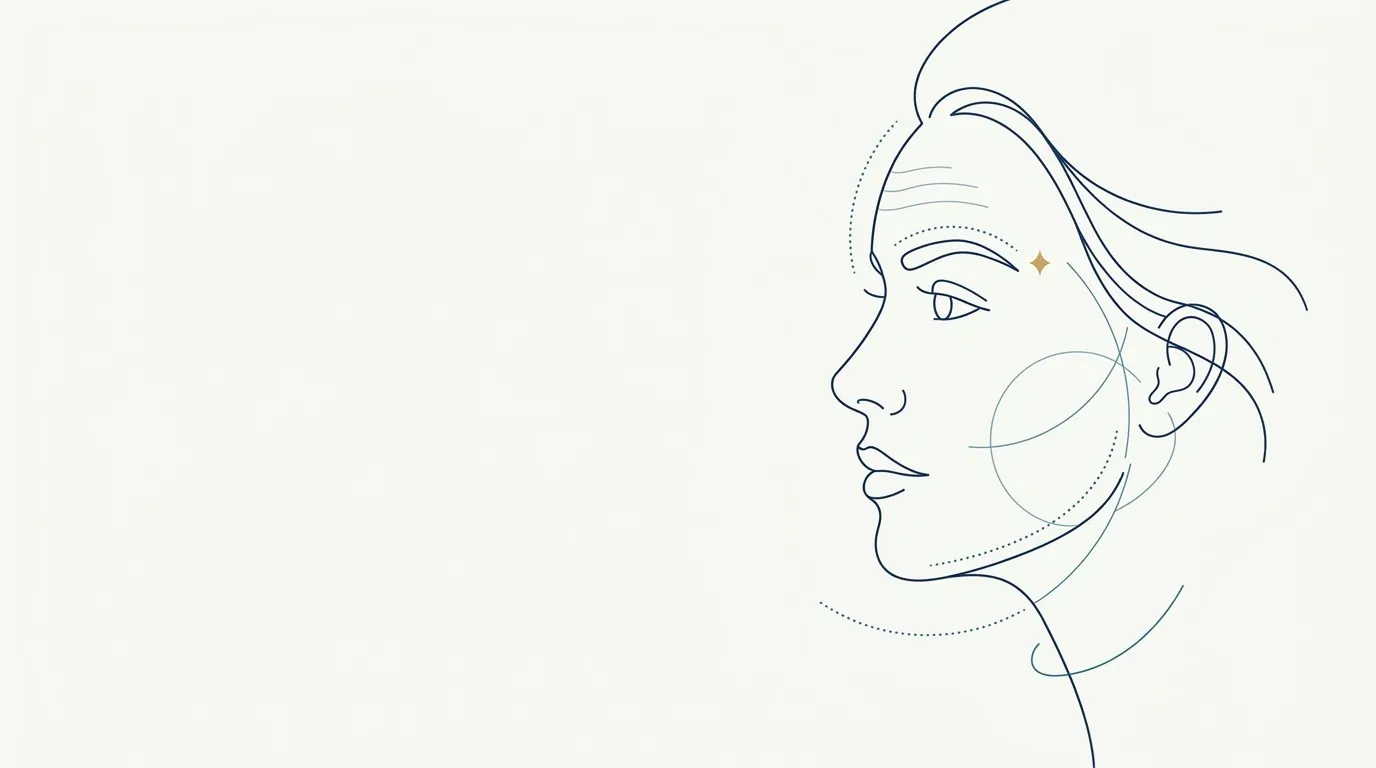
- Muscle
- Highlighted area
Quick facts
- Area
- Forehead, above the eyebrows
- Common concern
- Horizontal lines when raising the eyebrows
- Risk to explain
- Heavy eyebrow or eyelid if there is an imbalance
- Conversation tip
- Talk about balance between forehead, eyebrow and glabella
The forehead seems like the simplest place to treat: visible horizontal lines, a clear concern, a result that is easy to imagine. But it is one of the areas where patients get most frustrated, because the balance is delicate. Treating the forehead without thinking about the eyebrow can leave the gaze heavy. Treating too much can take away expression. Treating too little may show no difference.
Explaining the forehead well means talking about balance before talking about lines. This page gives the script, with a table, ready phrases and the risks that need to be stated. For the technical content of the area, see forehead lines and the frontalis muscle. For the reasoning on toxin as a whole, muscle map for botulinum toxin.
How do you explain the forehead's balance?
The clearest image is a seesaw. The forehead muscle lifts the eyebrow, and the muscles between the eyebrows (the glabella) pull it down. When one side lessens, the other weighs more. So treating the forehead can change the eyebrow's position, and the glabella needs to enter the conversation.
For the other side of the seesaw, see explaining the glabella to the patient.
What do patients usually want and what is realistic?
| Request | What can be explained |
|---|---|
| "I want a perfectly smooth forehead." | A completely smooth forehead has a cost: less movement, risk of a heavy eyebrow |
| "I just want the lines gone." | Dynamic lines tend to improve more than those marked at rest |
| "I want to lift my eyebrow." | Depends on anatomy; eyebrow position is a separate topic |
| "I want to look natural." | Natural means preserving some movement, and that can leave faint lines |
| "I want it to last." | The effect is temporary and fades over months |
The distinction between dynamic and static lines matters. Dynamic wrinkles appear with expression, and static ones remain at rest. The former usually respond better to botulinum toxin, the latter may call for other strategies, according to assessment.
Which risks should be explained?
The main ones are: heavy eyebrow or eyelid, eyebrow asymmetry, a "stiff" forehead feeling, transient headache and bruising. Eyelid ptosis is a less common but important effect, when toxin reaches muscles that support the eyelid. In foreheads with an already low eyebrow or eyelids with excess skin, the margin is smaller.
What is the timeline?
If the patient feels the eyebrow is heavy, the follow-up conversation is important; see ptosis after botulinum toxin and explaining what a touch-up is to the patient.
And the simulation, does it work for the forehead?
The forehead is not a marking point in Harmy, and toxin acts on movement, which a still image does not reproduce. If you want to show the look of the glabella, which is a point in the app, make clear that it represents the area between the eyebrows, not the forehead. The projection should not be used to promise the effect on the forehead.
The dynamic examination helps the most: watching the patient frown, raise and relax. That lets you explain what each muscle does, on their own face. See also dynamic facial analysis in expression.
What should you record?
Note the concern, the dynamic examination, what was explained about balance, risks and timeline, the decision on intensity and the agreed follow-up. The informed consent should cite the risk of a heavy eyebrow and eyelid. For the general text on toxin, see explaining botulinum toxin to the patient.
When the patient understands the balance, they stop asking for a "perfectly smooth forehead" and start asking for a "rested look", which is a more realistic and safer goal.
Frequently asked questions
Can treating forehead lines make the eyebrow droop?
It can, if there is an imbalance. The forehead muscle lifts the eyebrow, and reducing it too much can cause heaviness or drooping. The plan seeks balance, and the patient should know about this risk.
Why are the forehead and the glabella considered together?
Because the muscles that raise and the muscles that lower the eyebrow balance each other. Treating one without considering the other can change the eyebrow's position.
Do all forehead lines go away?
Not always. Lines marked at rest, the static ones, may improve less than dynamic ones. The professional explains what to expect after assessment.
How should the patient prepare for the result?
They should know that the effect is gradual, that the forehead may look smoother and less expressive, and that the follow-up is for assessing and adjusting, at the professional's discretion.
Harmy images are illustrative simulations generated by AI from the patient's photo to support the conversation between practitioner and patient. They are not a promise of results. Indication, technique, product and volume are solely the decision of the licensed practitioner. This content is for information only and does not replace a clinical assessment.