
How to Explain Botulinum Toxin to a Patient With No Background

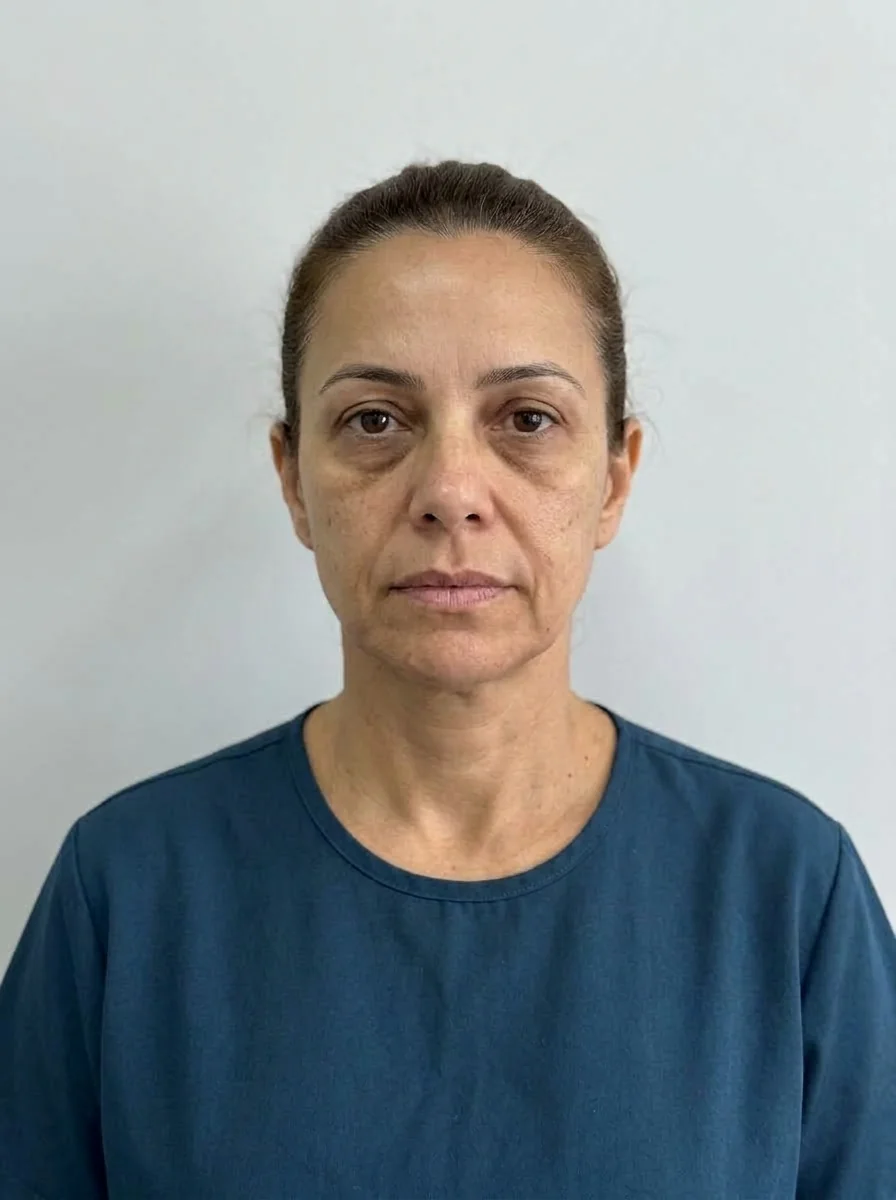 BeforeSimulation
Quick facts
- Core message
- It relaxes the muscle that creates the expression line; it is not a filler
- Analogy
- A dimmer that turns down the muscle's strength, not an on/off switch
- Timing
- The effect starts within a few days; no exact date, no promise
- Avoid
- Saying it 'freezes' the face or that it is 'just a little prick'
"Botox" is the name the patient knows and the one they confuse the most. For many people it is a synonym for any cosmetic procedure with a needle: filler, biostimulator, even threads. Before talking about the glabella, forehead or crow's feet, the first job is to give the right idea of what botulinum toxin does.
The good news is that it can be explained in five sentences. The rest of the conversation, about a natural look, timing and risk, is built on top of them.
What are the five sentences?
Each sentence has a job: it defines the action, links the action to the line, states the effect, separates it from fillers and warns about timing. Use whichever analogy you prefer. A useful one is the light dimmer: the toxin does not switch the muscle off, it turns the intensity down, and the professional chooses how far.
How do you show the patient which muscle we are talking about?
A gesture is worth more than a map. Ask the patient to frown or furrow their brow in front of the mirror, and show where the line appears. Tell them a muscle is working there. If they understand that, they understand the toxin.
For the conversation, the area between the eyebrows is the clearest. See the glabella page for the anatomical view and explaining the glabella to the patient for consultation language. The article on toxin in the glabella covers the procedure at a review level.
What should you say about a natural look?
The most common fear is the "frozen face." Answer honestly: relaxation comes in degrees, and the idea is to preserve expression, not erase it. An expressionless face is usually the result of excess, not of any use of the toxin.
How long does it take and how long does it last?
Talk in ranges and variation. In general the effect starts to show within a few days, and the final assessment is made after it settles. Duration varies by person, by area and by amount, at the professional's discretion. Avoid exact dates.
More on these timeframes in the result is not immediate and duration without promising a timeframe.
What about the risks?
The conversation must include the most common risks, such as pain at the injection site, a small bruise and headache; the less common ones, such as expression asymmetry or a drooping eyebrow or eyelid; and the rare ones, such as spread of the toxin and allergic reaction. The full overview is in risks of each procedure, and the informed consent form must contain this information, in line with your professional board's rules.
What do patients usually ask?
How does Harmy help with this explanation?
The app does not simulate the movement or relaxation of the muscle over time: it shows one possible look. Tell the patient this when presenting the image.
Conversation checklist
A short, correct explanation at the start prevents most of the misunderstandings that come up later. Clarity about what the toxin does, and what it does not do, is the basis of a realistic expectation.
How do you explain the toxin for different areas?
The same idea applies to the forehead, the glabella and the crow's feet: the muscle contracts, the skin creases, the toxin turns the strength down. But each area has a particularity the patient should know about. On the forehead, for example, excessive relaxation can weigh down the eyebrow, and the decision about how much to relax affects expression. See explaining the forehead to the patient for this nuance.
When talking about more than one area, make clear that balance between them is part of the planning. Relaxing one area without looking at its neighbors can shift the expression. It is a simple clinical argument that patients understand well.
What should you say about what the toxin does not do?
Avoid leaving the expectation open. The toxin does not fill folds, does not lift loose skin and does not fix a line that is already etched even without movement (a static line), although it may help keep it from getting worse. For those cases there are other conversations, such as filling or stimulating. Saying what the procedure does not do usually builds more trust than listing what it does.
Frequently asked questions
How do I explain botulinum toxin to a patient with no background?
Say that it relaxes the muscle that creates the expression line, reducing its strength. It does not fill or change the shape of the face. The effect appears gradually.
Does botulinum toxin leave the face frozen?
Not necessarily. The degree of relaxation is the professional's decision, based on the assessment. It is excess that gives the look of an expressionless face.
When does the patient notice the effect of the toxin?
Generally within the first few days, with a final assessment later on. Timing varies by person and by area, so avoid exact dates.
Is botulinum toxin the same thing as a filler?
No. The toxin acts on the muscle to soften expression lines. A filler adds volume or structure where it is lacking.
Harmy images are illustrative simulations generated by AI from the patient's photo to support the conversation between practitioner and patient. They are not a promise of results. Indication, technique, product and volume are solely the decision of the licensed practitioner. This content is for information only and does not replace a clinical assessment.