
"I don't want a Botox look": how to answer

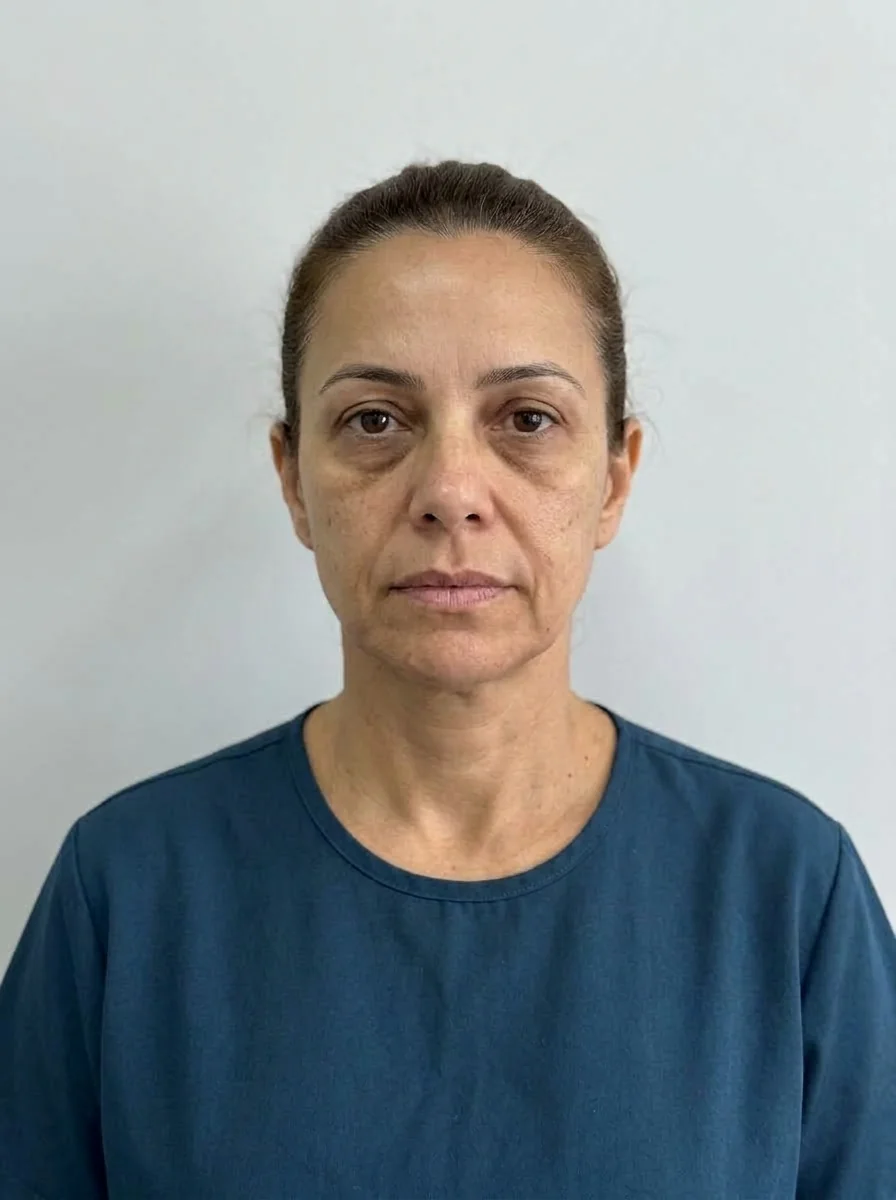 BeforeSimulation
Quick facts
- Real fear
- An expressionless or artificial-looking face
- Clinical translation
- Natural look: preserve expression and features, with conservative intensity
- Strategy
- Ask what they want to keep and start with little
- Avoid
- Promising it 'will never look artificial' or downplaying the worry
"Doctor, I want to look better, but I don't want a Botox look." It is probably the most common sentence in harmonization offices. It expresses a common and legitimate fear: leaving with an expressionless, strange, "done" face. And it is also an excellent way into a conversation about goals.
The trap is to answer "that doesn't happen with me". The way forward is to turn the fear into criteria for the plan.
What does the patient mean by that?
"Botox look" is a popular label that mixes several things: an immobile forehead, a heavy brow, exaggerated lips, a face that is too smooth, artificial symmetry. Before answering, find out which of them worries the patient.
The answer shows what they call artificial and, at the same time, what they value. That becomes the target of your approach. The text aligning expectations about natural results goes deeper into the idea.
What usually causes an artificial look?
Understanding the causes helps you explain to the patient what you do differently, without criticizing anyone:
- Excess. Too much product or too much relaxation in one area.
- Imbalance. Treating one area without looking at its neighbors.
- Uniformity. Removing every asymmetry and every expression line.
- Pace. Doing everything at once, without reassessment.
- External standard. Chasing a reference face instead of the patient's own face.
None of this is inevitable. Each item has a countermeasure you can explain to the patient: planning the whole face, conservative intensity and stages. See explaining why more than one session is needed.
How to turn the fear into goals?
Swap the negative ("I don't want") for the positive ("I want"). For each worry, one goal:
| The patient says | The goal you record |
|---|---|
| "I don't want a still forehead" | Keep the forehead's natural movement |
| "I don't want duck lips" | Discreet proportion, respecting the shape |
| "I don't want a face that is too smooth" | Preserve soft expression lines |
| "I don't want to look different" | Recognizability: look like the same person, more rested |
This table becomes the agreed success criterion, which makes the follow-up easier. See defining a good result with the patient.
How to talk about toxin without letting the fear grow?
Many patients link the "Botox look" to the toxin. Explain that the degree of relaxation is adjustable and that the professional chooses how much to relax. See explaining botulinum toxin to the patient and the procedure page toxin in the glabella. For the specific area, glabella.
Important: the "frozen" look usually comes from excess, not from the use itself. But that is no excuse to downplay it: the risk of an artificial result exists and must be acknowledged.
How to use Harmy with this patient?
For the intensity conversation, see explaining subtle, moderate and pronounced intensity and comparing intensities in the simulation. If the patient asks for less than planned, see patient asks for less in the simulation.
What if the patient wants something "without anyone noticing"?
It is a frequent request, and the honest answer is this: the idea is for people to notice that they look well, not that they had something done. But nobody controls what others perceive. Avoid saying "no one will know". See I don't want anyone to know.
Timeline for a fearful patient
Checklist
The fear of looking artificial is an ally of the professional who listens. It sets the limit of the plan and, when respected, builds a relationship of trust that outlasts any procedure.
Frequently asked questions
How do I answer the patient who does not want a Botox look?
Acknowledge the fear, ask what they want to preserve and explain that intensity is adjustable. Suggest starting conservatively and reassessing at the follow-up.
What causes an artificial look?
Generally, too much product, imbalance between areas, an unsuitable choice of intensity or a lack of planning for the whole face. The cause varies by case.
Can I guarantee the face will not look artificial?
No. Promise a method, not a result: assessment, conservative intensity, stages and follow-up. Absolute guarantees are not honest.
How do I use the simulation with this patient?
Show the Subtle intensity first and let them compare it with Moderate. The image is illustrative, and the patient chooses the point they feel comfortable with.
Harmy images are illustrative simulations generated by AI from the patient's photo to support the conversation between practitioner and patient. They are not a promise of results. Indication, technique, product and volume are solely the decision of the licensed practitioner. This content is for information only and does not replace a clinical assessment.