
Deep forehead lines: assessment beyond toxin
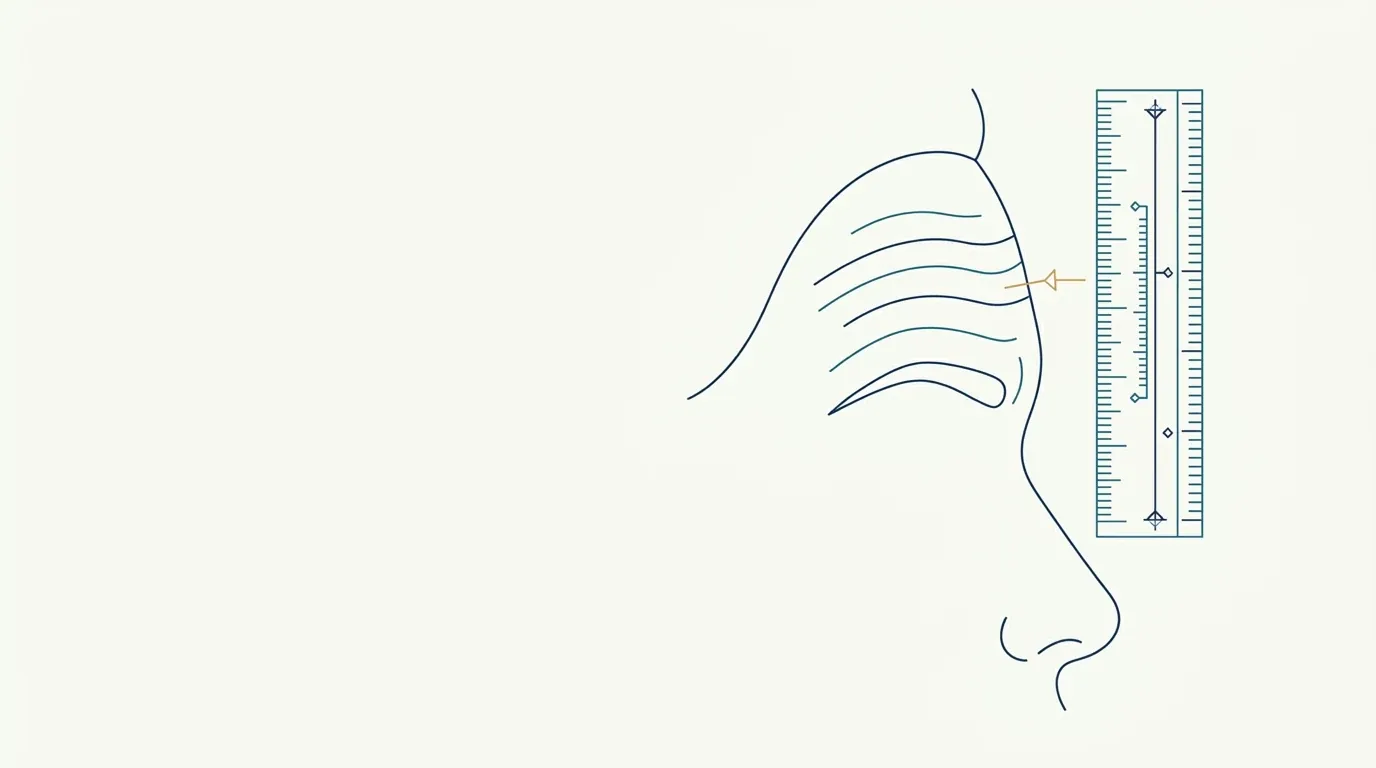
- Muscle
- Highlighted area
Quick facts
- Concern
- Deep horizontal lines on the forehead, visible even without movement
- Key distinction
- Dynamic line (appears with movement) versus static (stays at rest)
- Hidden factor
- The forehead works to hold up a heavy brow and eyelid
- Caution
- Silencing the frontalis without assessing the brow can weigh down the gaze
The forehead is the only place on the face where a wrinkle can be the result of compensation. Many patients with deep horizontal lines do not have a "problem" forehead: they have a gaze that has to be held open by force. The frontalis muscle lifts the brow all day, the skin creases, and the line becomes the price paid for seeing well.
For that reason, assessing deep forehead lines goes beyond "inject toxin". This page shows how to read what is behind the line, when toxin works, when it is not enough, and how to avoid the classic mistake in this area.
Dynamic or static: the first question
Every forehead line belongs to one of two families, or a mix of them.
| Type | What it is | Appears when | Responds to |
|---|---|---|---|
| Dynamic line | Skin fold from muscle contraction | When raising the brows | Toxin |
| Static line | Permanent mark in the skin and dermis | At rest | Skin quality, volume, other approaches |
| Mixed | Dynamic line that has become a crease | In both situations | Combination, with realistic expectations |
To tell them apart, ask the patient to fully relax the forehead and then raise the brows. The line that shows only with movement is dynamic. The one that stays is static. In patients over 40, a mix is the rule. See dynamic and static lines, where the difference matters in the plan.
What the forehead is compensating for
Before treating, ask the question that changes everything: why is the forehead working so hard? The most frequent causes are:
- Excess eyelid skin (mild eyelid ptosis or dermatochalasis), which forces the frontalis to lift the brow.
- Low brow, which the patient raises without noticing. See low eyebrows.
- Expression habit, in people who raise their brows a lot when they talk.
- Strong depressor muscles (glabella and orbicularis), which pull down and trigger the frontalis reaction. See frontalis muscle.
- High forehead or baldness, which enlarges the area and the visibility of the lines.
In the first four, silencing the frontalis without treating the cause removes the compensation and can drop the gaze. This is the origin of the "heavy look" complaint after toxin. See heavy look after toxin and brow ptosis after toxin.
How to assess
The relationship between glabella and forehead is close. Treating the glabella without balancing the forehead can cause excessive lifting of the brow tail, the so-called "Mephisto" brow. See glabella and forehead: combining in the plan and toxin in the frontalis muscle.
What each option can (and cannot) do
Toxin. Botulinum toxin reduces the dynamic part. It is the basis of treatment. In a forehead with compensation, dose and distribution must be careful so as not to lower the brow. See botulinum toxin: fundamentals.
Biostimulator and skin quality. For lines that are already static, skin-quality approaches such as the collagen biostimulator, skinbooster and microtoxin can be considered in selected cases, with clear limits. See skinbooster on the forehead and biostimulator on the forehead.
Hyaluronic acid. Filler for fine forehead lines is possible in selected cases, but the area carries relevant vascular risk, with supratrochlear and supraorbital branches. It requires anatomical knowledge and hyaluronidase on hand. See hyaluronic acid on the forehead and vascular occlusion on the forehead.
Brow support. When the cause is a low brow, repositioning approaches can be considered, and surgery may be the most appropriate answer in some cases. See PDO threads in the brow and concerns HOF does not solve.
Timeline of an approach
The reassessment visit is when you find out whether the dose was right. Without it, the next cycle repeats a possible mistake.
Risks
On the forehead, risks include brow ptosis, asymmetry, headache, excessive lifting of the tail and a heavy look. With hyaluronic acid, serious vascular complications are added, including visual ones, although rare. Safety guidance and warning signs are in visual complication after filler and complications with botulinum toxin.
How Harmy fits the conversation
Harmy has the Glabella as a marking point, which uses the app's symbolic unit, and other points for volume. It does not simulate the action of toxin on the horizontal forehead lines or the change in brow position.
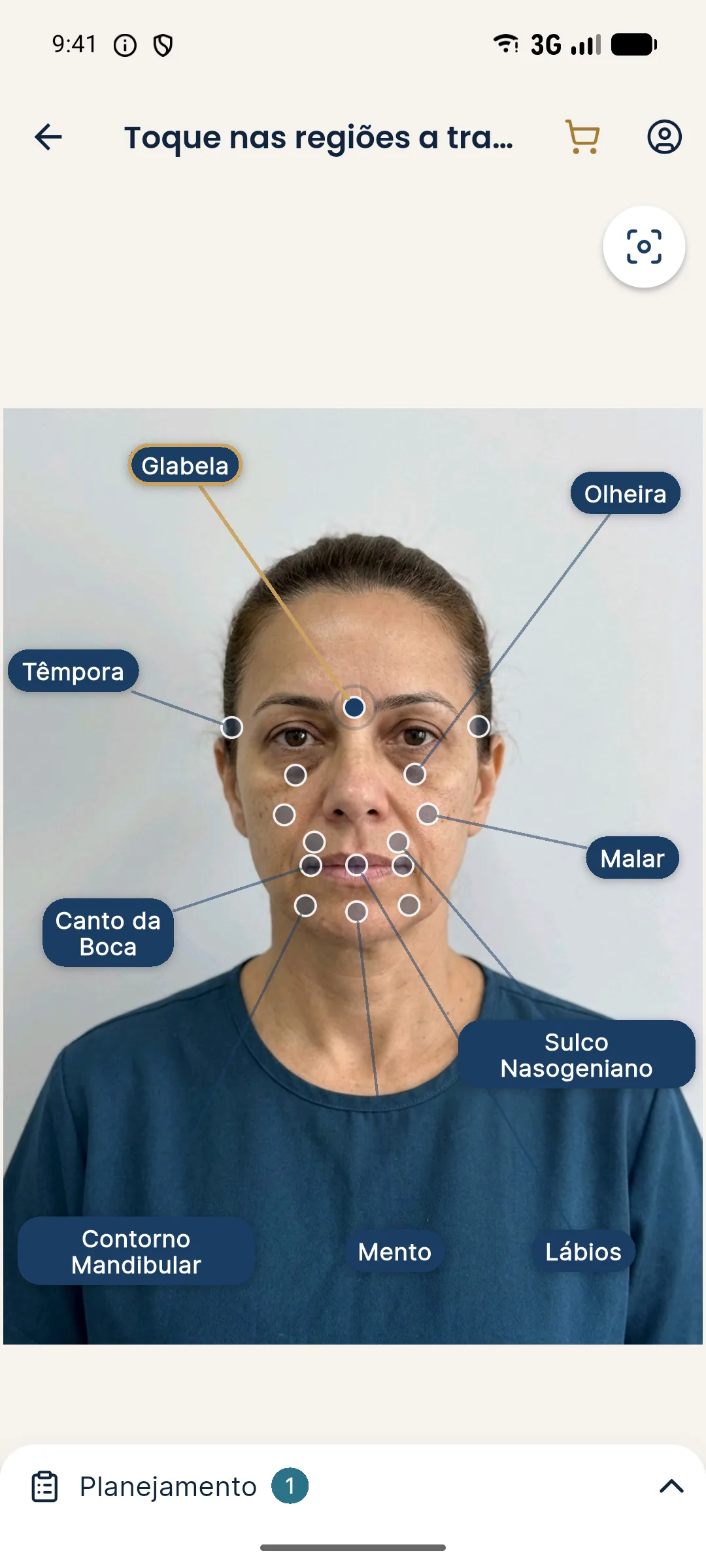
That honesty protects the relationship: do not promise on screen something that the technique delivers differently on real skin.
Record
Record the compensation test, the photos at rest and in motion, the dose and distribution decisions (at the professional's discretion) and the guidance given about the limit of response. All in line with the rules of your professional council in Brazil and the LGPD (Brazil's data protection law) for images.
Frequently asked questions
Does toxin fix deep forehead lines?
It softens the dynamic part, caused by contraction. Lines already etched at rest tend to improve partially and may call for other associated approaches, at the discretion of the qualified professional.
Why do some people's foreheads wrinkle so much?
Many raise their brows all the time to keep the eyes open, whether from excess eyelid skin, a low brow or an expression habit. The forehead overworks and creases.
Is it safe to inject toxin across the whole forehead?
It depends on the assessment. If the frontalis is compensating for a low brow or eyelid, silencing it can weigh down the gaze. Dose and distribution must respect the balance with the glabella.
Does forehead filler work for deep lines?
It can be considered in selected cases for static lines, but it is a high vascular risk area and requires experience and hyaluronidase on hand.
Harmy images are illustrative simulations generated by AI from the patient's photo to support the conversation between practitioner and patient. They are not a promise of results. Indication, technique, product and volume are solely the decision of the licensed practitioner. This content is for information only and does not replace a clinical assessment.