
Gaze Tilt and the Lateral Canthus in Treatment Planning
- Nerve
- Highlighted area
Quick facts
- What it is
- Angle between the line joining the medial and lateral canthi and the horizontal
- Described pattern
- The lateral canthus usually sits slightly above the medial, with variation between people and populations
- Limit
- Injectables do not reposition the canthus: they act on volume and surrounding support
- Warning
- The periorbital region is delicate: eye complications are rare but serious
For most people, the gaze is the first part of the face another person sees. The shape of the eyes, their opening, their tilt and their relationship with the brow and the cheek say a lot about the expression a person conveys. Two eyes of the same size can look happy or sad, young or tired, from a difference of just one or two degrees of tilt.
In HOF (orofacial harmonization), the gaze comes with high expectations and great caution. Many patients ask for a "lifted gaze," and the professional needs to know what the technique can and cannot do. This page shows how to assess the gaze axis, which factors influence it, what injectables can reach and what lies beyond their reach.
What is gaze tilt?
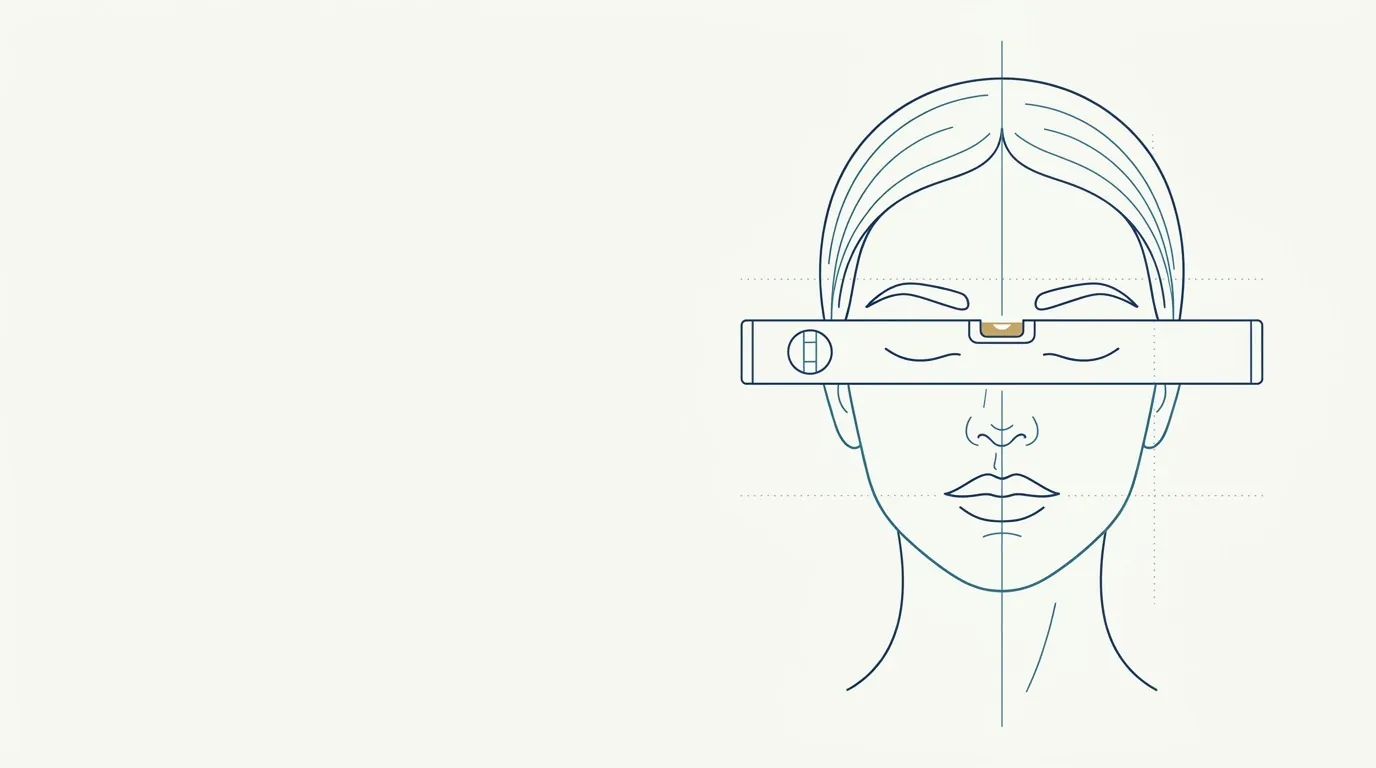
It is the angle that the line joining the medial and lateral canthi of the eye forms with the horizontal. In many faces, the lateral canthus sits slightly above the medial, which gives a younger, more open look. When both are level, the gaze tends to look neutral. When the lateral canthus sits below the medial, it can look more tired or sad.
The glossary describes the concept in canthal tilt. Two important points:
- tilt varies between people and between populations, and there is no single correct value;
- it changes with age, as the surrounding tissue loses support.
What influences how the gaze looks?
The canthal tilt itself is determined by bone structure and the canthal ligament. But how the gaze looks depends on a larger set of factors:
| Factor | How it influences |
|---|---|
| Lateral canthus position | Defines the gaze axis |
| Brow | A low position weighs down the gaze; a high one opens it |
| Upper eyelid | Excess skin or ptosis reduces the opening |
| Lower eyelid and tear trough | Shadow and bags give a tired look |
| Cheekbone | Its volume and position support the area under the eye |
| Temple | Volume loss can pull the look downward |
| Tone of the orbicularis oculi | Acts on shape and the lines around the eye |
| Visible sclera | How much of the white of the eye shows below the iris |
This set explains why a person's gaze changes when the cheek loses volume or the brow drops, even if the corner of the eye itself has not moved. The relationship with the brow is in ideal brow position in planning and with the temple in temples and brow: combining them in the plan.
What can and cannot injectables do?
This is the most important and most misunderstood part. Injectables act on volume, indirect support and muscle dynamics. They do not reposition the lateral canthus or change the bony shape of the orbit. What they can do, at the professional's discretion, is influence how the gaze is perceived through:
- Cheekbone and temple volume, which supports the area below and beside the eye.
- Improving the tear trough or the eyelid-cheek transition, when indicated.
- Adjusting the brow position, through the effect on muscle dynamics.
- Skin quality, in biostimulation or skinbooster strategies.
What they do not do: change the shape of the eye, lift the canthus structurally, correct true eyelid ptosis or a significant excess of eyelid skin. These cases may need assessment by another professional.
What risks does the region carry?
The periorbital region is one of the most delicate areas of the face, because of the thin skin, the proximity to the eye and the vascular network. Risks include swelling, bruising, asymmetry, visible irregularities and, rarely, serious vascular complications that can affect vision. With hyaluronic acid fillers, hyaluronidase must be available.
The discussion is in periorbital anatomy for injectables, visual complication after filler and vascular danger zones of the face. The decision to treat this region or not belongs to the qualified professional, following the rules of their professional council in Brazil.
How do you assess the gaze at the consultation?
A short, systematic checklist avoids skipped steps.
Reading the tear trough and the eyelid is covered in tear troughs: types and assessment and tired eyes: assessment. The proportion of the eyes to each other, in horizontal analysis, is covered in intercanthal distance and eye width in analysis.
What about asymmetry between the eyes?
Asymmetry in eye height, opening or tilt is very common and usually mild. It can have a bone, muscle or eyelid cause, and it is rarely fully correctable. Document it with a photo before any procedure, because small pre-existing differences tend to be blamed on the treatment later. The reasoning is in simulation in a patient with asymmetry.
What should you tell a patient who asks for a more lifted gaze?
The conversation needs to welcome the wish and make the limits clear. A good approach: ask what the patient sees in their gaze, explain what influences the look, show what injectables can and cannot reach, and propose a conservative plan.
How does Harmy fit into the conversation?
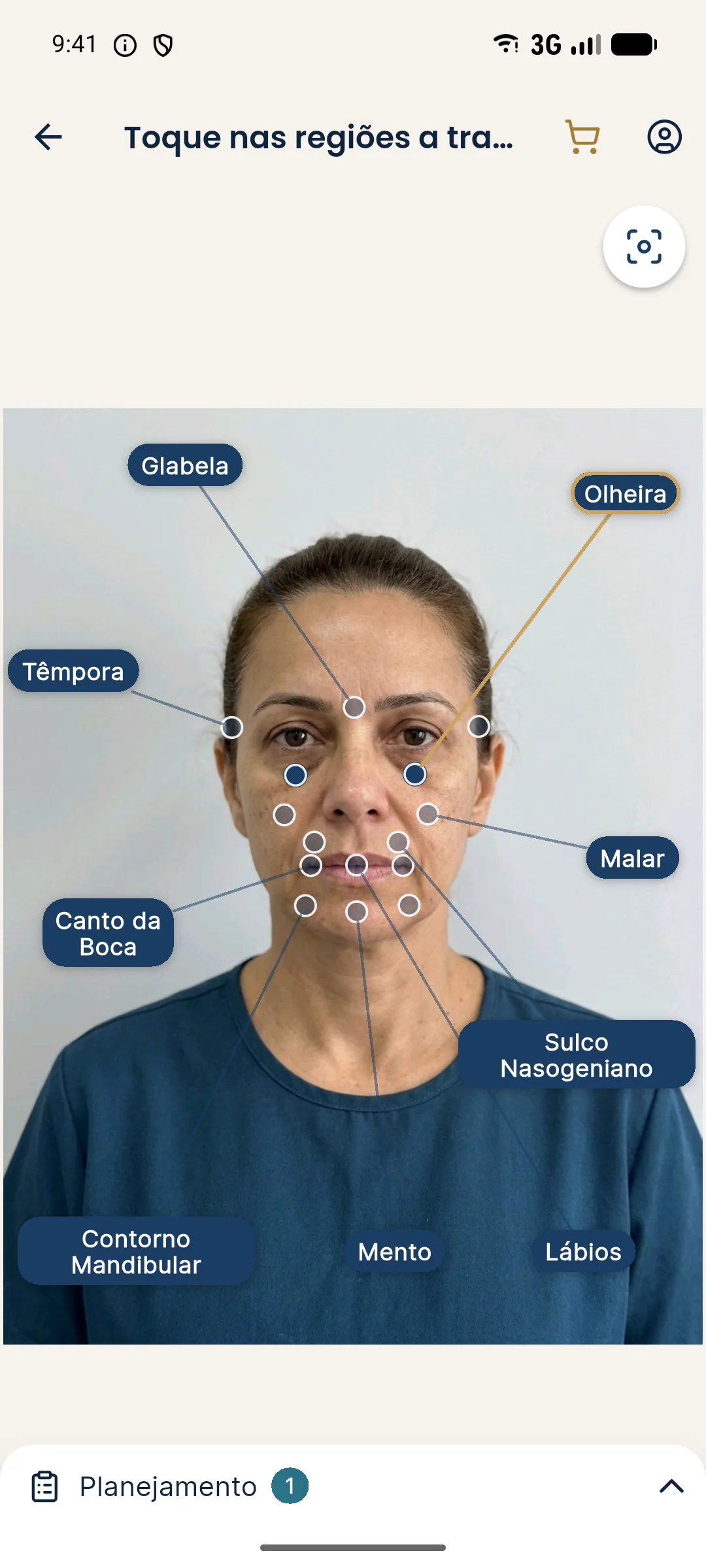
Use the projection to show the effect of volume in these areas and be clear about what it does not do. It is an illustrative simulation, not a promise of results. For using the point in the app, see marking the tear trough in Harmy and marking the cheekbone in Harmy.
Quiz: gaze and lateral canthus
Summary
- Gaze tilt is the angle between the medial and lateral canthi and the horizontal.
- It varies between people and populations, and changes with age.
- Injectables act on volume and surrounding support; they do not reposition the canthus.
- The periorbital region is delicate and requires anatomical knowledge and hyaluronidase on hand.
- Talk to the patient about influence on appearance, without promising structural change.
- In Harmy, Tear Trough, Cheekbone and Temple relate to the gaze; there is no point for the canthus.
Frequently asked questions
What is gaze tilt (canthal tilt)?
It is the angle of the axis joining the medial and lateral canthi relative to the horizontal. In general, the lateral canthus sits slightly above the medial, but variation between people is normal.
Can injectables lift the corner of the eye?
They do not directly reposition the corner of the eye. They can influence how the gaze looks through the volume and support of the cheekbone, temple and periorbital region, at the professional's discretion.
Is a drooping eye corner always a problem?
No. Tilt varies between people and populations and is part of identity. The decision to treat depends on the patient's concern and the clinical assessment.
Does the app simulate a change in the gaze?
Harmy has no specific point for the corner of the eye. The projection simulates areas such as the tear trough and the cheekbone, and it does not reposition the canthus or change the shape of the eye.
Harmy images are illustrative simulations generated by AI from the patient's photo to support the conversation between practitioner and patient. They are not a promise of results. Indication, technique, product and volume are solely the decision of the licensed practitioner. This content is for information only and does not replace a clinical assessment.