
Plan for a rested look: tear trough, cheekbone and brow

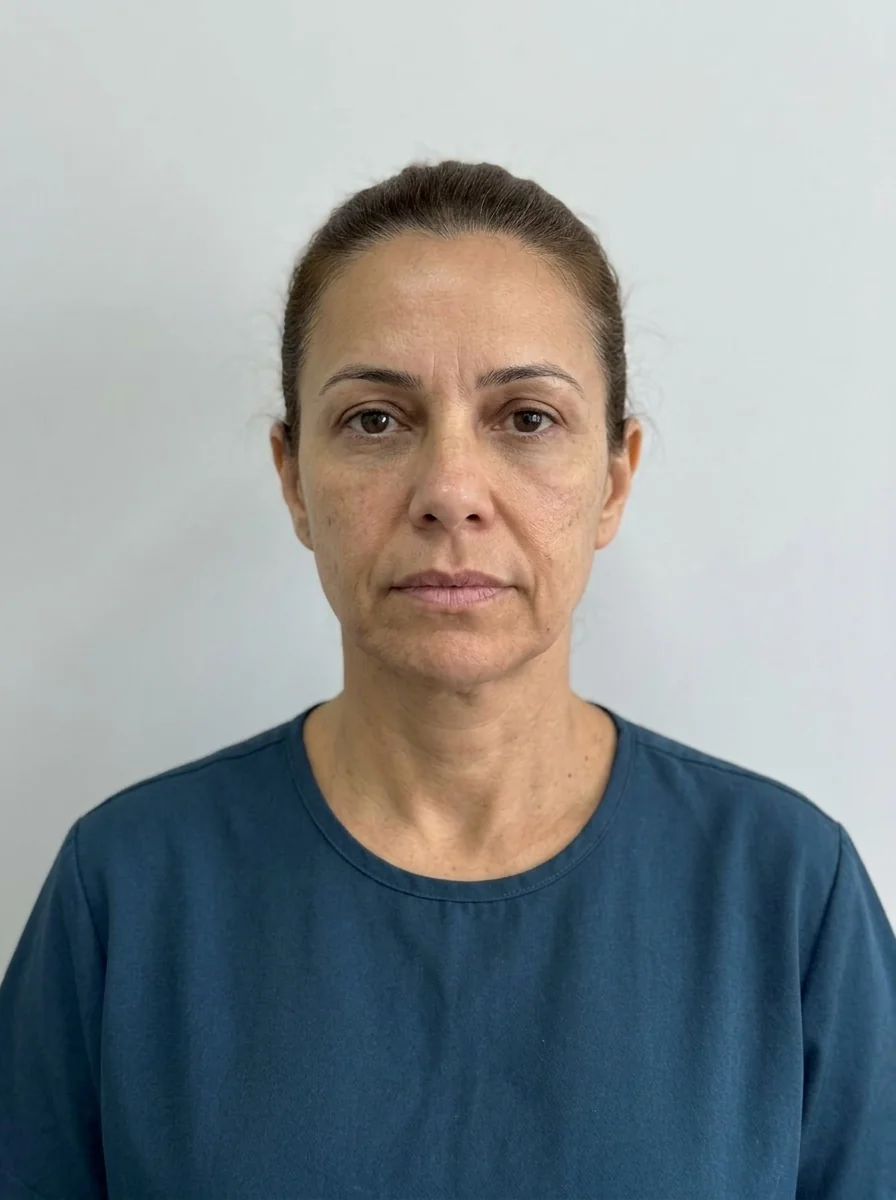 BeforeSimulation
- Highlighted area
Quick facts
- Topic
- Plan for a rested look
- Areas involved
- Tear trough, cheekbone, temple and brow
- Usual order of reasoning
- Cheekbone support before the tear trough
- Greatest risk
- Tyndall effect, persistent swelling and vascular occlusion
- Alternatives
- Skin care, treating the cause of the dark circle and waiting
The request "I want a more rested look" is one of the most frequent and, at the same time, one of the most complex. The eyes are the center of the face, the skin around them is thin, the anatomy is full of vessels and the smallest excess shows. This page lays out the reasoning for a rested-look plan, with the order between cheekbone, tear trough, temple and brow, the risks of the area and the role (and limits) of the simulation.
What lies behind the complaint of a tired look?
It is almost never a single thing. A tired appearance can come from shadow due to a tear trough (depression), a fat eye bag, pigment in the skin, vessels visible through the skin, loss of cheekbone support, temporal hollowing and brow position. Each cause calls for a different approach, and the first job is telling them apart. See dark circles: types and assessment, tired look: assessment and the patient's complaint in purple or sunken dark circles.
What is the difference between the types of dark circles?
| Type | How it presents | Approach to consider |
|---|---|---|
| Tear trough (depression) | Groove-shaped shadow that changes with the light | Assess cheekbone support and possible filler |
| Eye bag | Bulge above the groove | Filler may make it worse; consider other approaches |
| Pigmented | Dark color, even without relief | Skin care and specific procedures |
| Vascular | Purplish tone from visible vessels | Avoid superficial filler; consider alternatives |
| Mixed | A combination of the above | Staged plan, treating each component |
More on the approaches in dark circles: hyaluronic acid or fat, botox or filler for dark circles and explaining dark circles to the patient.
Why does the cheekbone often come before the tear trough?
The cheekbone supports the eyes. When it loses projection, the tear trough gains depth by relationship, not only from a lack of local volume. Restoring support can soften the shadow and reduce the need to treat the tear trough directly, which is the highest-risk area. This is not a rule: it depends on the exam. See cheekbone and tear trough: combining in the plan and cheekbone filler.
What about the temples and the brow?
Temporal hollowing accentuates a sunken look and can leave the tail of the brow without support. The area has its own vascular risk, and volume is conservative. Brow position, in turn, can be influenced by the muscle balance of the forehead and glabella, and toxin can adjust the look when well indicated. See temple filler, temples and brow: combining in the plan, heavy look after toxin and low brows.
What is the order of decision?
How do you use the simulation in this plan?
In Harmy, the Tear Trough point simulates the effect of volume on the groove, with ml and intensity. Subtle intensity is generally used, and the "First time" shortcut brings tear trough 1 ml at Subtle. The projection shows that the change is discreet, and that is what the patient needs to understand. Compare two projections: cheekbone only, and cheekbone with tear trough, and see what changes.
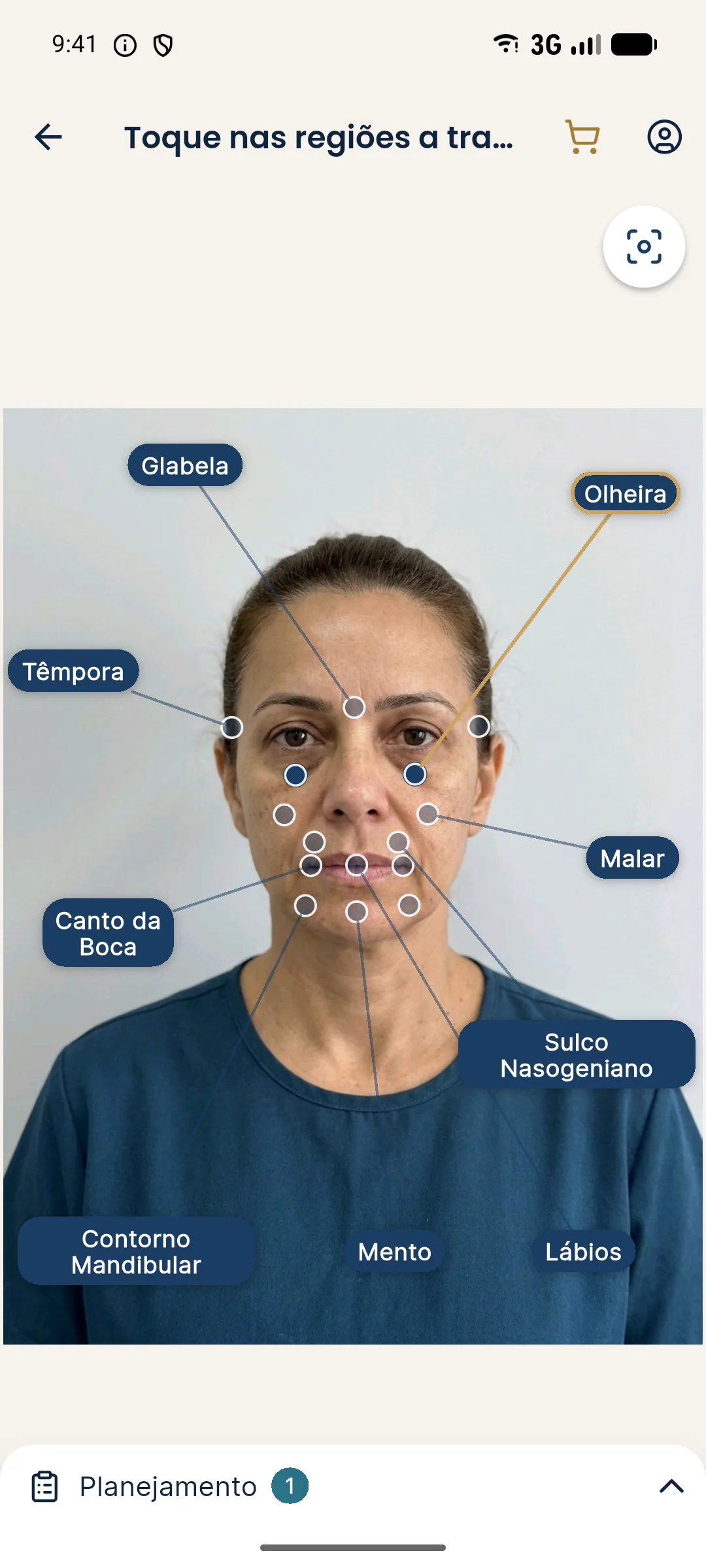
The projection does not represent pigment, vessels, eye bags or the Tyndall effect, and it does not replace the real light of the consultation. Tell the patient and, when the cause is pigment, explain that volume does not improve color. See limits of 2D simulation and simulation on dark skin and lighting.
When should you not fill?
When the cause is pigment, when there is an evident eye bag, when the skin is very thin and prone to Tyndall, when the patient expects to "erase" the shadow or when there are signs of chronic periorbital swelling. In these cases, the approach may be different, or none. See under-eye filler with an eye bag, Tyndall effect in the under-eye area and chronic eyelid swelling after filler.
How do you talk to the patient?
Use the patient's words and translate them into anatomy. Instead of "you have dark circles", say "there is a shadow at the inner corner, which comes from a depression, and the cheek just below has a little less support". This explains why you suggest starting with the cheekbone. Avoid promising the shadow will go away.
Assessment checklist
Reasoning quiz
Summary
A rested look requires diagnosing the shadow, support before detail, conservative volume, awareness of the risks and honesty about the limits. The simulation serves to align expectations, but it does not represent color, eye bags or Tyndall.
Frequently asked questions
Where should you start to get a more rested look?
In general, the cause of the shadow is assessed first: pigment, tear trough, eye bag or loss of cheekbone support. Often the cheekbone comes before the tear trough. The decision depends on the exam.
Does filling the tear trough fix the tired look?
Only when the cause is a tear trough hollow or a depression. For dark circles from pigment or an eye bag, filler may not help or may make it worse. The type of dark circle defines the approach.
Is the under-eye area risky?
It is one of the areas that demands the most care: thin skin, risk of the Tyndall effect and persistent swelling, plus vascular risk. The professional should have specific training.
Does the simulation help with the under-eye area?
It helps show, subtly, the effect of volume on the tear trough. It does not represent pigment, eye bags or the product's color, and it is illustrative.
Harmy images are illustrative simulations generated by AI from the patient's photo to support the conversation between practitioner and patient. They are not a promise of results. Indication, technique, product and volume are solely the decision of the licensed practitioner. This content is for information only and does not replace a clinical assessment.