
Cheekbone and under-eye area: why combine them in the plan

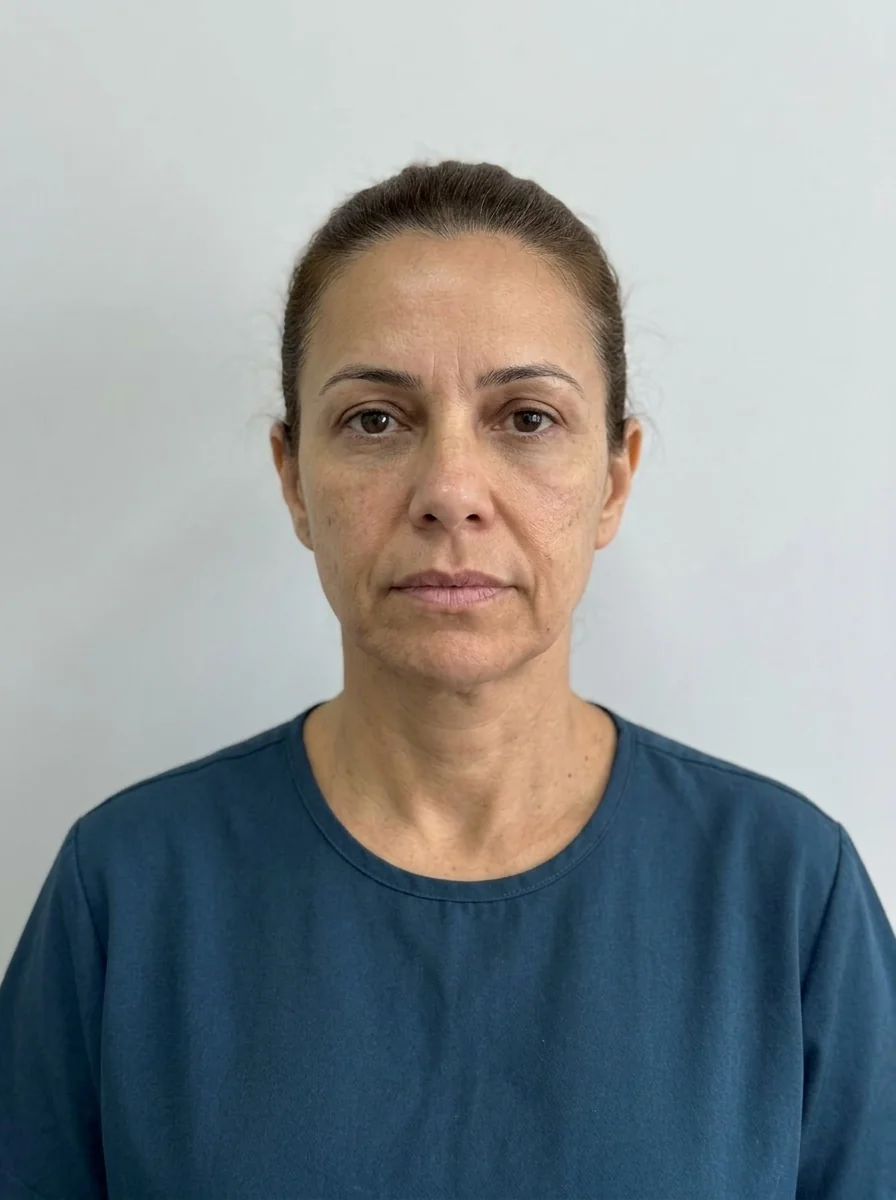 BeforeSimulation
- Highlighted area
Quick facts
- Topic
- Relationship between cheekbone support and the lid-cheek groove
- Central question
- Is the dark circle a cause of its own, or a consequence of an unsupported midface
- Risk
- The periorbital region carries high vascular risk, with hyaluronidase available
- Important
- The decision to combine belongs to the professional, after assessment
The under-eye area is a concern that rarely lives alone. The patient points to the darkness or the groove under the eye, but what is seen there also depends on what lies just below: the cheekbone. When the cheek loses support, the transition between the lower lid and the face becomes more abrupt, the groove looks longer, and the shadow grows. That is why planning the under-eye area without looking at the cheekbone is a shortcut that often costs a second visit.
This page shows how to read that relationship, when it makes sense to combine the two areas in the plan, what the risk precautions are, and how to use the simulation for the conversation. To understand the types of dark circles, see under-eye circles: types and assessment.
Why does the cheekbone influence the groove under the eye?
The lid-cheek groove (palpebromalar groove) marks the meeting of the lower lid and the malar area. When the cheekbone projects and supports, that passage is smooth. When it sinks or descends, the groove lengthens, the shadow grows, and the eyes look more tired. It is a relationship of support, not of a single cause: the under-eye area also depends on skin, fat, pigment, and vessels.
| Type of dark circle | Relationship to the cheekbone | Role of the plan |
|---|---|---|
| Structural (groove and shadow) | Usually related to midface support | Assess the cheekbone before or together |
| Pigmentary | Little relationship | Other approaches, outside filler |
| Vascular (purplish) | Little relationship, thin skin lets vessels show | Caution, filler may accentuate it |
| Fat bag | May become more pronounced with a lowered cheekbone | Careful assessment and, sometimes, another approach |
| Mixed | Partial | Talk about realistic expectations |
Seeing the cause is the first step. A well-supported cheekbone does not lighten pigment or remove a bag. If the concern is color, filler does not solve it, and that honesty with the patient prevents frustration. The reading of the whole is covered in midface fat compartments in the plan.
How do you order the plan between cheekbone and under-eye area?
When there is a structural component, a usual order is to reassess the cheekbone first. If the support improves the transition, the under-eye area may need less, or nothing. This respects a simple principle: treat the cause before the symptom, without piling volume into an area with little margin.
In many cases the plan ends up in a single area at first. Combining both in one session only makes sense when the reading is clear and the professional has room to review afterward. See domino effect between facial areas and structure before detail in the facial harmonization plan.
How much volume should you plan for each area?
The margin is small in this region. For visual planning, the app works in steps of 0.5 ml, from 0.5 to 5 ml per area, but the under-eye area usually falls in a low range and the cheekbone in a moderate range, always at the professional's discretion. Harmy's "First time" shortcut, for example, brings the tear trough at 1 ml with Subtle intensity, not the other way around.
Signs that the plan has gone too far:
- A "puffy" or "bagged" look under the eye, which appears when you try to solve the groove with volume alone.
- A bluish tone visible through thin skin.
- A cheekbone that gains projection but makes the groove even more evident by contrast.
For the logic of adding carefully, see percentage distribution of volume between areas and pillow face: how planning avoids the effect.
How do you simulate both areas in Harmy?
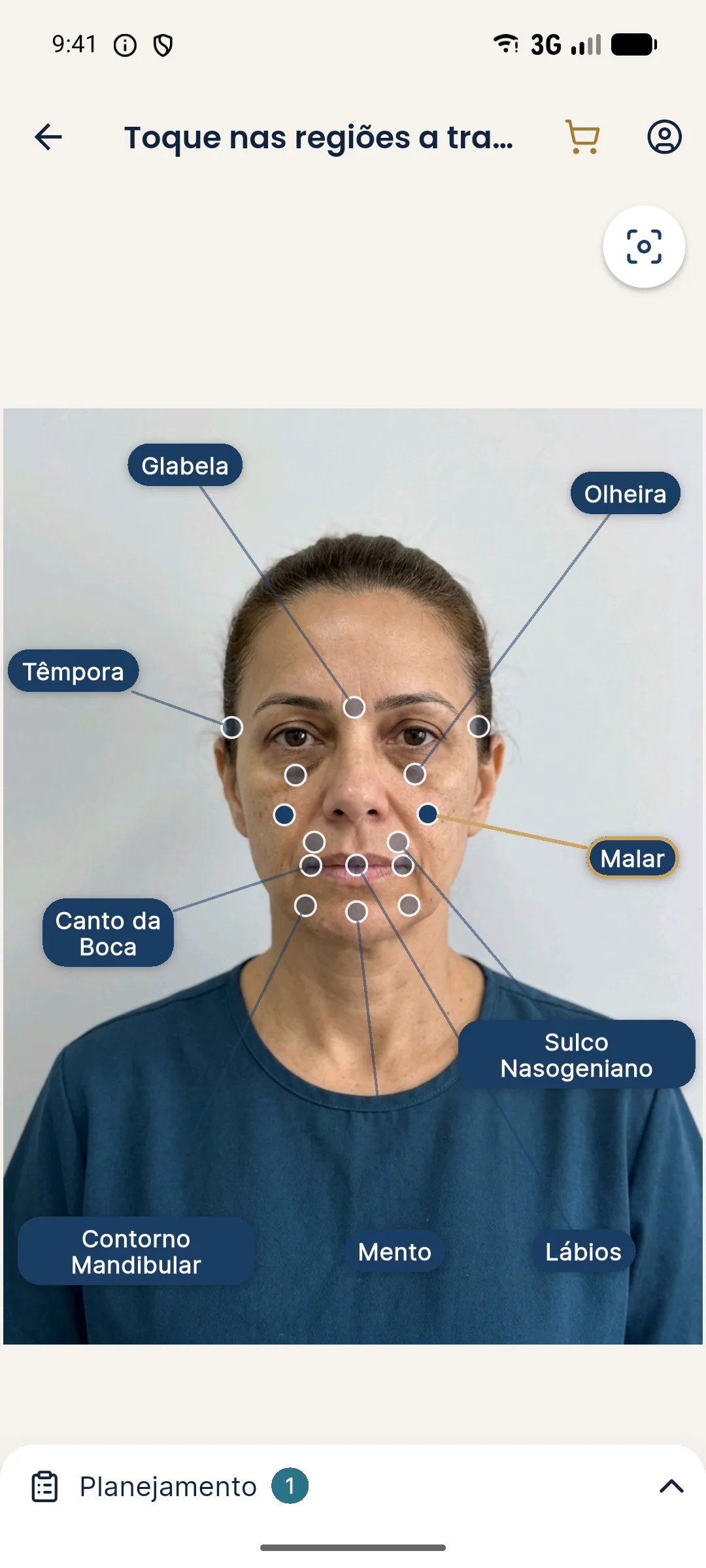
In Harmy, you upload a frontal photo, the app detects the face on the device, and shows labeled points. Tap Malar and Tear trough, enter the ml for each, and choose the intensity (Subtle, Moderate, or Pronounced, with Moderate as the default). The projection changes only the marked areas.
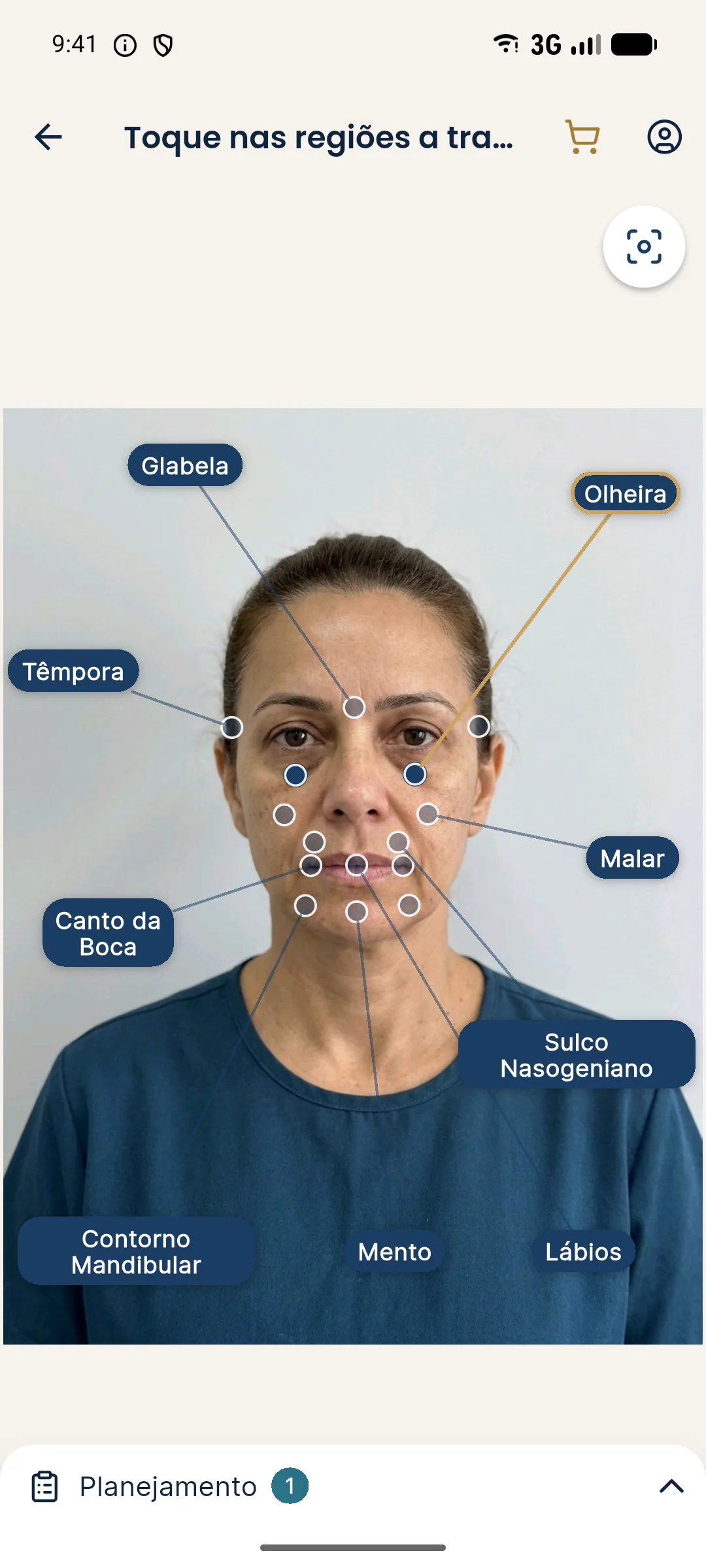
A useful approach is to generate one version with the cheekbone only and another with cheekbone and under-eye area. The patient sees that cheek support already changes how the area reads, and the decision about the under-eye area becomes more informed. To see how to compare intensities, see comparing Subtle, Moderate, and Pronounced intensities.
When should you not combine them?
- When the concern is only color: filler does not treat pigment.
- When the lower lid skin is very thin and translucent: the risk of a bluish look increases.
- When there is a marked fat bag: the plan may worsen the contour, and the approach deserves another assessment.
- When the patient expects the dark circle to disappear: use explaining that a simulation is not a guarantee and ethics of result simulation.
How do you talk about expectations with someone who has dark circles?
The under-eye area is one of the concerns where expectations drift furthest from what is possible. The patient often imagines the mirror will show, after the plan, skin with no shadow, and the truth is that the plan works on contour and support, not on color. It is worth saying this before showing any image, and repeating it when showing the simulation.
A few guidelines help align the conversation without discouraging the patient:
- Separate what is shadow from contour (which the plan can influence) from what is color (which it does not solve).
- Show their photo in two lights, from above and from the front, so they see how much the shadow changes.
- Say that dark circles vary with sleep, hydration, and time of day, and that the follow-up photo should be taken under the same conditions.
- Agree upfront that the first follow-up is for assessing, not necessarily for adding more.
This alignment reduces the chance of dissatisfaction with a result that, clinically, was the expected one. Record what was said, as in the plan diary: session-by-session progress record. If the patient compares the simulated image with the mirror every day, remind them that the projection is an illustration of a single frontal photo, in a single light.
Every indication, volume, and technique is a decision for the qualified professional, after assessment, and the simulation is always illustrative.
Frequently asked questions
Does treating the cheekbone improve the under-eye area?
In some patients, cheekbone support changes how the groove under the eye reads, because the transition between lid and cheek becomes more continuous. In others the dark circle has its own cause, such as pigment or a fat bag. The assessment decides.
Which should be treated first, cheekbone or under-eye area?
When the cheekbone lacks support, many plans start with it and reassess the under-eye area at the follow-up. The order is a clinical decision and there is no single rule.
Is every dark circle related to the cheekbone?
No. A dark circle can be vascular, pigmentary, structural, or mixed. Only the structural part is usually related to midface support.
Can I show cheekbone and under-eye area in the same simulation?
Yes. In Harmy you mark Malar and Tear trough, enter the ml and intensity for each, and generate the projection. The image is illustrative and does not promise results.
Harmy images are illustrative simulations generated by AI from the patient's photo to support the conversation between practitioner and patient. They are not a promise of results. Indication, technique, product and volume are solely the decision of the licensed practitioner. This content is for information only and does not replace a clinical assessment.