
Lower Eyelid Smoothing and Eye Bags with Hyaluronic Acid

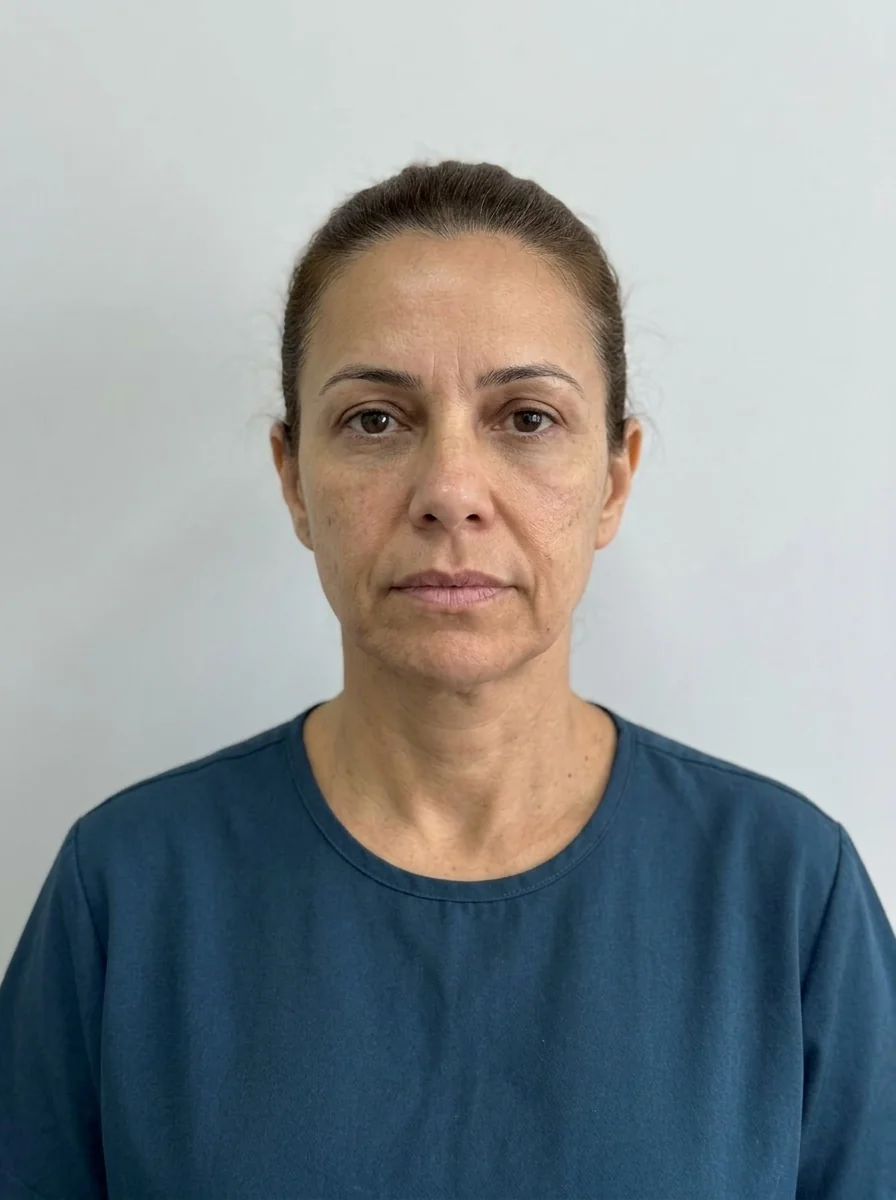 BeforeSimulation
Lower eyelid smoothing with hyaluronic acid aims to make the transition between the eyelid and the cheek more continuous. The typical concern is "I have bags under my eyes" or "my eye looks puffy in the morning and tired in the afternoon." It is an indication that calls for more conversation than injection: in many cases, the best course is not to fill.
On this page you will find when the procedure usually makes sense, when it does not, usual volumes, risks and how to simulate it in Harmy.
What is lower eyelid smoothing?
It is the use of small volumes of hyaluronic acid at the palpebromalar transition to reduce the step between the lower eyelid and the cheek. When there is a mild bag above and a hollow just below, restoring volume in the hollow can camouflage the contrast and reduce the shadow.
It is important to be clear with the patient: filler does not remove the bag. It works the surroundings. Bags caused by pseudoherniation of orbital fat, especially large ones, usually have a surgical indication, and filling can make the whole area look heavier.
Who is lower eyelid smoothing usually indicated for?
Generally, for patients with:
- a discreet bag, with a visible step between eyelid and cheek;
- a hollow below the bag that accentuates the shadow;
- skin of reasonable thickness, without marked laxity;
- no chronic or fluctuating swelling in the area.
These patients are usually not good candidates:
- patients with large bags, which increase when looking up;
- people with frequent morning swelling, eye allergies or fluid retention;
- very thin skin, with excess skin or a large amount of fine lines;
- people who expect to eliminate the bag without surgery.
General contraindications include active infection, active autoimmune disease, pregnancy, breastfeeding and allergy to the product. The decision belongs to the qualified professional, in line with the rules of their professional council in Brazil, and referring for surgical assessment is a legitimate course.
Which areas are involved?
The main area is the lower eyelid, continuous with the under-eye area (tear trough) and the malar area. The whole region is part of the periorbital area. In many cases, midface support weighs more on the look of the eyelid than the eyelid itself, and malar filler comes first in the plan.
Which product is used?
Low-G' hyaluronic acid, flexible and with low water-absorbing capacity, to reduce the risk of swelling and visible ridging. The choice of instrument and plan is a technical decision for the professional and does not belong on a public page.
What volumes are usual?
Very small volumes. The ranges below are general references; the final volume is set by the qualified professional after assessment.
| Situation | Usual range per side | Note |
|---|---|---|
| Mild step, no evident bag | 0.1 to 0.3 ml | Reassess at follow-up |
| Discreet bag with a hollow below | 0.2 to 0.4 ml | Prioritize midface support when indicated |
| Large bag | Generally not filled | Consider surgical assessment |
How long does lower eyelid smoothing last?
Usual durability is generally between 9 and 12 months, and can be longer in some patients. Because it is an area with little movement, the product tends to stay, which is good when the result is pleasing and a problem when there is excess. That is why a conservative dose is the rule.
What are the risks and complications?
The periorbital area is high vascular risk, with branches of the angular and infraorbital arteries and connections to the circulation of the orbit. An intravascular injection can cause vascular occlusion and, rarely, a visual complication. Hyaluronidase must be available whenever hyaluronic acid is used, with a known management protocol.
Most frequent complications:
- Persistent or fluctuating swelling, which can last weeks.
- Tyndall effect, with a bluish tone under thin skin.
- Apparent worsening of the bag, when the volume adds to fat that is already projecting.
- Irregularities and nodules.
- Bruising and asymmetry.
See also safety and complications in facial harmonization.
How do you tell a bag from a hollow in the consultation?
A few simple observations help guide the conversation, without replacing the clinical exam:
- Looking up: bags caused by orbital fat usually become more evident when the patient looks up.
- Variation through the day: puffiness that changes a lot from morning to afternoon suggests a swelling component, which tends to get worse with filler.
- Frontal light: if the shadow lessens with light from the front, the step below the bag weighs more than the bag itself.
- Skin: excess skin and fine lines do not respond to volume.
When the bag dominates, the most honest course is usually to explain the limit of filler and, where appropriate, suggest a surgical assessment.
What care is needed before and after?
Beforehand, the medical history should record anticoagulants, eye allergies, morning swelling, previous eyelid surgery and products already placed in the area. Afterward, usual instructions include not rubbing the eyes, avoiding intense heat, alcohol and heavy exercise for 24 to 48 hours, and sleeping with the head slightly raised for the first days. Disproportionate pain, pallor, purplish patches or visual changes call for immediate contact with the professional.
What is not promised to the patient
- That the bag will disappear.
- An effect equivalent to surgery.
- No swelling in the first days.
- Improvement of fine lines or excess skin.
- An exact duration.
These limitations should be written into the informed consent, mainly because the patient's expectations are often greater than what the procedure delivers.
Simulation in Harmy
The image at the top of this page was generated by Harmy itself, using the fictional person we use across all our pages, marking only the Under-eye point with 1 ml. Drag the line to compare. The change is subtle on purpose: the AI alters only the marked area, respecting the volume, and does not apply concealer, retouch the skin or change lighting or expression. It is an honest projection. It is an illustrative simulation, not a promise of results.
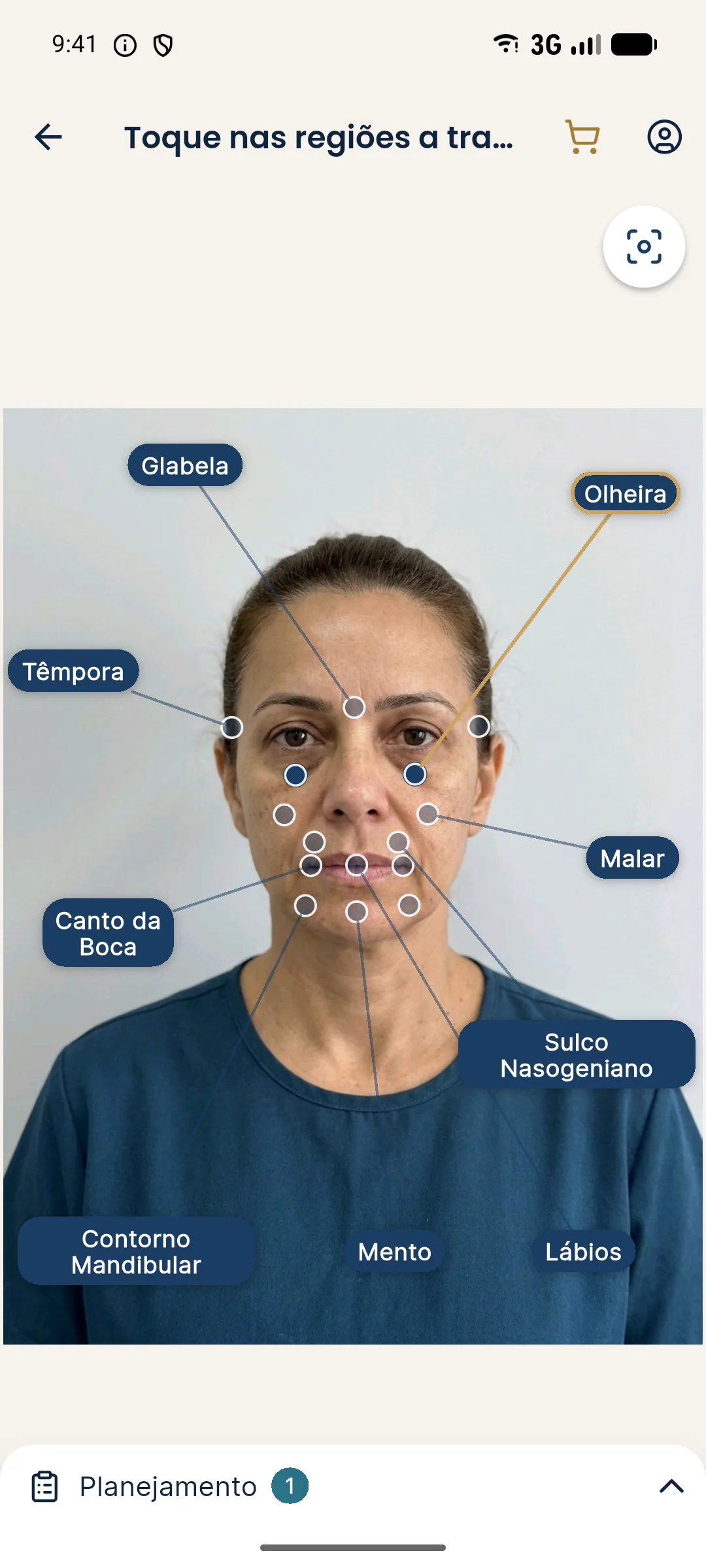
In the app, lower eyelid smoothing and under-eye filler share the same point, Under-eye. The simulation shows the effect of the point as a whole, not of each indication separately. The ml is the total for the bilateral area: with 1 ml, about 0.5 ml on each side.
A useful note for the consultation: if the patient has a large bag, the projection will not "erase" the bag, and that helps explain why filler is not the best indication for them.
How to simulate in 3 steps
- In New projection, enter the patient's name and use a frontal photo with light from the front, looking at the camera.
- In the marking screen, tap the Under-eye point and set the total volume in the Plan (from 0.5 ml, in 0.5 steps).
- Tap Create projection and compare on the Before / After slider.
Details and screenshots in how to mark areas and volumes.
Frequently asked questions
Does filler remove eye bags?
It does not remove the bag. In mild, selected cases, it can camouflage the transition between the bag and the cheek. Prominent fat bags usually have a surgical indication.
How long does lower eyelid smoothing with hyaluronic acid last?
Generally 9 to 12 months, and it can vary with the product, the volume and the patient's metabolism.
What are the risks of filling the lower eyelid?
The main ones are persistent swelling, Tyndall effect, irregularities, apparent worsening of the bag and vascular occlusion. Hyaluronidase must be available.
What is the difference between filling the tear trough and smoothing the lower eyelid?
Tear trough filler treats the hollow of the tear trough. Lower eyelid smoothing aims for a more continuous transition between eyelid and cheek, including camouflaging mild bags.
Harmy images are illustrative simulations generated by AI from the patient's photo to support the conversation between practitioner and patient. They are not a promise of results. Indication, technique, product and volume are solely the decision of the licensed practitioner. This content is for information only and does not replace a clinical assessment.