
Makeup and beards in the facial planning photo
Quick facts
- Topic
- How makeup and beards affect the reading of the planning photo
- Most affected areas
- Tear trough, nasolabial fold, chin and jawline
- Guidance
- Photo without heavy makeup and with the beard documented, or shoot two versions
- Important
- Covered skin or hair hides relief, and the projection inherits that
The planning photo looks like a simple step, but it is the foundation of everything that follows: analysis, marking, projection and the comparison at follow-up. Makeup and beards are two variables the professional does not always control, and they quietly change what the photo shows. Foundation and concealer hide under-eye hollows and folds. Face contouring creates shadows that do not exist. A beard hides the jawline and the chin projection.
This page shows how each of these elements changes the reading, what to ask the patient before the photo, how to document it when that is not possible, and how the projection inherits what the photo shows. For the general standard, see standardized frontal photo and hair, earrings and glasses in the assessment photo.
How does makeup change the reading of the photo?
Coverage products work on exactly what planning wants to see: shadow, color and relief. This applies to foundation, concealer, powder, contouring and highlighter, which create artificial light and shadow.
| Product | What it hides or creates | Affected area |
|---|---|---|
| Concealer | Darkens or lightens the under-eye area | Periorbital region |
| Foundation and powder | Evens out the skin and erases texture | Whole face |
| Contour and blush | Creates artificial shadow and apparent projection | Cheekbone, jawline, nose |
| Highlighter | Creates shine that simulates volume | Cheekbone, nose, Cupid's bow |
| Dark lipstick or eyeliner | Changes the perception of shape and size | Lips and eyes |
On a patient wearing makeup, the under-eye hollow may seem nonexistent, the cheekbone may look more projected than it is and the contour may look more defined. A plan built on that image is based on a face that does not exist in real life without makeup. See also tear troughs: types and assessment.
What about beards and facial hair?
A beard hides structures the plan needs to see. The jawline, the chin projection and the labiomental fold are covered, and a patient with a full beard often has more definition than the photo shows, or less. A mustache also interferes with the reading of the upper lip and the philtrum.
There are points to watch:
- Dense beard: hides the contour and makes it hard to measure the chin.
- Trimmed or patchy beard: creates shadow that looks like a contour flaw.
- Long hair and sideburns: cover the jaw angle and the temple.
- Filled-in or drawn-on eyebrows: change the reading of position and gaze.
It is not appropriate to pressure the patient into changing their appearance for the plan. The approach is to document what is there and, when needed, assess the contour by other means, such as palpation and a conversation about what they know of their own face.
What should you ask the patient before the photo?
The best moment to control these variables is when booking the appointment. A short message avoids surprises.
If the patient arrives wearing makeup, offer makeup remover and a space to use it. If they decline, note it in the patient record and use the photo with that caveat. See the standard for light and distance in distance and lens in the assessment photo and the rule on expression in neutral expression in the planning photo.
What does this change in the Harmy projection?
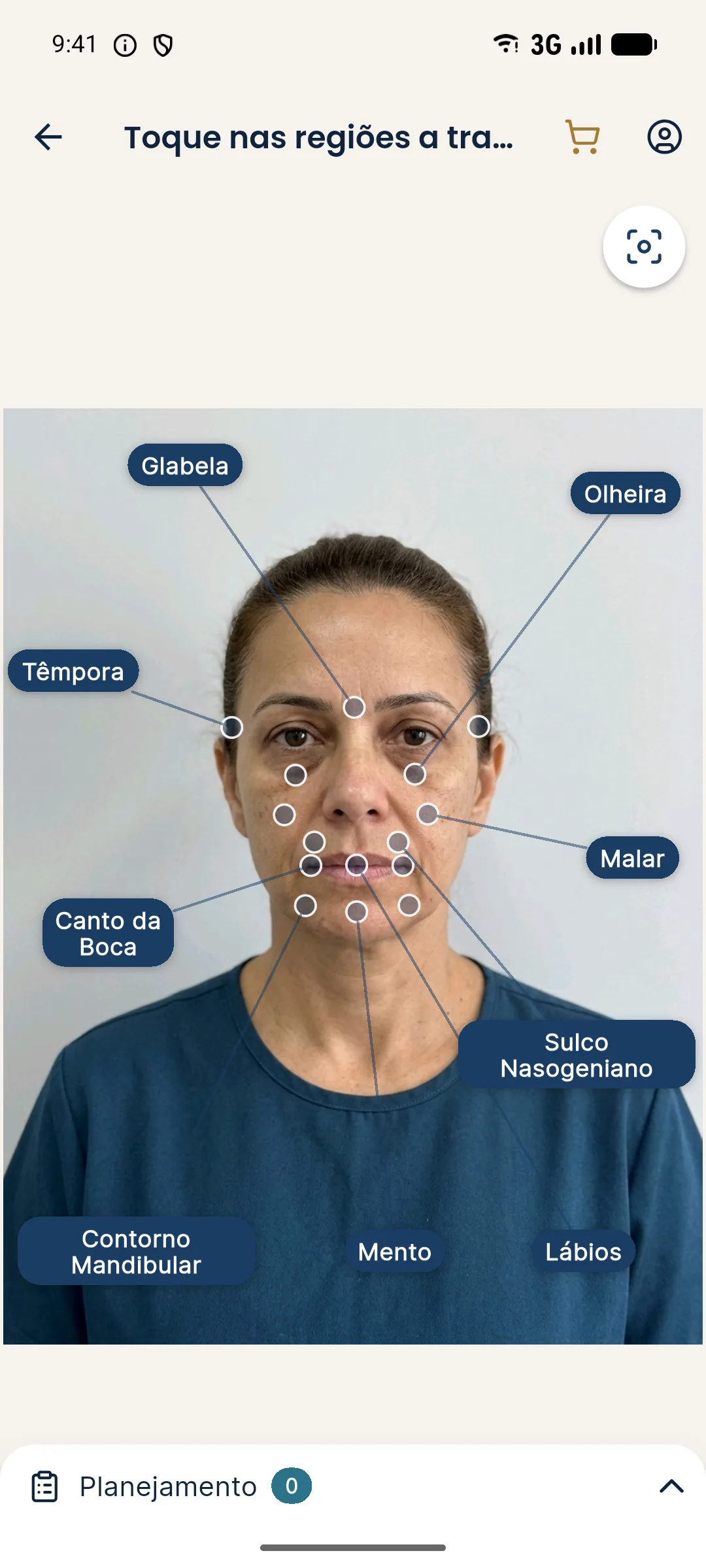
Harmy starts from the frontal photo you send. The app's AI does not alter makeup, skin retouching, expression, background, hair or lighting. That is good, because the projection does not "put on makeup", but it means the source image carries weight. If the under-eye hollow was hidden in the photo, the After shows an area that already looked treated.
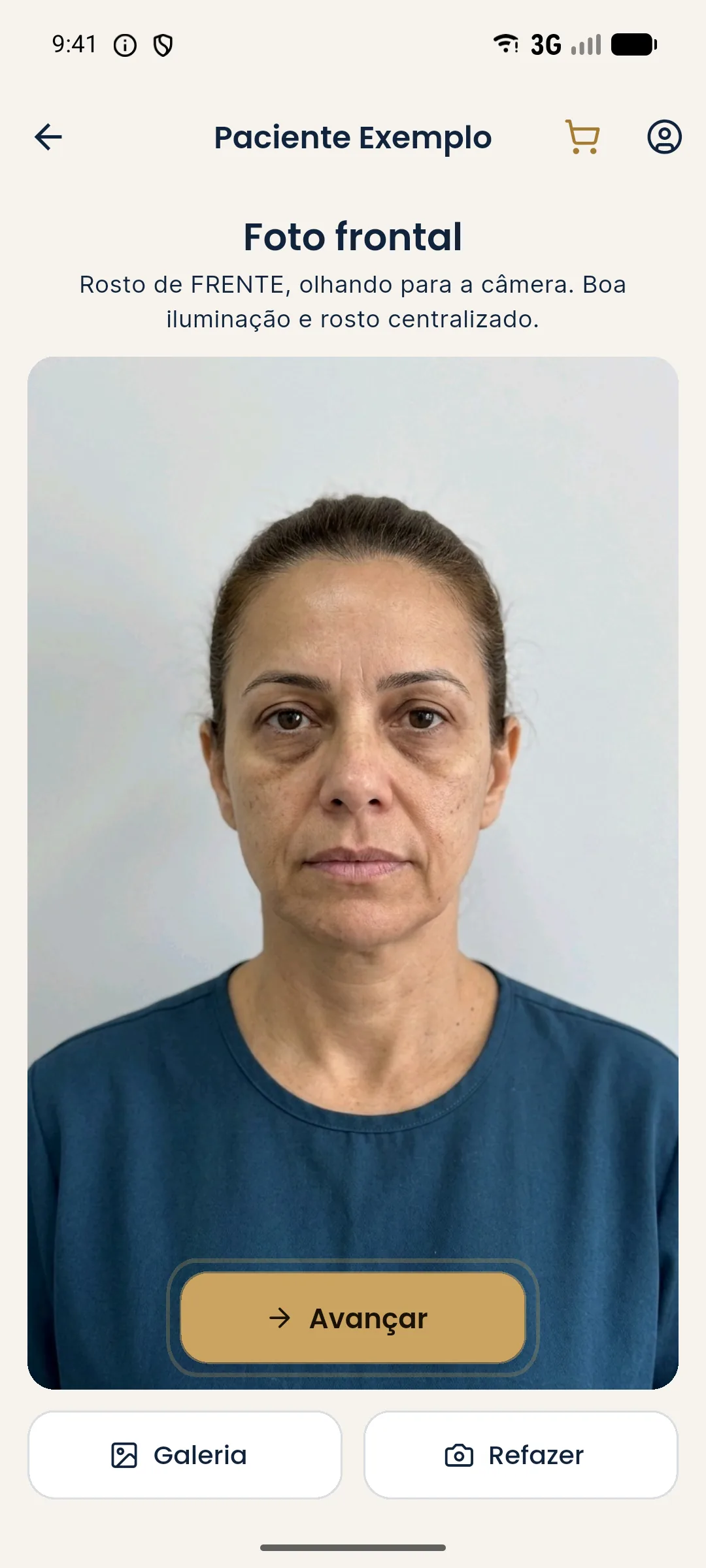
For the patient, the risk is expectation. A projection made over made-up skin may look more natural than the actual result on bare skin. Say so. And if the source photo has a beard covering the contour, the Jawline marking may be less faithful. Consider a better photo before spending a projection. Each projection costs R$ 3.99.
And in the follow-up comparison?
The comparison between the starting photo and the follow-up photo is only valid if conditions are similar. Different makeup, a trimmed beard or different light create differences that are not from the procedure. Standardize what the patient wears at follow-ups too, and note when it changes. See alignment errors when comparing photos and comparing projection and actual result.
And when makeup is part of the patient's life?
Some patients never leave home without makeup, and for them the desired result is seen, most of the time, with the skin covered. That does not remove the need for the photo without makeup, but it changes the conversation: the goal is for the natural face to look good, with makeup as a complement and not a disguise for what the plan left unresolved.
It is worth asking what they use to cover up, because the answer reveals the real concern. Someone who corrects the under-eye area every day, who contours the face to look more defined or who fills in the eyebrows is telling you, without meaning to, where the mirror bothers them. Note the answers in the plan record. Then, shoot both situations when it makes sense: without makeup, for planning, and with the usual makeup, to understand what the patient sees day to day.
Tone matters too. The person may feel exposed taking off makeup in front of others. Offer a private space and explain the reason for the photo. A welcoming environment improves the photo and trust in the plan.
Every planning decision belongs to the qualified professional, after assessment, and the simulation is illustrative, not a promise of results.
Frequently asked questions
Should the patient remove makeup for the planning photo?
Ideally the skin is free of heavy foundation, concealer and contouring, because they hide shadow and relief. If that is not possible, note that makeup was worn and consider retaking the photo.
Does a beard get in the way of assessing the jawline?
Yes, it can hide the jawline and the chin. It is worth shooting with the beard as it is and, when possible, with the contour visible, and noting which of the two was used.
Does makeup affect the Harmy projection?
The AI does not change makeup, but it starts from the photo you send. If relief is hidden in the source photo, the area is harder to read.
Can I ask the patient to shave?
That is a conversation and the patient's decision. In general it is enough to document the beard as it is and assess the contour in other ways, without pressure.
Harmy images are illustrative simulations generated by AI from the patient's photo to support the conversation between practitioner and patient. They are not a promise of results. Indication, technique, product and volume are solely the decision of the licensed practitioner. This content is for information only and does not replace a clinical assessment.