
Hair, Earrings and Glasses in the Assessment Photo
Quick facts
- Goal
- Photograph the face without hair and accessories changing how the areas read
- Adjustments
- Hair tied back and away from the face, no large earrings, glasses or necklaces
- Areas affected
- Forehead, temples, jawline, ear and neck
- In Harmy
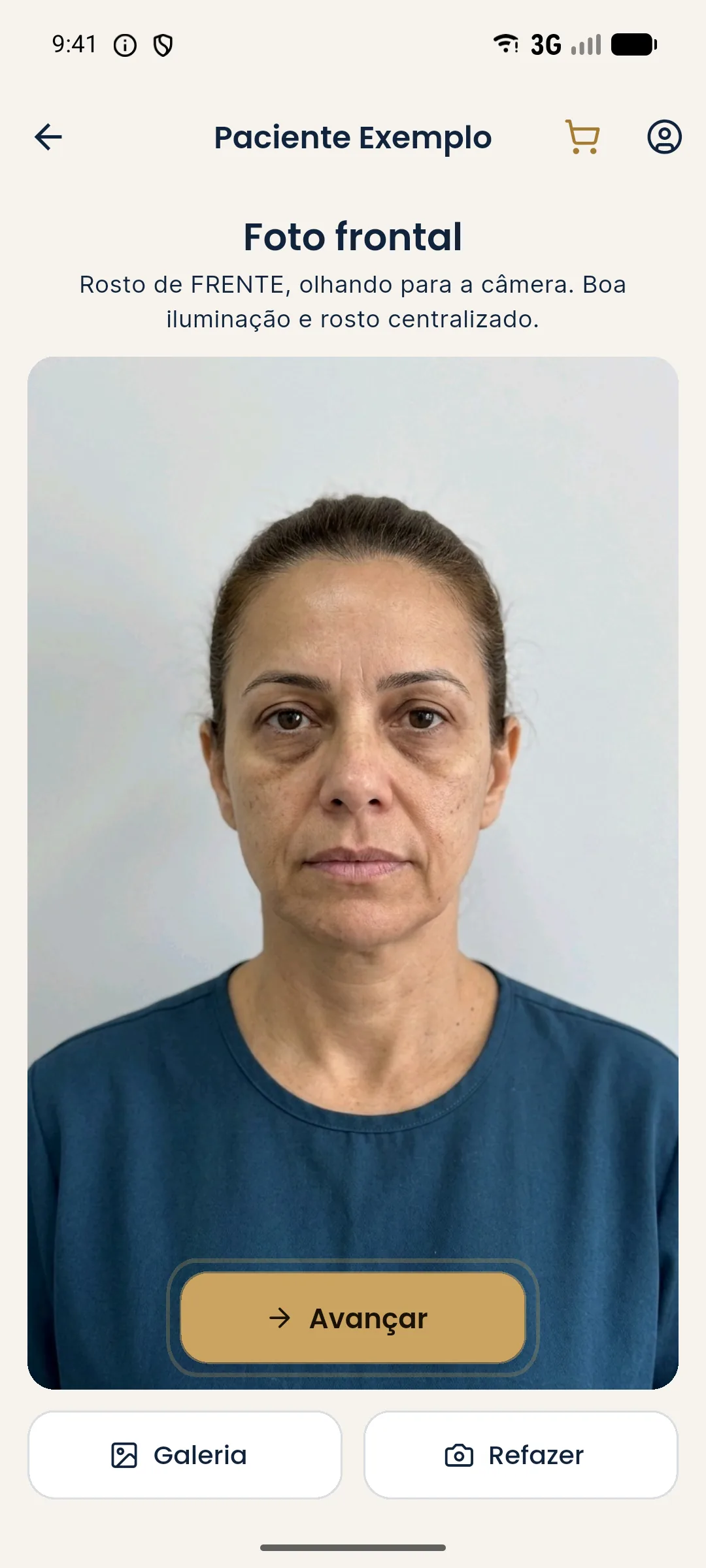
- The frontal photo must show a clear face for detection and projection
The assessment photo is the most used document in the plan. It supplies the symmetry reading, the record of the baseline state, the comparison at follow-up and, in Harmy, the basis of the projection. Misplaced hair or forgotten glasses can make that photo misleading without anyone noticing at the time. Only later does someone ask why the temple "looked" full or why the contour "didn't show."
This page lists what to adjust on the patient before photographing, explains what each accessory distorts and proposes a checklist for the clinic. For the complete recording routine, see standardized clinical photography and standardized frontal photo in Harmy.
Why do hair and accessories matter?
Reading the face depends on seeing the skin and structures without interference. Anything that covers, shades or diverts the eye changes the assessment. Three effects appear:
- Coverage: bangs, strands and beards hide areas you need to assess.
- Shadow and reflection: glasses and earrings create shadows and shine that look like a hollow, a spot or a wrinkle.
- Distraction and distortion: large pieces draw the eye and change the perception of proportion.
Because the photo serves as a future comparison, what changes from one session to the next also creates error. A different earring, loose hair in the second photo, and the comparison is no longer fair.
What does each item get in the way of?
| Item | Area affected | Possible distortion | Adjustment |
|---|---|---|---|
| Bangs | Forehead and eyebrow | Hide lines and the hairline | Tie back or move away completely |
| Side strands | Temples and cheekbone | Hide the temporal fossa and the lateral shadow | Tuck behind the ear or tie at the nape |
| Long loose hair | Jawline and neck | Covers the jawline | Tie up in a bun or high ponytail |
| Glasses | Under-eye, eyebrow, cheekbone | Shadows, reflection, arms covering the temple | Remove |
| Large earrings | Ear, jawline | Shadow on the contour, diverted attention | Remove |
| Necklace and collar | Neck | Change how the cervicomental angle reads | Remove or wear a low neckline |
| Beard | Chin and jaw | Hides the contour | Record it; if possible, also assess with a trimmed beard |
| Makeup | Skin, under-eye, lips | Covers spots and changes color | Remove, when possible |
| Piercing | Lips, nostrils, eyebrow | Reflection and change of shape | Remove, if possible |
How do you organize preparation before the photo?
A simple preparation, repeated every time, prevents rework. Keep hair clips, an elastic, makeup remover wipes and a tray for accessories at hand.
What about head position and lighting?
Accessories are only part of the problem. The head should be aligned to the Frankfort plane, and the light should be even, coming from the front, without hard shadows. Light from above deepens the under-eyes, and side light accentuates asymmetries. See frontal facial analysis: checklist and profile facial analysis: checklist.
How does this change the Harmy photo?
In Harmy, the app detects the face on the device itself and shows the marking points. The projection is generated from the frontal photo. Hair over the forehead, glasses over the eyes or a beard covering the contour hinder detection and the reading of the areas, and the projection becomes less faithful.
If the app does not find the face, the problem is often lighting, angle or something covering the face. See face not detected in Harmy and poor photo in Harmy: how to improve it.
How do you approach a patient who does not want to remove something?
Some patients are shy about showing their forehead or ears, wear glasses out of necessity or keep their hair covered for religious or cultural reasons. Respect that, explain the reason and offer alternatives.
If the patient cannot remove something, record it in the patient record. A photo with the accessory is better than no photo, but the analysis must take the limitation into account.
Keep the same standard at follow-ups
The comparison is only valid if the follow-up photo repeats the conditions of the baseline. If in the first photo the hair was tied back and there were no earrings, keep the same at follow-up. Note in the patient record what was removed, and ask the patient to come without heavy makeup on the follow-up day.
Common mistakes
- Photographing with glasses "just this once."
- Accepting bangs because the patient feels more comfortable.
- Forgetting to record that the beard was long in the baseline photo.
- Changing the background and lighting between visits.
- Comparing photos with and without makeup.
What if the patient is short on time or anxious?
On a busy day, the temptation is to skip the preparation and accept the photo as it is. Resist: two minutes of adjustment save a useless photo. For an anxious patient, explain each step before asking and show the photo on the screen afterward, so they see the purpose is clinical. A calm preparation repeated at every visit also builds the habit, and the patient starts arriving at follow-ups with their hair already tied back.
Frequently asked questions
Do I need to take off glasses for the assessment photo?
Yes. Glasses cover the periorbital area and the temple, create shadows and reflections and make it harder to read under-eyes, eyebrow and cheekbone. Take them off for Harmy's frontal photo too.
Does hair get in the way of the facial assessment?
Yes. Bangs cover the forehead, strands hide the temples and the side of the face, and loose hair covers the jawline. Tie the hair back to see these areas.
Do earrings and necklaces affect how the contour reads?
Large earrings draw the eye to the side and can shade the jawline. Necklaces and collars change how the neck reads. Ideally, photograph without accessories.
What about beards, makeup and piercings?
Beards cover the contour and the chin, makeup changes how the skin and under-eyes read, and piercings change how lips and nostrils read. When they cannot be removed, record it and take it into account in the analysis.
Harmy images are illustrative simulations generated by AI from the patient's photo to support the conversation between practitioner and patient. They are not a promise of results. Indication, technique, product and volume are solely the decision of the licensed practitioner. This content is for information only and does not replace a clinical assessment.