
Short or long upper third of the face: how to plan
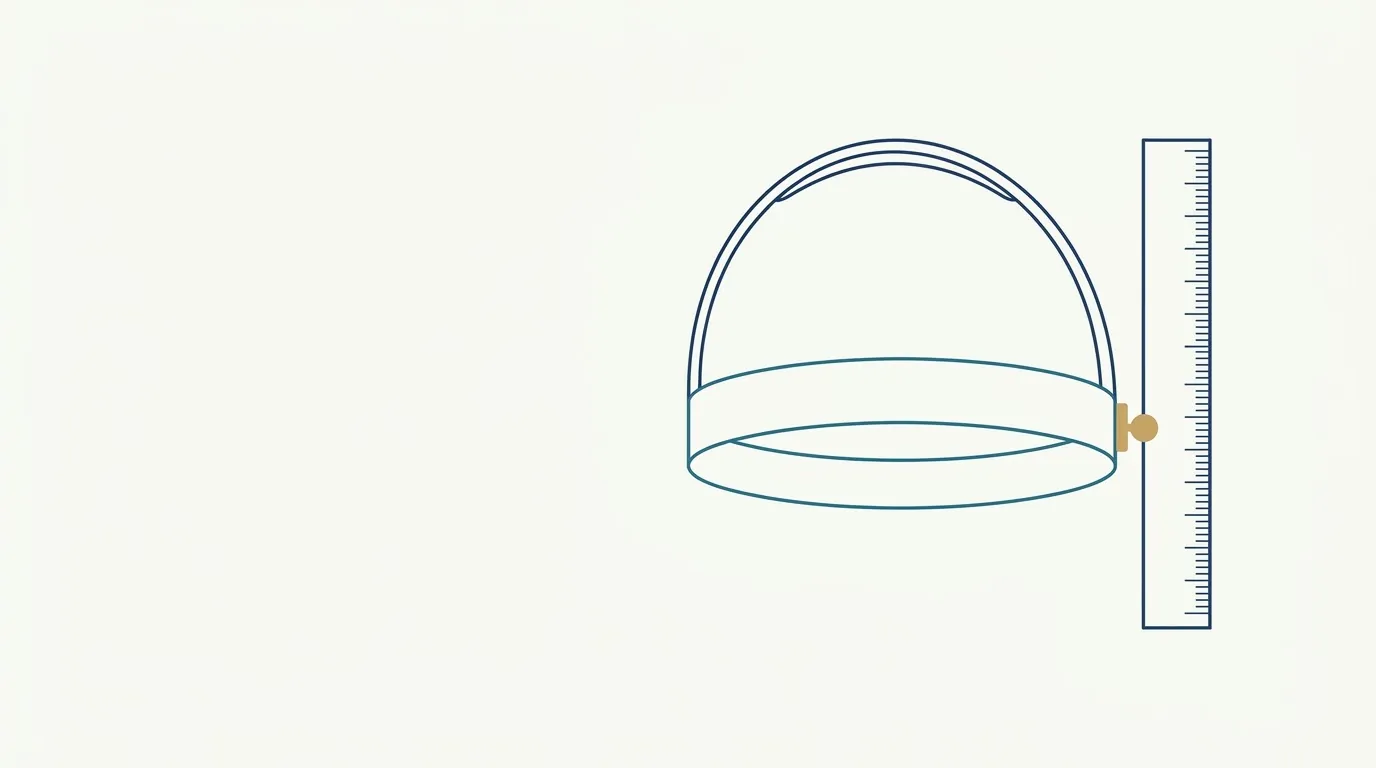
- Highlighted area
Quick facts
- Topic
- Proportionally short or long upper third
- Limits of the plan
- Hairline and frontal bone, which facial harmonization does not change
- What can be included
- Adjustments to the temple, glabella and forehead, at the professional's discretion
- Caution
- Toxin in a short forehead can make the eyes look heavy
- Who decides
- Qualified professional, after assessment
A forehead that is shorter or longer than the rest of the face is a matter of structure, not volume. It depends on the hairline, hair insertion and the frontal bone, and no filler or toxin changes that measurement. Even so, patients often bring the concern as "big forehead" or "small forehead" and expect an answer from facial harmonization. This page helps tell what is measurement from what is perception, decide what goes in the plan, and talk honestly about the limits.
How do you know whether the upper third is really short or long?
Measure. The upper third runs from the hairline to the glabella (the point between the brows), and should be compared with the middle and lower thirds. Because the hairline varies and can be receded, high, low, asymmetric or affected by alopecia, the reference needs to be noted. Use a standardized frontal photo, with the hair pulled back, the head in the Frankfort plane and the forehead relaxed. The routine is in forehead and hairline analysis in the plan and in reference lines on the frontal photo.
Two traps. First: hairstyle and hair falling over the forehead change the impression of height. Second: a raised or furrowed brow alters the measurement. Photograph with the face at rest and repeat if the expression is forced.
What can facial harmonization do in each case?
| Situation | What harmonization does not do | What can enter the conversation |
|---|---|---|
| Long forehead (large upper third) | Does not reduce the height | Adjust how it reads with the temples and, in some cases, frontal projection; beware of excess |
| Short forehead | Does not increase the height | Avoid toxin that weighs down the brow; assess the glabella and the eyes |
| Receded hairline | Does not restore hair | Refer for hair assessment, if the patient wants |
| Flat forehead or poor frontal projection | Does not change the bone | Assess conservative volume, at the professional's discretion |
| Hollow temples | Does not change the vertical measurement | Conservative filler can soften the lateral transition |
The middle column is the most important for consent. Saying what harmonization does not do avoids the wrong expectation and protects the professional. More in when the bone is the problem, not the volume.
What changes with a short forehead?
In a short forehead, the space between the brow and the hairline is small. Reducing frontalis action too much with toxin can drop the brow and make the eyes look even more "closed". The reasoning is usually less is more: keep some frontalis action, pay attention to the glabella and assess brow position before any decision. The relationship with the brow is in ideal brow position in planning.
If the patient also has a heavy upper eyelid, the risk of worsening the look with toxin in the forehead is higher. In that case, the plan may prioritize other areas and leave the forehead in the background, with a specific assessment.
What changes with a long forehead?
In a long forehead, the space above the brow is large, and the upper face looks "stretched". Patients often ask for filler in the forehead, imagining that volume will "shorten" it. But volume in the forehead does not change the height, and excess can give a bulging forehead look. The way it reads usually improves more with attention to the temples, the brow and the balance between thirds.
When there are marked frontal lines, toxin can enter the conversation, with the same caution as always. See glabella and forehead: combining in the plan and complete upper third in the plan.
Which risks call for attention?
With toxin: brow drop, asymmetry, a heavy look and headache. With filler in the glabella, temples or forehead: swelling, bruising, irregularities and, rarely and seriously, vascular occlusion. The glabella and temples are vascular attention areas. When hyaluronic acid is used, hyaluronidase must be available. The review is in vascular danger zones of the face.
None of these risks is greater or smaller because the forehead is short or long; what changes is the aesthetic cost of the error. In a short forehead, any extra weight on the brow is visible. In a long forehead, any irregularity covers a large area. That is why the plan is usually conservative and reassessed.
How do you simulate it in Harmy?
Harmy does not change forehead height or the hairline. It simulates the volume of the areas marked on the frontal photo, and in the upper third the available points are Glabella and Temple. You set the ml and the intensity (Subtle, Moderate or Pronounced) and create the projection.
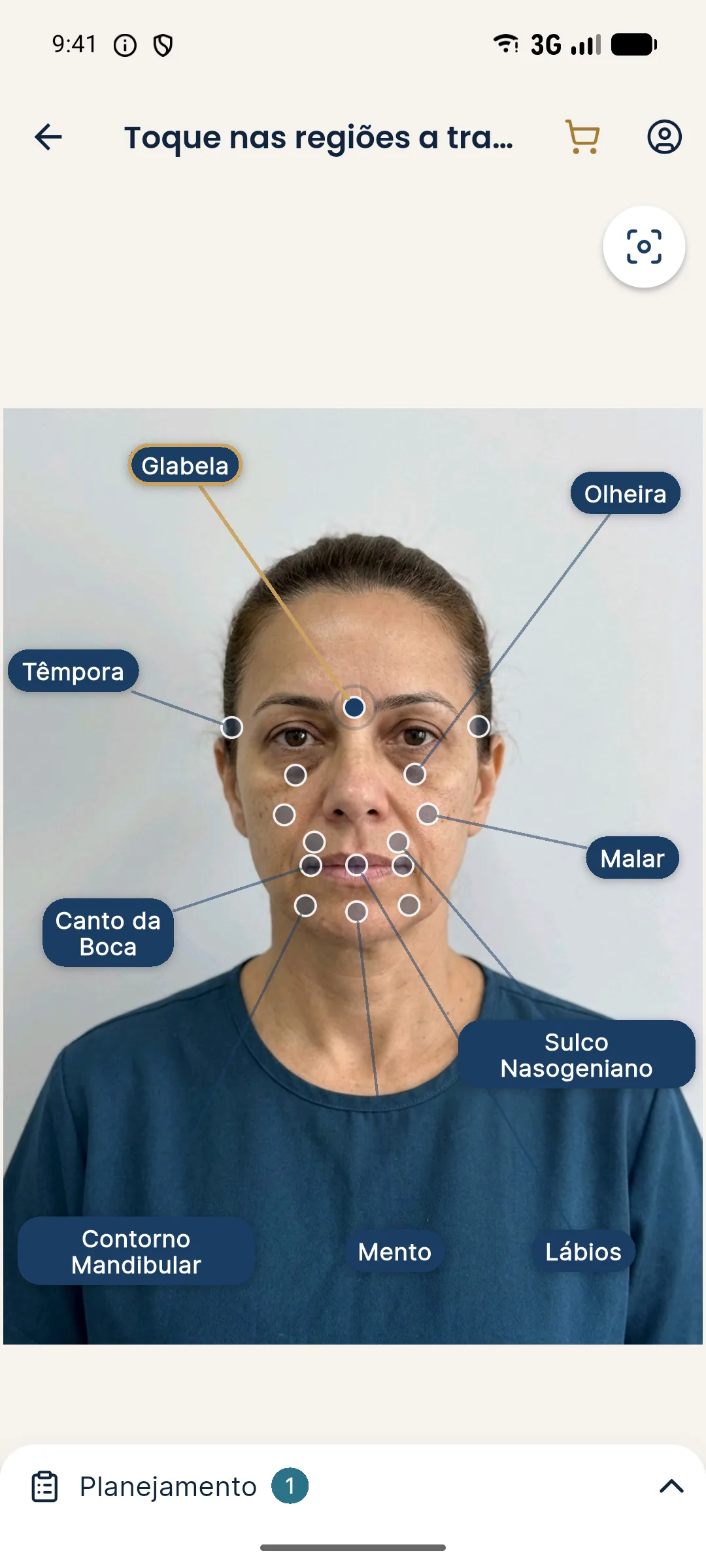
The simulation is useful to show the effect of a subtle lateral adjustment, for example in the temple, and to explain that the upper third does not "shrink" or "grow". The AI respects the volume and does not alter hair or background, which helps keep the hairline intact in the image, precisely to avoid creating a false expectation. It is an illustrative simulation, not a promise of results.
For the general limits, see limits of 2D simulation.
How do you organize the plan?
Splitting into stages follows the logic of when to split the volume across sessions.
What to tell the patient?
This line opens the conversation without promising the impossible. If the patient insists on changing forehead height, explain that other specialties handle that and record the guidance.
Check before the plan
Quick review
Summary
A short or long upper third is a matter of measurement and structure, not volume. Measure in a standardized photo, say what harmonization does not change, choose lateral and muscular adjustments with caution, split into stages and use Harmy's simulation only to show the effect of ml in the marked areas, without promising a change in height.
Frequently asked questions
Can facial harmonization change forehead height?
No. Forehead height depends on the hairline and bone structure. Harmonization works on volume and muscle, and it can improve how the face reads, but it does not change the measurement.
Can a short forehead get toxin?
It can, but with more caution. In a short forehead, reducing frontalis action too much can weigh down the brow and make the eyes look more closed. The dose and indication are up to the professional.
Does a long forehead call for filler?
Not always. In a long forehead, what changes how it reads is usually frontal projection and the temples, but the decision is clinical. Filling just to fill can leave the area heavy.
Does Harmy simulate a short or long upper third?
No. The app does not change forehead height or the hairline. It simulates the volume of the areas marked on the frontal photo, such as Glabella and Temple.
Harmy images are illustrative simulations generated by AI from the patient's photo to support the conversation between practitioner and patient. They are not a promise of results. Indication, technique, product and volume are solely the decision of the licensed practitioner. This content is for information only and does not replace a clinical assessment.