
Wide zygomatic arch: where HOF reaches its limit in the midface

- Highlighted area
Quick facts
- Concern
- Face that looks wide at the cheekbones, with width set by the zygomatic arch
- What does not change
- Bone width, which only surgery can modify
- What can change
- Perceived width through shadow, lateral volume and proportion with the jaw
- Central caution
- Do not add lateral volume that widens the face even more
When a patient says their face is "wide at the cheeks," the professional's first question is: what is wide, the bone or what sits on top of it? The zygomatic arch is the lateral bony bridge of the midface, formed by the zygomatic bone and the temporal process. It largely defines bizygomatic width, the widest dimension of the face, and harmonization does not change it.
The good news is that in many patients the concern is a mix of bone, fat, muscle and proportion. The soft tissue part responds to clinical management; the bony part does not. This page organizes that separation. The anatomy of the area is covered in zygomatic area and cheekbone.
What determines the width of the midface?
The perceived width of the midface comes from layers adding up:
| Layer | Contribution to width | Does HOF change it? |
|---|---|---|
| Bone (zygomatic arch and malar bone) | Base of the width | No |
| Deep and superficial cheek fat | Volume that rounds the contour | In part, depending on the cause |
| Muscles (masseter, temporalis, zygomaticus) | Contribute to lateral width | Yes, toxin acts on some of them |
| Skin and ligaments | Determine sagging and tension | Partially |
| Proportion with the jaw and forehead | Sets the impression of a "wide face" | Yes, through the overall plan |
This explains why two patients with the same bone measurement can look as if they have very different widths: shadow, fat descent and the jaw change how it reads. The rule of fifths helps measure width on the frontal photo relative to the width of the eyes, and the page on face width by fifths goes deeper into the method.
How to assess a wide arch
The examination is simple, but it needs method. Patient seated, head straight and face at rest.
Palpation in two conditions (rest and contraction) is the most informative. If the width is the same with the muscle relaxed and contracted and the skin pinched, bone accounts for almost everything. If there is a difference, the plan gains options.
What HOF can and cannot do
It cannot: reduce bone. When the concern is purely bony, the patient needs to hear this clearly, without hedging, before any plan. Bone contouring surgery is the decision of another specialty, with its own assessment, and the professional should refer when appropriate.
It can, within limits:
- Redistribute proportion: projecting the chin, defining the jaw or adding forward projection to the cheekbone changes the relationship between widths and reduces the impression of width in the midface.
- Avoid making it worse: in a face with a wide arch, lateral zygomatic filler tends to widen it further. The plan usually favors forward projection, in cheekbone filler.
- Act on what is soft tissue: if the masseter is bulky, toxin can reduce the width of the lower face; if there is excess fat, the conversation changes. See cheeks that are too full and toxin in the masseter.
Lateral zygomatic or anterior cheekbone?
The distinction between cheekbone and zygomatic area is a practical one: the cheekbone usually refers to the anterior, central portion of the apple of the cheek, and the zygomatic area to the lateral portion, along the arch. With a wide arch, projecting the anterior cheekbone is the more conservative path. See the full difference in zygomatic and lateral cheekbone in the plan and in high cheekbone and hollow cheek, a case in which prominent bone coexists with volume loss beneath it.
The risks of midface filler include swelling, bruising, asymmetry, nodules and irregularities. Relevant vessels in the area include the transverse facial artery and branches of the facial artery, and the infraorbital nerve deserves care in more anterior areas. Hyaluronidase must be available whenever hyaluronic acid is used.
How to simulate in Harmy
In Harmy, the Cheekbone point represents the projection of the apple of the cheek on the frontal photo. Because the projection uses only a frontal photo, it shows the visual effect of the relationship between areas, but not lateral projection or the measurement of the arch. For bilateral areas, the ml is the total, split between the two sides.
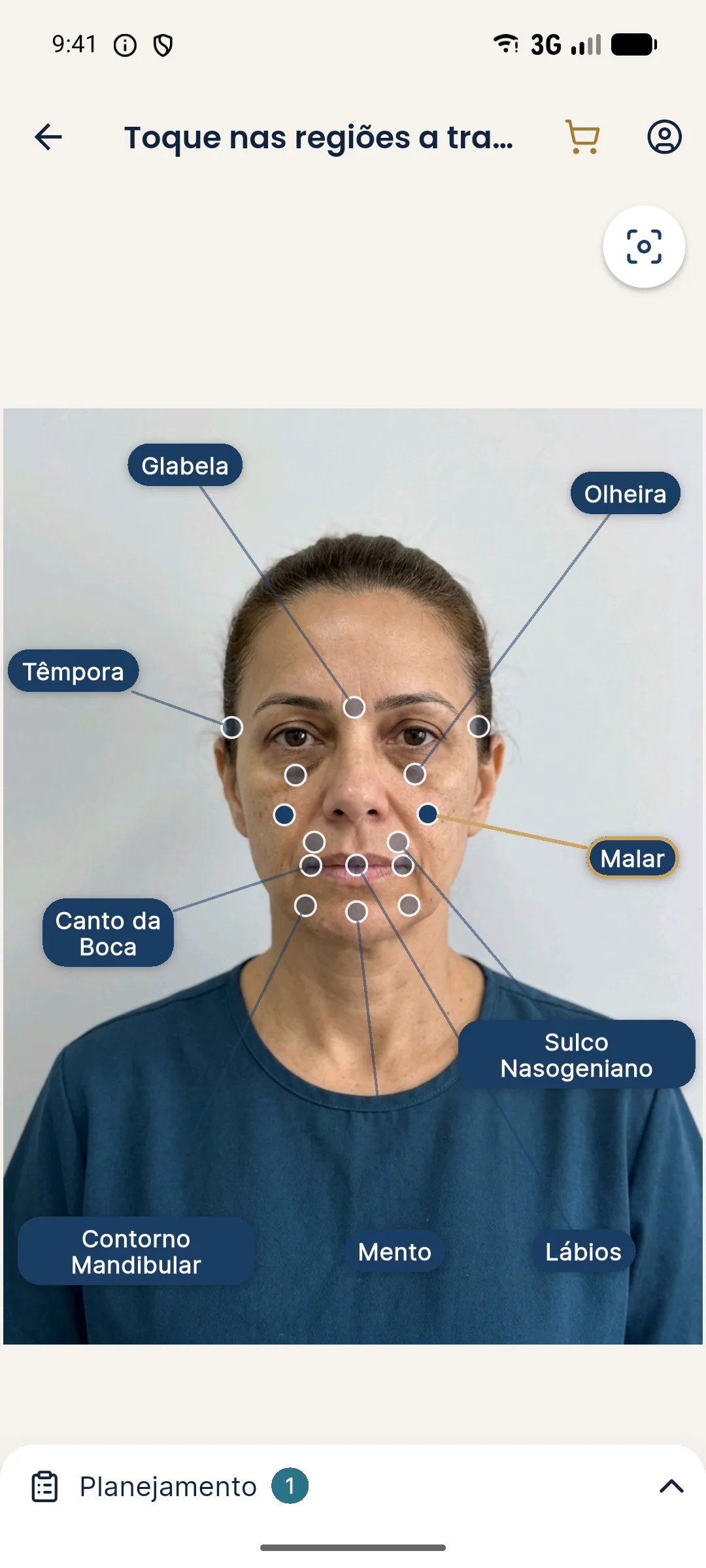
An honest use for this concern is to compare two simulations of the same face: one with only Cheekbone and another with only Jawline or Chin. The patient sees that the impression of width changes more through proportion than through lateral volume, and the topic moves from promise to conversation.
When to refer
If the central concern is bone width and the patient does not accept the limitation, the path is a frank conversation and, when appropriate, referral for surgical assessment. In those cases, doing HOF only to "disguise" it can delay the right decision. Document the conversation and the agreed expectation, and record standardized photos. For cases in which the whole face looks wide, see also wide face and plan for a wide face. Volumes and technique are always left to the discretion of the licensed professional, in line with the rules of their professional council in Brazil.
Frequently asked questions
Can harmonization slim down a wide zygomatic arch?
Not in the bony sense. Harmonization does not reduce bone. It can influence perceived width by adjusting the proportion between the cheekbones, the jaw and the forward projection of the face, at the discretion of the licensed professional.
Does zygomatic filler make the face wider?
If placed laterally, it can. In a face with an already wide arch, filler usually favors forward projection rather than lateral, to avoid widening further. The decision is the professional's, after assessment.
How do you tell wide bone from full cheeks?
By palpation and by photo. Bone is hard and the width stays the same when you pinch or relax the cheek; fat and muscle change when you clench the teeth, when you smile and when you palpate in layers.
Does botox in the masseter slim the zygomatic arch?
No. The toxin acts on the masseter muscle, which sits below the arch, and can reduce the width of the lower face. The bony arch is not altered.
Harmy images are illustrative simulations generated by AI from the patient's photo to support the conversation between practitioner and patient. They are not a promise of results. Indication, technique, product and volume are solely the decision of the licensed practitioner. This content is for information only and does not replace a clinical assessment.