
Cheek filler: how many ml are needed?

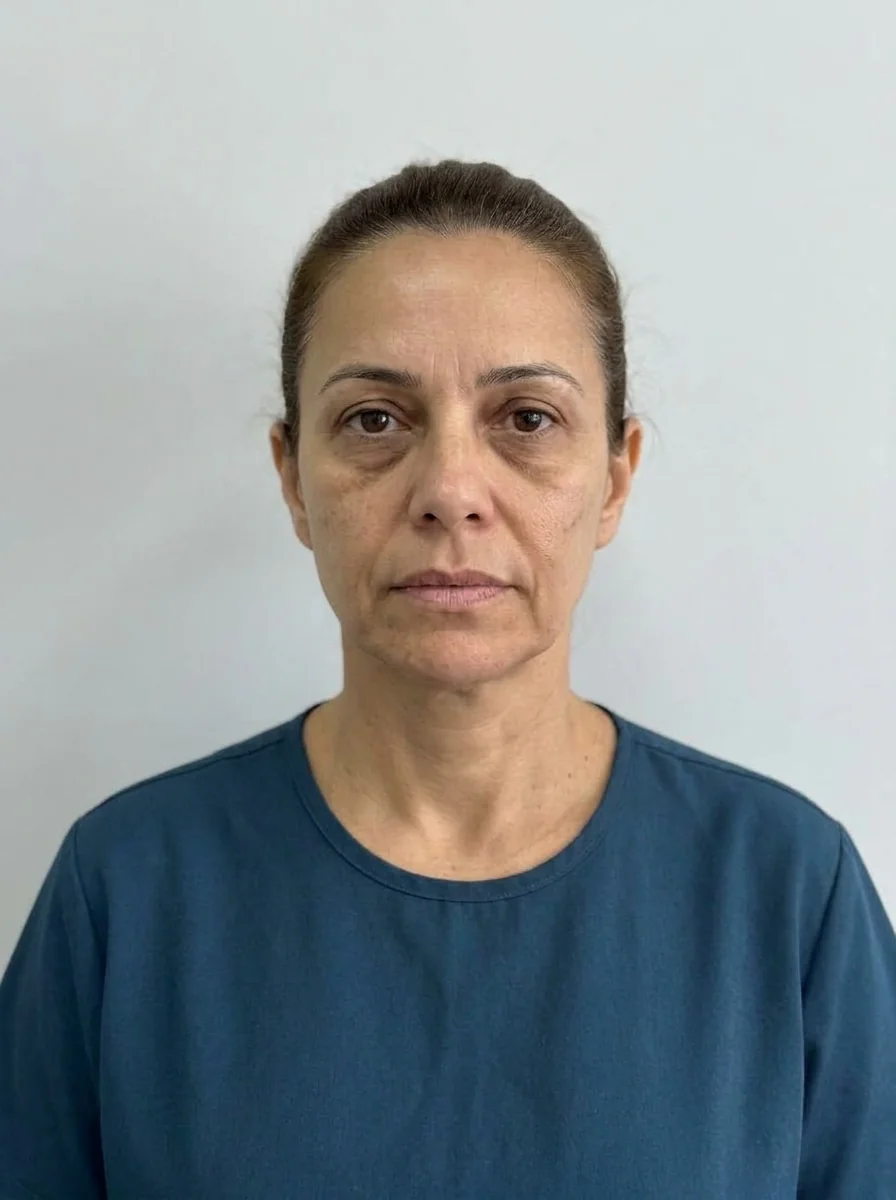 BeforeSimulation
Quick facts
- Question
- How many ml of cheek filler
- Usual range
- Usually a few ml in total, generally split between both sides and into stages
- What defines it
- Bone projection, laxity, volume lost and goal
- Who decides
- The licensed professional, after assessment
"How many ml for the cheekbone?" is a question about price, results and safety all at once. The answer is a range and a logic. Cheek filler usually takes a few milliliters in total, but that "few" changes a lot with the structure of the face, and the most common mistake is treating ml as a measure of results.
This page explains what makes the volume vary and how to talk about it. Setting the volume and the technique are up to the licensed professional, according to the rules of their professional council (in Brazil).
What decides the volume
| Factor | How it weighs |
|---|---|
| Bone projection | A poorly projected zygomatic bone usually calls for more volume than a well projected one |
| Volume loss | Faces with resorbed fat and bone call for greater replacement |
| Laxity | Lax skin may not respond to volume alone |
| Face width | Wide faces have less room for lateral volume |
| Goal | Soften, project or "lift" the look |
| Product | Firmness and cohesivity influence the ml needed |
| History | First time or maintenance |
A face with well projected bone and little loss may need a small volume. A face with significant loss, more. But "more" has a ceiling: past a certain point, the gel only widens and rounds. To understand the limits, see does cheek filler make the face look thinner?.
Per side or in total?
One source of confusion is the reported ml. Some professionals talk about the total and others, per side. Ask for clarity so the patient can compare quotes. In Harmy, for bilateral areas such as the cheekbone, the marked ml is the total, and the app splits it between the two sides in the projection.
In stages, not all at once
Splitting the injection into stages is usually safer and more precise. The first stage lays the base; the follow-up, once the swelling has gone down, lets you assess whether the volume is enough. This reduces the risk of overfilling and asymmetry. The reasoning is detailed in cheek filler: how many sessions and touch-ups.
Harmy's shortcuts and simulations
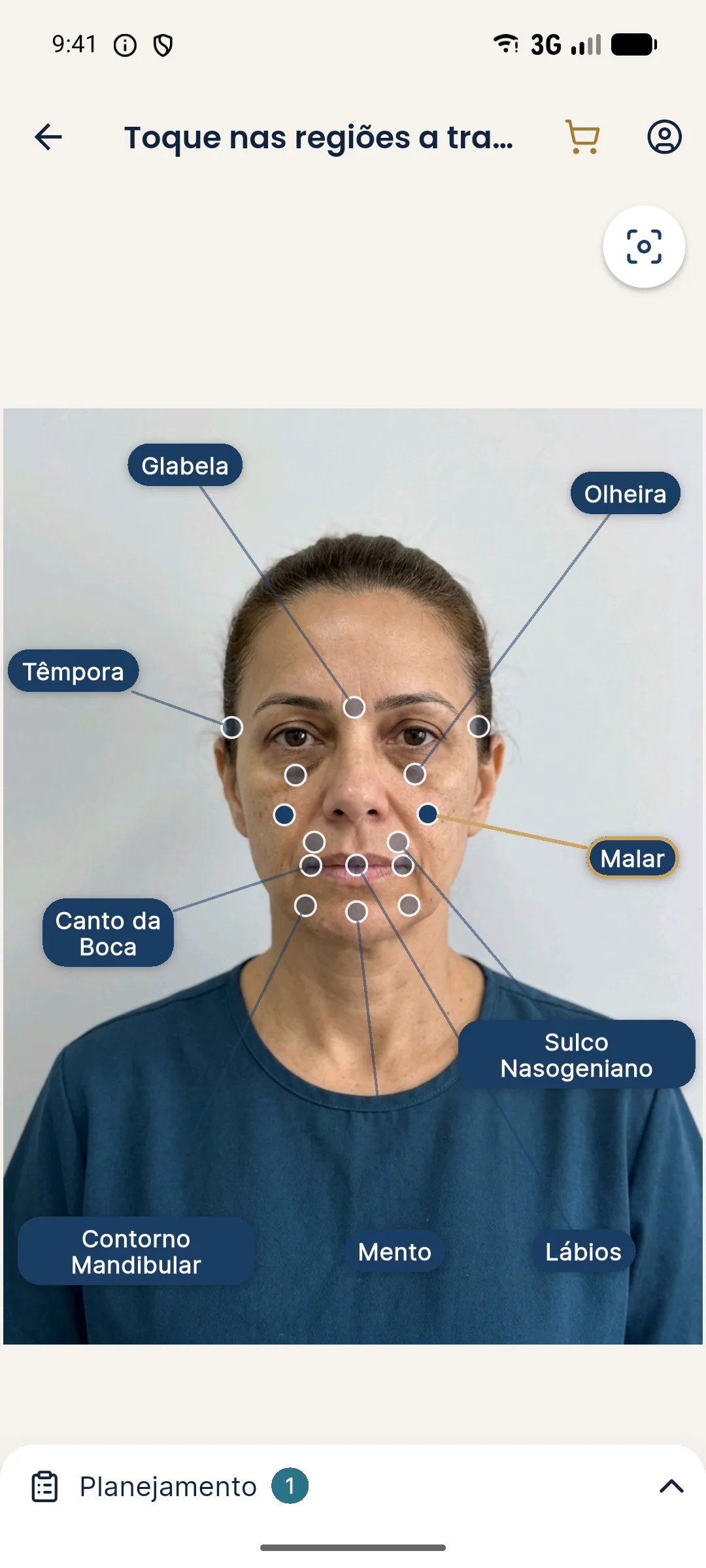
Harmy lets you mark the Cheekbone point with ml between 0.5 and 5, in steps of 0.5, and intensity Subtle, Moderate or Pronounced. The "Maintenance" shortcut brings cheekbone at 1 ml in Subtle intensity, and the "Full harmonization" shortcut brings cheekbone at 2 ml in Moderate intensity. The app's official simulation for the area uses 2 ml. By testing 1 ml and 2 ml on the same photo, the patient sees the difference and takes part in the decision. The projection is illustrative, an illustrative simulation and not a promise of results.
When ml is not the answer
If the patient asks to "lift" and the face has significant laxity, more ml will not solve it. In those cases, the conversation turns to support, biostimulator or threads; see cheek filler or PDO threads. If the issue is major bone deficiency, you can discuss cheek filler or implant. And if the problem is asymmetry, the adjustment is in distribution, not total.
How to close the quote
Describe the area, the goal and the staging strategy, and make clear whether the ml is total or per side. Include whether follow-up and touch-up are part of the price. Harmy's PDF quote is issued per area, with a validity date, and supports that transparency.
Summary
The cheekbone ml follows from the design. Bone structure, volume loss and goal set the range; stages and follow-up refine it. More ml is not the same as better.
Frequently asked questions
How many ml of hyaluronic acid are used in the cheekbone?
Usually a few milliliters in total, split between the two sides. The amount depends on bone structure, volume loss and goal, and is set by the professional.
Is the ml per side or in total?
It depends on how the professional reports it. In Harmy, for bilateral areas, the marked ml is the total, split between the two sides.
Do more ml make the face look more lifted?
Not necessarily. Excess widens the face and flattens the gaze. The result depends on proportion and support.
Can it be done in two stages?
Yes, and many professionals prefer it, to follow the response and avoid overfilling.
Harmy images are illustrative simulations generated by AI from the patient's photo to support the conversation between practitioner and patient. They are not a promise of results. Indication, technique, product and volume are solely the decision of the licensed practitioner. This content is for information only and does not replace a clinical assessment.