
Cheek Without Volume When Smiling: Dynamic Cheekbone Assessment

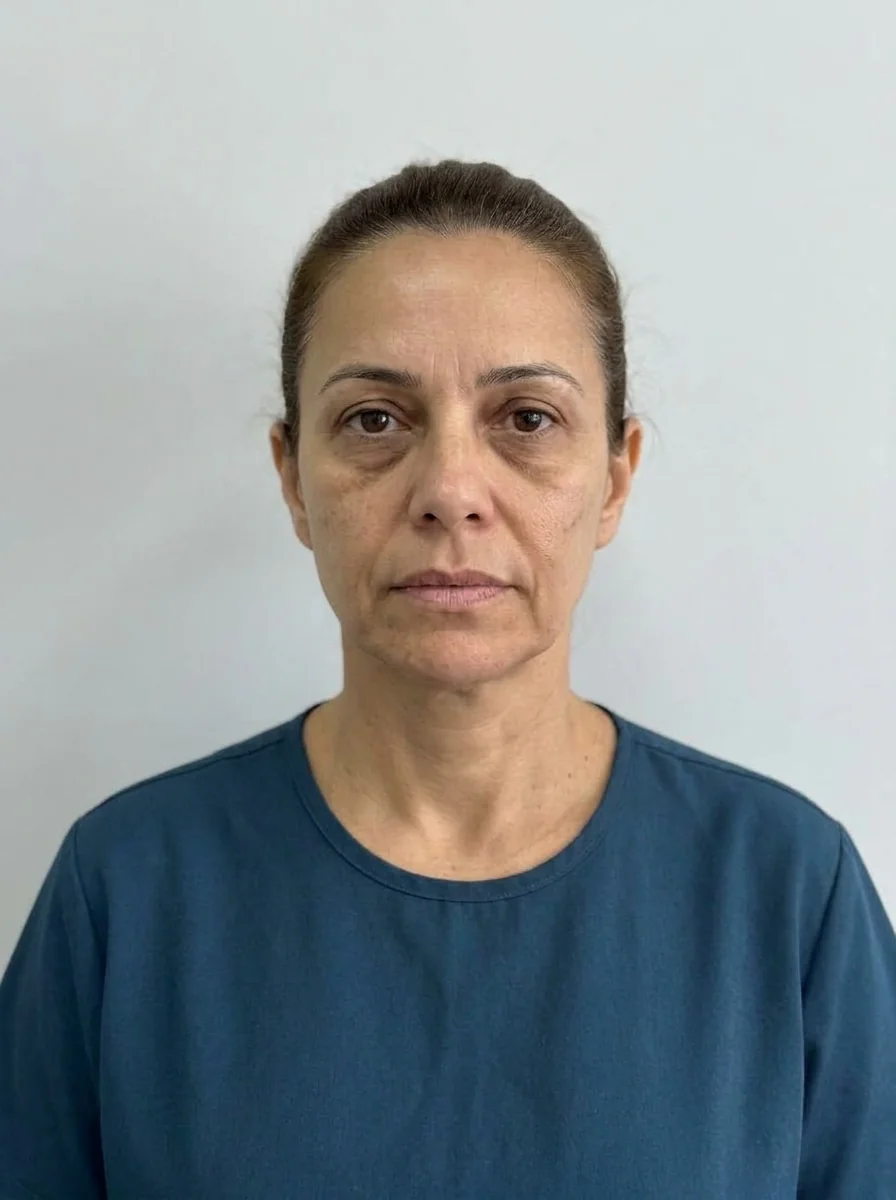 BeforeSimulation
- Nerve
- Highlighted area
Quick facts
- Concern
- The apple of the cheek does not show when smiling, or the smile flattens the cheek
- Method
- Compare the cheekbone at rest, in a soft smile and in a full smile
- Structures
- Malar fat, zygomaticus muscles and zygomatic ligament
- Caution
- Too much volume at rest can look hard when smiling
There is one type of patient who, at rest, has a reasonable cheekbone, but when smiling the cheek "disappears" or flattens, and another who has a prominent cheek when smiling and a flat one at rest. The difference between the two shows a truth that is rarely discussed: malar volume is dynamic, and planning from a still photo alone leads to incomplete choices.
This page proposes an assessment in motion and explains how it changes the plan. It complements flat cheekbone, hollow cheeks and dynamic facial analysis in expression.
How does the cheek behave in the smile?
When smiling, the zygomaticus major and zygomaticus minor muscles pull the mouth corner up and out, and the cheek fat shifts toward the apple of the cheek. The skin over the cheekbone stretches vertically and the "pouch" of fat gathers above the fold. In a young face, the effect is a full apple, and the nasolabial fold stays soft.
Over time, the behavior changes:
| Situation | At rest | In the smile |
|---|---|---|
| Intact cheekbone | Discreet, soft projection | Full apple, lifted cheek |
| Malar fat loss | Flat cheekbone | Cheek barely lifts, fold pronounced |
| Fat descent | Low cheekbone, deep nasolabial fold | Fat rises poorly, folds over the groove |
| Excess filler | Prominent, firm apple | Shows up as a ball or block |
| Overactive muscle | Normal | Compression of the volume and a "squeezed" eye |
The prezygomatic space and the SOOF are two fat compartments relevant to this movement, and the zygomatic ligament anchors the skin to the bone. The layered reasoning is in midface fat compartments in the plan.
How to assess in motion
Dynamic assessment is simple, but it needs to be systematic. A short video is ideal.
What this changes in the plan
Dynamic assessment guides the amount and placement of volume in the cheekbone, at the discretion of the licensed professional.
- Little volume at rest and in the smile: indicates fat and support loss, a candidate for cheekbone filler in stages.
- Reasonable volume at rest, but no lift in the smile: there may be fat descent or reduced muscle action, and the approach is different.
- Volume present in the smile, flat at rest: be careful, because filling to "replace" at rest can make the cheekbone too prominent when smiling.
- Creases when smiling: suggest excess or poor placement of earlier product, and the assessment should check for old filler.
A practical rule is that the ideal cheekbone in the office is the one that stays harmonious in both conditions. For the patient who smiles a lot, the plan is more conservative. See also ideal cheekbone projection, cheekbone and dark circles: combining in the plan and malar bags: assessment.
Risks
Midface filler has the usual risks: swelling, bruising, asymmetry, nodules and irregularities, plus less frequent vascular complications. The area has branches of the transverse facial artery and the infraorbital nerve, and hyaluronic acid requires hyaluronidase to be available. Proximity to the eye calls for extra care with swelling and the Tyndall effect in thin skin. The overview of the topic is in does cheekbone filler slim the face?.
How to show it in Harmy
In Harmy, the Cheekbone point simulates the support of the apple of the cheek in the frontal photo. The input photo is still, so the app does not show the smile: it shows the cheekbone at rest. The professional should use dynamic assessment through video or photos taken outside the app, and Harmy as support for the conversation about volume at rest.
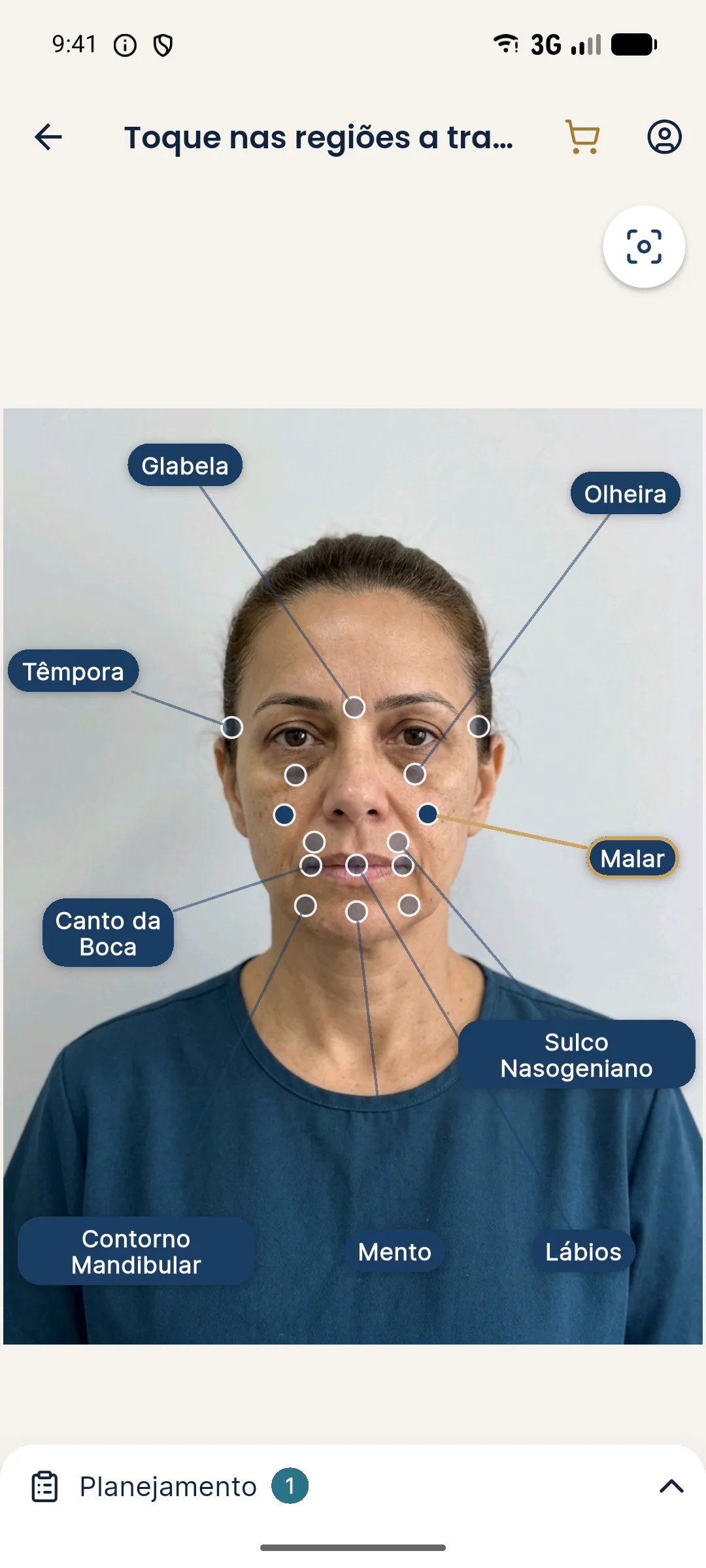
Make two projections with different intensities (Subtle and Moderate) and show the patient how visible the difference is. This helps in choosing the conservative path, and the projection changes only what was marked. In a bilateral area, the ml is the total, split between the two sides.
Age and smile dynamics
Smile dynamics change with age. In the young face, malar fat rises freely and forms a clear apple. Around middle age, the fat is less abundant and the nasolabial fold becomes more pronounced in the smile, which gives the patient the sense of a "cheek falling" only when smiling. In older faces, the smile can even accentuate laxity, with excess skin over the fold.
This leads to a different plan by age group: in the younger face, the focus is on preserving movement and avoiding excess volume; in the middle-aged face, restoring cheekbone support can improve the smile; in the older face, the conversation includes laxity and limits. Record the age, the movement and the plan's conclusion. Assessment in motion is a skill that is trained, and it is worth recording the video before deciding on any injection.
Wrap-up
Record the video, the frames and the conclusion about movement, and tell the patient that the plan takes the smile into account. For related concerns, see high cheekbone and hollow cheek and tired face. Volumes and techniques are at the discretion of the licensed professional, in accordance with the rules of their professional council in Brazil.
Frequently asked questions
Why does my cheek disappear when I smile?
When smiling, the zygomaticus muscles lift the malar fat, which rises and gathers at the apple of the cheek. If there is little fat or a lot of fold, the effect is a flattened cheek or creases. Movement is part of the assessment.
Does cheekbone filler show when smiling?
It can. The product moves with the tissues, and excessive or poorly placed volume shows up as a ball when smiling. That is why the cheekbone is assessed in motion before and after.
Is assessing the cheekbone only at rest enough?
No. The face lives in motion and the smile changes the distribution of volume. Assessing at rest and while smiling avoids planning for an expression the patient rarely makes.
Does a biostimulator help a cheek that disappears in the smile?
It can be considered for quality and support in suitable cases, at the discretion of the licensed professional. It works gradually and does not replace the assessment of movement.
Harmy images are illustrative simulations generated by AI from the patient's photo to support the conversation between practitioner and patient. They are not a promise of results. Indication, technique, product and volume are solely the decision of the licensed practitioner. This content is for information only and does not replace a clinical assessment.