
Tired-looking face: causes and how to plan

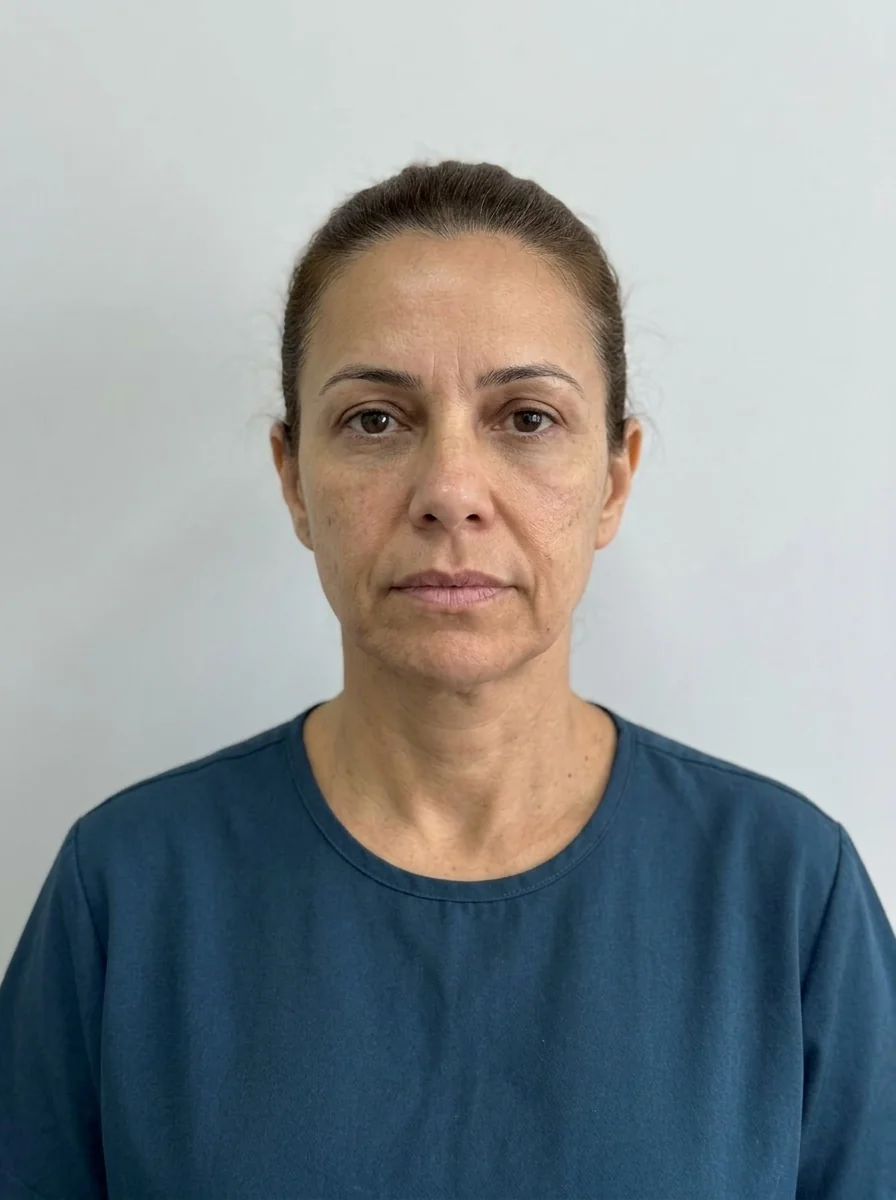 BeforeSimulation
- Nerve
Quick facts
- Concern
- "Everyone says I look tired" or "I look exhausted even when I sleep well"
- Key insight
- A tired look in the face is a sum of under-eye hollow, folds, volume, skin and brow posture
- Supporting measure
- Frontal photo with overhead light, photo with side light and a reading of the eye-to-cheek transition
- Limit
- Part of the look comes from sleep, pigmentation and habits, which facial harmonization does not change
A tired appearance is one of the most frequent and most misdiagnosed concerns in HOF. The patient talks about "dark circles," but what the mirror shows is a set of things: the shadow under the eye, the cheek that lost height, the fold that got deeper, the skin that lost its glow and, sometimes, the brow that dropped. Treating only the under-eye area may be insufficient, and treating everything may be too much.
This page proposes a five-factor map to read the tired face, with objective questions for each one, and a staged plan that respects the delicate anatomy of the area. For the detail of each piece, see purple or dark under-eye circles, bags under the eyes and man with a tired face.
Which factors make up the tired face?
The human eye associates tiredness with shadows under the eye, contrast between eyelid and cheek, vertical lines around the mouth and a heavy expression. Five factors explain most cases:
- Depressed tear trough, which creates a shadow cast by the cheek, even with normal skin color. See tear trough.
- Pigmentation or visible vessels, where the color of thin skin darkens the area, and volume changes little.
- Fat bags, which cast a shadow below them. See eyelid fat bags.
- Loss of cheek support, which exposes the palpebromalar groove and deepens the eye-to-cheek transition.
- Nasolabial fold and mouth corners, which draw the lower third toward the floor.
The combination of factors changes from patient to patient. So start by asking what bothers them most and have them point to the area in the mirror.
How to tell shadow from pigment?
The difference is central, because it determines whether injecting volume makes sense. Shadow comes from relief: the tear trough sinks, and overhead light casts a dark band. Pigmentation, on the other hand, is color, coming from melanin or from vessels visible through thin skin, and it does not change with the angle of the light. Gently stretching the skin under the eye and watching the color can help: if the color stays, pigment is more likely.
| Finding | Leans toward relief shadow | Leans toward pigment or vessel |
|---|---|---|
| Changes with light | Yes, a lot | Little |
| Changes when the skin is stretched | Softens | Keeps its color |
| Associated with a bag or fold | Frequent | Less so |
| Response to volume | Usually better | Usually limited |
| Parallel treatment | Plan support | Skin care and other specialists |
In many patients both components are present at once. The professional assesses the proportion and aligns expectations: volume can soften the shadow but not the color. See under-eye area and tear trough filler for the context of the area.
What about the cheek, does it count?
A great deal. The cheek supports the lower eyelid. When it loses projection, the eye-to-cheek transition becomes abrupt, and the shadow increases, even without any change in the under-eye skin. In many cases, restoring cheekbone support softens the under-eye area indirectly and avoids direct injection in a sensitive area. The relationship is described in cheekbone and tear trough combined in the plan and in sunken eyes and low cheekbone.
The logic of the order is simple: if the base is empty, treating the detail first is usually insufficient. That is why many plans for the tired face start with the cheekbone and reassess the under-eye area after a few weeks. The decision rests with the qualified professional, after assessment.
Which risks call for attention?
The periorbital region is delicate. Possible complications in any treatment include swelling, bruising, asymmetry, nodules, irregularity, Tyndall effect and, rarely, vascular compromise. When hyaluronic acid is used, hyaluronidase must be available. The anatomy is in periorbital anatomy for injectables, and the vascular reasoning in safety and complications.
It is also worth asking the patient about allergy, use of anti-inflammatories and anticoagulants, and habits that affect swelling, such as irregular sleep and excess salt. Bruising and puffiness are expected to varying degrees and should be explained beforehand, since a patient who was not warned tends to consider them a serious complication.
How to build the plan in stages?
The temptation is to solve everything in one session, because the patient wants the change soon. Resist. The tired face improves more gradually, and the reassessments show which factors have already been treated enough.
If a low brow and heavy gaze are part of the picture, consider the conversation described in heavy gaze. If the patient recently lost weight, the reasoning changes and the page gaunt face after weight loss helps.
How does Harmy fit into the conversation?
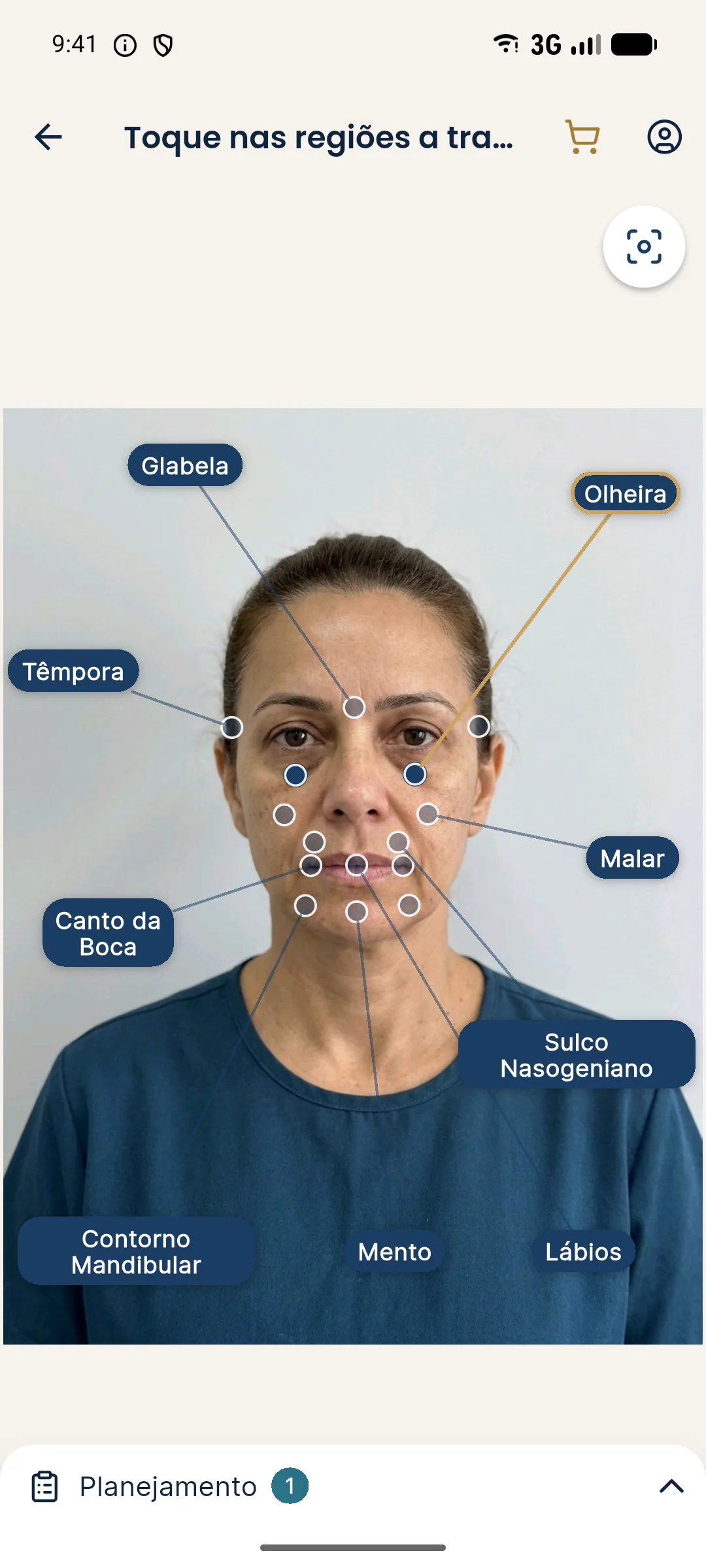
Harmy's Tear Trough point lets you illustrate the softening of the area in a frontal photo, and the Cheekbone point shows the support of the cheek. Present the two separately to the patient, so they see which contributes more. The under-eye volume in the app is small by nature, and the "First time" shortcut uses 1 ml Subtle for the tear trough.
Frequently asked questions
Why does the face look tired even after a good night's sleep?
Because a tired appearance depends on anatomy: the shadow of the tear trough, volume loss in the cheek, folds and thin skin. Sleeping better helps, but it does not change the structure that creates the shadow.
Does tear trough filler fix a tired face?
It can soften the shadow when it comes from a depressed tear trough. If there is pigmentation, a fat bag or cheek descent, the response tends to be partial and the plan usually includes other approaches.
What else contributes to a tired appearance?
Under-eye hollows, bags, loss of cheek support, a marked nasolabial fold, dull skin, a low brow and downturned mouth corners. Each face has its own combination.
Is the under-eye area a risk zone?
Yes, it has delicate anatomy and requires vascular and technical care. The professional should explain risks such as swelling, bruising, irregularities and, rarely, vascular complication, with hyaluronidase available.
Harmy images are illustrative simulations generated by AI from the patient's photo to support the conversation between practitioner and patient. They are not a promise of results. Indication, technique, product and volume are solely the decision of the licensed practitioner. This content is for information only and does not replace a clinical assessment.