
Malar Filler: How Many Sessions and Touch-Ups

 BeforeSimulation
Quick facts
- Question
- How many malar filler sessions and when to touch up
- Usual range
- One session may be enough; a touch-up is usually assessed after the swelling goes down
- Why gradual
- Avoids excess and allows the proportion to be adjusted
- Who decides
- The qualified professional, after assessment
The question arrives like this: "does one session do it?" The honest answer is "it may, but the result can only be judged after the face has gone down." Malar filler has no fixed number of sessions. What exists is an approach: inject what the assessment indicates, wait for the gel to settle, and only then decide whether anything needs adjusting.
This page gives you a way to explain that to the patient clearly, without promising a number of sessions or a volume. Quantity, technique and interval are at the discretion of the qualified professional.
Why the malar result is assessed in two stages
Right after the injection, the area has swelling, sometimes bruising, and the hyaluronic acid still holds water and is settling into the tissue. What the patient sees in the mirror in the first days is the sum of the gel and the swelling. Only after a few weeks does the face show what the volume really did.
That is why planning the touch-up on the same day, or promising "I'll adjust it tomorrow," usually leads to excess. A cheekbone that is too full changes the proportion of the midface and can flatten the gaze. To understand the other side, see asymmetry after malar filler.
| Moment | What usually happens | What to do |
|---|---|---|
| Day of injection | Volume added to swelling | Do not judge the final result |
| First days | Swelling, possible bruising, feeling of heaviness | Give aftercare guidance and reassure |
| About 2 weeks | Swelling nearly resolved | Follow-up visit to assess with photos |
| 3 to 4 weeks | Gel settled | Decide whether there is room for a touch-up |
| Months later | Gradual absorption | Plan maintenance, at the professional's discretion |
When does a touch-up make sense?
A touch-up is usually considered when, with the swelling resolved, there is still a difference between the right and left sides, or the patient and the professional agree that projection fell short of what was agreed. It is also common when the plan anticipated two stages from the start, because of a large volume or poorly elastic skin.
Not every discomfort calls for a touch-up. A complaint of "it looks different" in the first days, for example, is almost always asymmetric swelling. The best test is to compare the standardized before photos with those from the follow-up, without filters and in the same light.
How many sessions for different profiles?
Young faces with little volume loss usually need less volume and fewer sessions. Faces with significant volume loss or marked laxity may call for more stages, and sometimes another approach, such as a biostimulator or threads. The comparison between the paths is in malar filler or PDO threads. For the factors that change the total amount, see how many ml of malar filler.
How to align expectations about sessions
Patients tend to hear "two sessions" as "double the price" and "half a result." Reframe it: the first stage sets the base; the second, if there is one, refines. Build that logic into the quote, by area and by ml, so the patient understands what they are paying for.
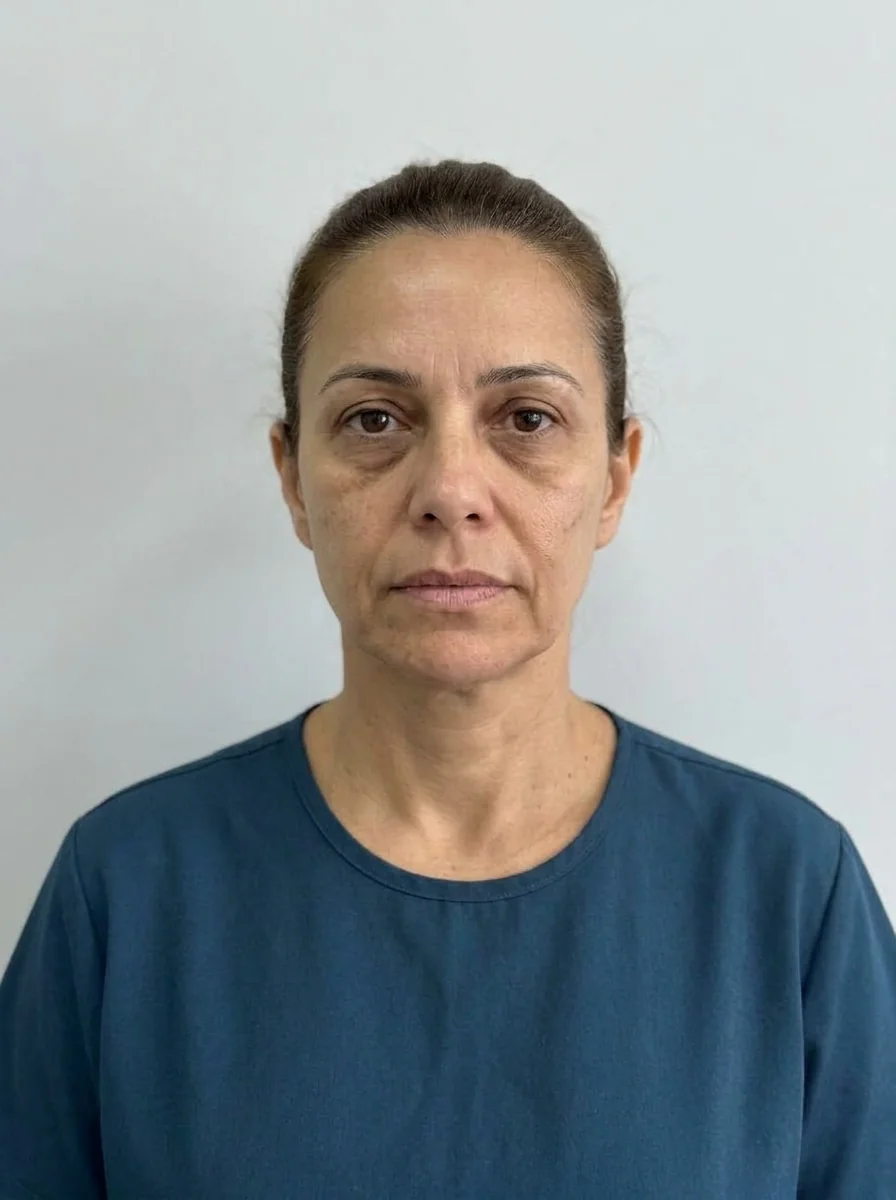
In Harmy, the Cheekbone point lets you simulate the marked ml and show the difference between smaller and larger volumes. The projection is an illustrative simulation of volume and helps explain why working in stages can be safer. The PDF quote is issued by area, with validity and the simulation disclaimer.
What to record in the patient file
When a touch-up is not the answer
If the patient asks for "more" after every session, the problem may be something else: an expectation that was not aligned, comparison with filtered faces, or a picture of persistent dissatisfaction with appearance. In such cases, touching up nonstop worsens proportion. It is worth pausing, reviewing the photos and, if necessary, pointing to another course of action.
Frequently asked questions
How many malar filler sessions are needed?
It depends on the desired volume, the structure of the face and the professional's approach. Many cases start with one session and assess a touch-up after the swelling goes down.
When should the malar filler touch-up be done?
Generally only after the swelling has passed and the gel has settled, which usually takes a few weeks. Touching up before that makes it hard to judge the real result.
Do I need to do everything at once or a little at a time?
Doing it a little at a time is a common approach because it lets you follow the response and avoid excess, but the decision depends on the case.
Is the touch-up included in the price of the procedure?
That is the policy of each professional or clinic. Agree on it in writing beforehand, to avoid misunderstandings.
Harmy images are illustrative simulations generated by AI from the patient's photo to support the conversation between practitioner and patient. They are not a promise of results. Indication, technique, product and volume are solely the decision of the licensed practitioner. This content is for information only and does not replace a clinical assessment.