
Facial fifths: when the width does not add up
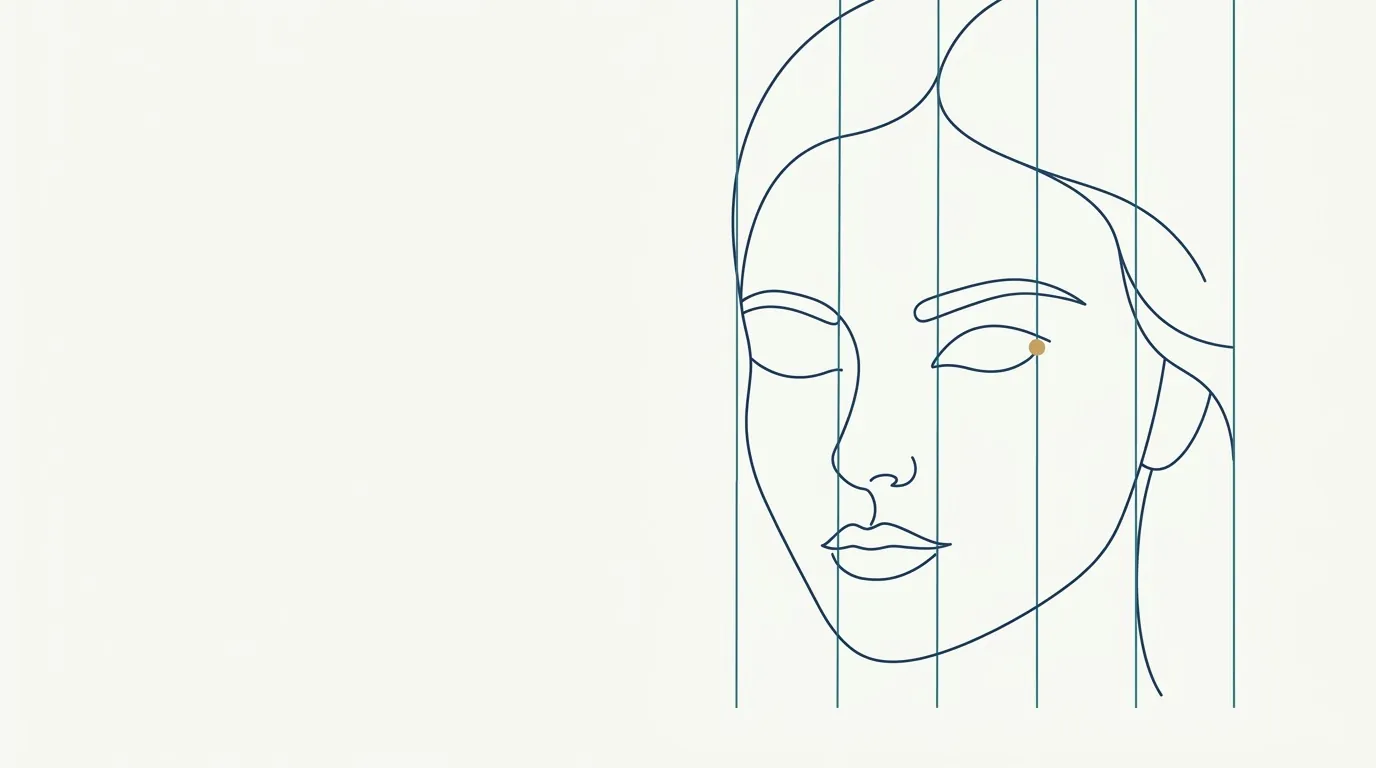
- Nerve
- Highlighted area
Quick facts
- Concern
- The face looks too wide or too narrow relative to the eyes and nose
- Method
- Divide the face width into five equal parts on the standardized frontal photo
- Structures
- Zygomatic bone, mandibular angle, malar fat and masseter
- Caution
- The rule is a reference, not a goal, and varies between people and ancestries
"My face is wide" and "my face is narrow" are concerns that depend on the reference. Wide compared to what? The rule of fifths gives an objective answer to part of that question: by dividing the face width into five parts, you see where the deviation appears, and that guides the plan without relying on impressions.
This page shows how to apply the rule carefully and how to link it to planning. It complements wide face, narrow face and reference lines on the frontal photo.
What does the rule of fifths say?
According to the rule of fifths, the width of the face at eye level equals about five eye widths. The distance between the inner corners of the eyes would be one fifth, each eye another fifth, and the area from the outer corner to the edge of the face one more fifth on each side.
| Fifth | Area | Common reading |
|---|---|---|
| 1st and 5th | From the outer corner of the eye to the edge of the face | Temple and lateral zygomatic bone |
| 2nd and 4th | Each eye | Width reference |
| 3rd | Between the eyes | Base of the nose and glabella |
When the lateral fifth is very narrow, the face tends to look thin or "lacking sides." When it is very wide, the perception is of a broad face, sometimes because of bone, sometimes because of the masseter or fat. The value of the rule lies in giving the deviation a name.
How to apply it on the photo
The quality of the photo decides the quality of the measurement. Follow a standard: frontal photo, gaze on the horizon, head straight, enough distance to avoid lens distortion. The chapter on standardized clinical photography describes the standard.
Hair covering the temples, glasses and shadows change the reading of the face edge. Ask the patient to tie the hair back and remove accessories. A difference between the right and left sides may indicate facial asymmetry or simply a head tilt: hence the second photo.
What the deviation can mean for the plan
Reading the fifths guides, without deciding:
- Narrow lateral fifth: may indicate little projection of the lateral zygomatic or of the temples. The plan may consider volume in the lateral midface, in a restrained way.
- Wide lateral fifth: may have a bone or masseter component. The conversation covers the limits of what the injectable does and, when relevant, an assessment of the masseter.
- Wide central fifth: related to interocular distance and the base of the nose, which harmonization changes very little.
- Asymmetry between sides: confirm whether it is framing or structure before planning.
Where harmonization acts and where it does not
In practice, harmonization can change the perception of width, with volume in the lateral areas of the cheekbone and the jawline, or by reducing masseter volume with toxin (at the professional's discretion). It does not change the width of the bone. Promising to structurally slim or widen the face is an error of expectation. The pages on cheekbone filler and jawline filler detail the areas.
The risks follow the rules of each area: swelling, bruising, asymmetry, nodules and, rarely, vascular complications, with hyaluronidase available when hyaluronic acid is used.
How to show it in Harmy
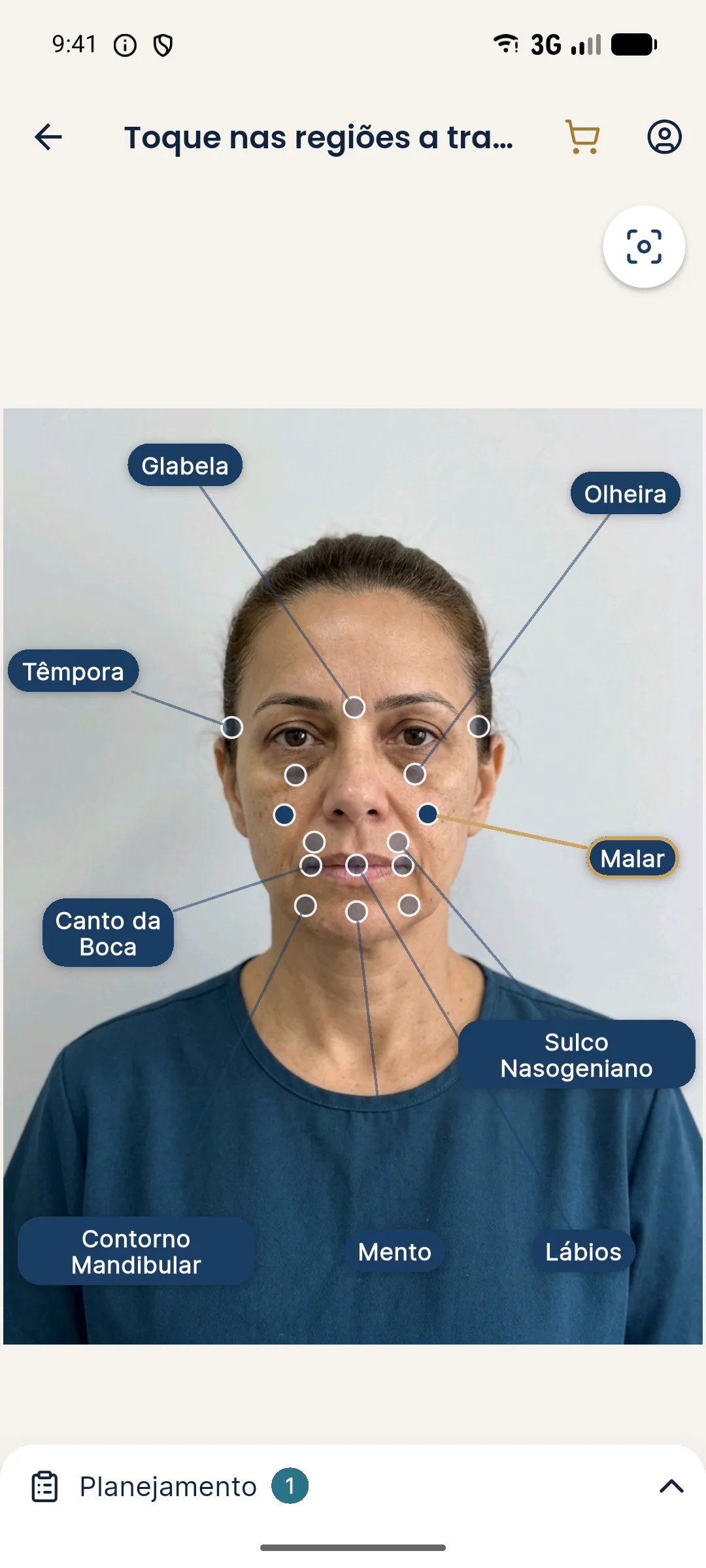
Harmy uses a frontal photo, the same type of image on which the fifths are measured. The Cheekbone and Jawline points simulate volume in the lateral areas, and the projection changes only what was marked. The app does not draw proportion lines or calculate fifths: the measurement is made by the professional, and the simulation illustrates the volume effect.
Common mistakes when applying the rule of fifths
The most common mistake is drawing the lines on a tilted photo. A small head rotation makes one of the lateral fifths look wider and the other narrower, and the professional concludes there is asymmetry where there was only posture. The second is using photos taken from too close: the lens exaggerates the center of the face and compresses the sides.
Another mistake is treating the result as a diagnosis. The rule of fifths shows where to look, not what to do. A narrow lateral fifth may come from bone, a hollow temple or hair covering the edge; each cause calls for a different approach. Finally, it is a mistake to apply the rule the same way to everyone, ignoring that proportions vary and that many beautiful faces fall outside it.
How to talk with the patient
Avoid numbers and speak in terms of balance. Show the vertical lines over the photo and explain that they are conversation guides. Ask what the patient sees as different and compare it with what the rule shows. If they agree, the plan gains an objective basis. If not, the patient's wish should be reassessed carefully, because there may be a concern the rule does not capture.
Record the photos used, the lines drawn, the fifth that departs and the conclusion of the plan. At follow-up, repeat the photo at the same distance and position. Comparing between sessions is what shows what really changed and what was merely an angle effect.
Wrap-up
Record photos, lines drawn, the fifth that departs from the reference and what was set as a limit. For related plans, see triangular face and round face. Volumes and techniques are at the discretion of the licensed professional, in line with the rules of their professional council in Brazil.
Frequently asked questions
What is the rule of facial fifths?
It is a proportion reference in which the width of the face, seen from the front, is divided into five roughly equal parts, each close to the width of one eye. It serves to identify deviations, not to impose a mold.
Does the rule of fifths apply to everyone?
It is a starting point. Variation between people, ancestries and sexes is large, and the plan must respect the patient's identity.
Can a deviation in the fifths be corrected with filler?
In part. Lateral volumes can help the perception of width, but the bone does not change. The plan considers what is structure and what is soft tissue.
Can the fifths be measured with a phone?
It gives an estimate if the photo is frontal, with no tilt and from a good distance. Photos taken with the lens too close distort the width and mislead the reading.
Harmy images are illustrative simulations generated by AI from the patient's photo to support the conversation between practitioner and patient. They are not a promise of results. Indication, technique, product and volume are solely the decision of the licensed practitioner. This content is for information only and does not replace a clinical assessment.