
Narrow or too-thin face: how to assess it

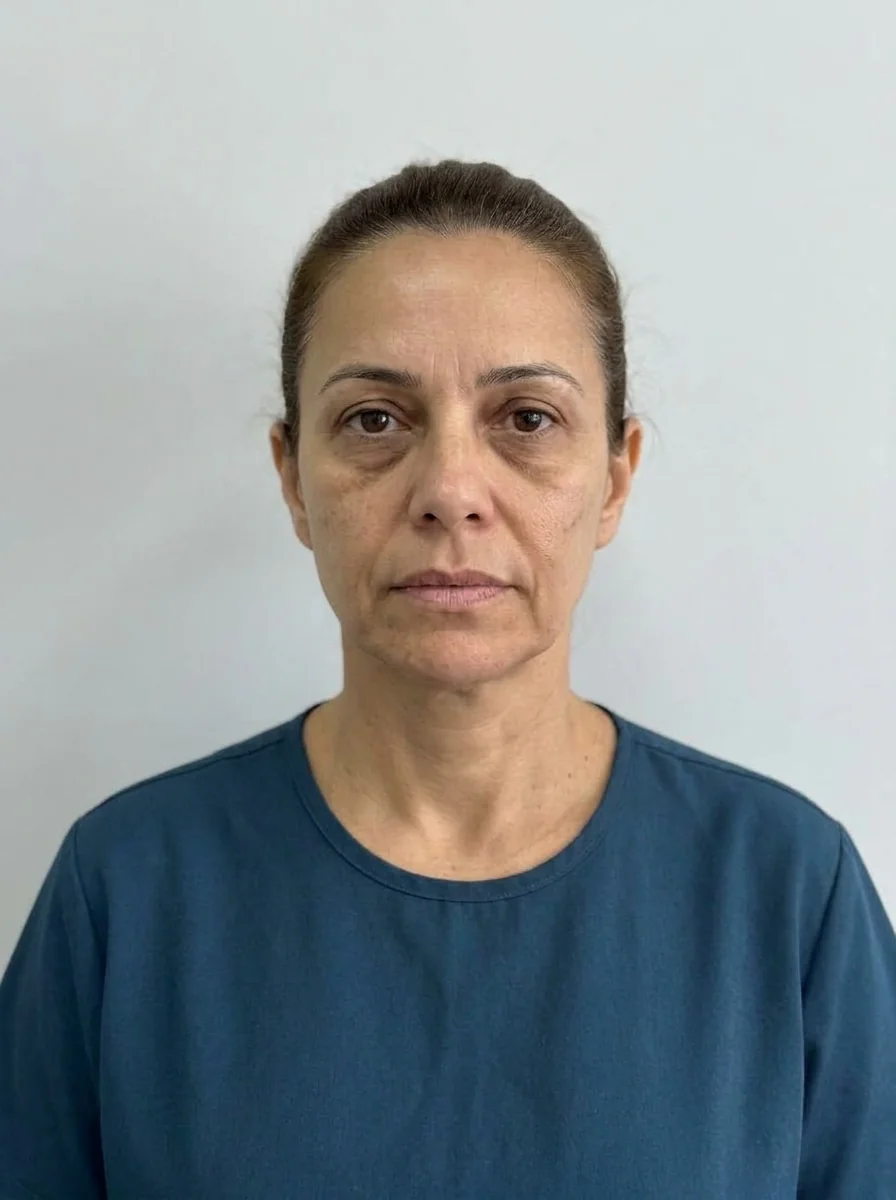 BeforeSimulation
- Highlighted area
Quick facts
- Concern
- A narrow, thin or "stretched" face, with little width at the sides
- Key insight
- Narrowness can be bony or soft tissue, and only the second responds to volume
- Supporting measure
- Facial fifths, zygoma width, cheekbone projection and a photo with overhead light
- Limit
- Widening the face with volume requires caution so the patient's identity is not distorted
Some patients describe their face as "too thin" or "tight", with a sense that there is not enough width at the level of the cheeks. The discomfort usually comes from a comparison: with a relative who has a fuller face, with photos seen on social media, or with their own younger self. The concern is valid, and the clinical answer depends on understanding what exactly is narrow.
This page helps tell bony narrowness from soft-tissue narrowness, shows how to measure facial width and sets the limits of what volume can do. For related cases, see long face, gaunt face and flat cheekbone.
What makes a face look narrow?
Facial width comes mostly from the zygomatic arch, the mandible and the thickness of soft tissue. The zygomatic bone and the zygomatic arch define the widest part of the midface, and the mandible does the same for the lower third. A narrow face may have had under-projected bones all along, or may have lost lateral fat with age and weight loss.
The distinction matters. With bony narrowness, the patient was born this way, and the realistic goal is a modest softening. With narrowness from soft-tissue loss, replacement may have a more visible effect. An old photo helps show whether the face was always like this or has changed. The reasoning applies to men and women, with design adjustments, as in differences between the female and male face.
How do you measure width and projection?
Use the fifths as a width reference. The distance between the most lateral points of the face should be roughly five times the width of one eye. If it is clearly less, the face is narrow by the classic reading. The rule of fifths explains the method. Also measure projection in profile and in an oblique photo, because a face that looks narrow from the front may have adequate projection, and a flat cheekbone may be the real problem.
| Finding | Possible origin | Likely response to volume |
|---|---|---|
| Under-projected zygoma since always | Bony structure | Limited, softening only |
| Recent loss of lateral width | Fat loss | Better, with conservative replacement |
| Hollow temples | Loss of fat pad and muscle | Moderate, depending on assessment |
| Narrow jaw | Constitution | Watch proportion |
| Thin skin over prominent bone | Skin thinning | Caution about material visibility |
For eye-width assessments, see eye width and intercanthal distance, and for the cheekbone, Hinderer lines in cheekbone assessment.
Which areas go into the plan?
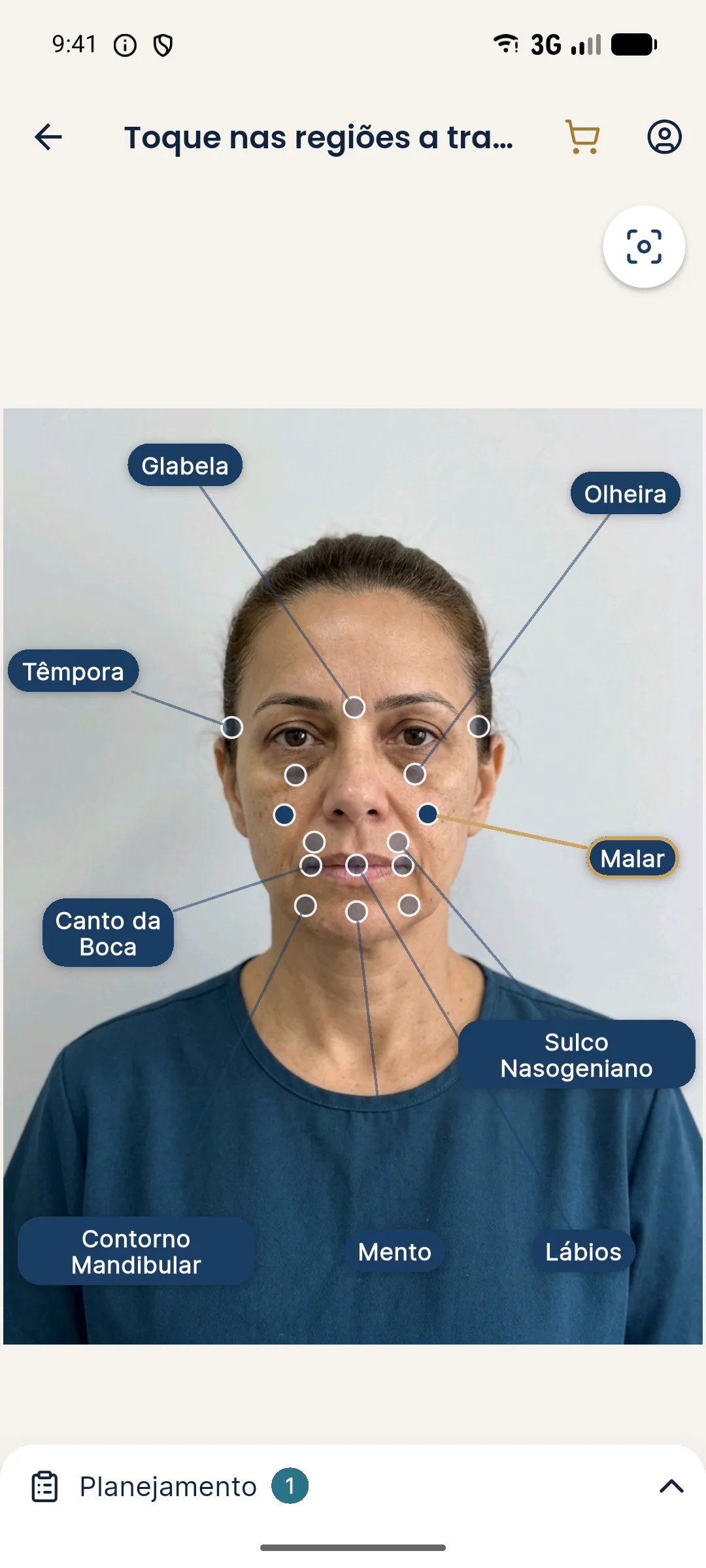
The plan usually involves three areas. The cheekbone, for anterior projection and moderate width. The temple, which influences the width of the upper face and the continuity of the facial curve. And, in selected cases, the lateral zygomatic area, which adds width to the midface and demands vascular care. The pages cheekbone filler, temple filler and zygomatic filler detail the areas.
Proportion with the jaw deserves attention. Widening the midface without looking at the lower third can create an inverted-pear face, with the jaw looking narrow by contrast. Thinking of them together is what prevents this. See cheekbone and jaw combined in the plan.
Usual risks include swelling, bruising, asymmetry, nodules and, rarely, vascular occlusion, with hyaluronidase on hand. The temples and the lateral zygoma region have important vessels, and the professional must have anatomical knowledge and trained emergency management.
How do you organize the plan?
Start with what supports. In general, that is the cheekbone and, when there is clear hollowing, the temples. Reassess before any lateral addition. Many patients feel their face has "opened up" with anterior projection alone, and do not need more width. Those who do receive small steps.
What mistakes should you avoid when widening a narrow face?
The first mistake is chasing a face model that does not belong to the patient. A person with fine bones and delicate features rarely looks good with cheeks of large lateral projection, and the result often looks borrowed from another face. The second mistake is treating the cheek shadow without looking at the skin: in very thin skin, the material can show beneath the surface and create an irregularity the patient did not have. The third is forgetting the profile. A cheekbone projected forward and sideways, unrelated to the nose and chin, disrupts the harmony the narrow face already had.
A practical rule is to stop the plan when the patient says it looks good, not when the professional thinks there is still room for more. Comparative photography, always taken under the same conditions, serves as a witness and protects the decision to stop.
What about Harmy?
Harmy illustrates the gain in projection and midface width when the Cheekbone point is marked, and the Temple point shows upper lateral filler. The projection is subtle and starts from the frontal photo, so it does not show the profile. For a narrow face, the frontal image is the most relevant and tends to add a lot to the conversation.
Frequently asked questions
Is there a treatment for a narrow face?
It depends on the cause. When there is lateral volume or fat loss, support can help. When the narrowness is bony and constitutional, improvement with volume tends to be limited.
Can I widen my face with filler?
There can be a modest gain in width and projection in the midface with conservative volumes, at the discretion of the qualified professional. Excess tends to look artificial.
Is a narrow face the same as a thin face?
No. Narrow is a width characteristic, often bony. Thin refers to soft-tissue volume loss, and the approaches differ.
Which area is usually assessed first?
The midface, with the cheekbone and zygomatic arch, and the temple, which influences the width of the upper face.
Harmy images are illustrative simulations generated by AI from the patient's photo to support the conversation between practitioner and patient. They are not a promise of results. Indication, technique, product and volume are solely the decision of the licensed practitioner. This content is for information only and does not replace a clinical assessment.