
Plan to Slim the Face: What Actually Slims It

 BeforeSimulation
- Muscle
- Highlighted area
Quick facts
- Topic
- Plan to slim the face
- Common myth
- Slimming only by filling or only by removing the cheek
- Factors that count
- Bone, fat, muscle, skin, contour and proportion
- Usual strategy
- Define contour and support, treat what is indicated
- Limit
- No injectable procedure makes the face "lose weight"
"I want a slimmer face" is one of the most common requests and one of the most misunderstood. Many patients think facial harmonization has a feature that shrinks the face, when what it does is, in general, add or reposition volume. Slimming, in practice, is the sum of factors that include bone, fat, muscle, skin and proportion. This page separates what is possible from what is myth and organizes the plan.
What does "slim the face" mean in the patient's concern?
It almost never means losing weight in the face. It usually means one of three things: defining the contour (having a visible jawline), reducing the apparent width ("square" or "round" face) or improving the proportion between thirds. Ask the patient in which photo they see themselves as "slim" and what exactly bothers them. The answer steers the plan and prevents frustration. See wide face and round face.
What actually slims, in terms of perception?
| Factor | How it influences | What facial harmonization can do |
|---|---|---|
| Jawline | A sharp line gives the impression of a slimmer face | Define the line with filler or biostimulator, at the professional's discretion |
| Midface | Cheekbone support draws the eye up and toward the center | Give projection and support to the cheekbone |
| Double chin and submental fat | Mask the cervicomental angle | In some cases, lipolytic agents or other approaches; assess |
| Masseter | Hypertrophy widens the lower third | Botulinum toxin, when indicated |
| Skin and laxity | Laxity blurs the contour | Biostimulator, threads and skin quality |
| Bone | Sets the baseline width | Facial harmonization does not change it; surgery, depending on the case |
Each row has its own page: jawline, jawline filler, cheekbone filler and double chin.
Why does volume alone not slim?
Because volume adds, it does not subtract. Filling the cheek of a full face can worsen the perception of width, and filling the jaw without assessing the skin can leave the lower third heavy. The strategy that tends to work is one of proportion: give more definition and support where they are lacking, so that the relative width looks smaller, and treat the muscle or the fat when they are the cause. See plan for a wide face and planning a round face.
What is the role of the masseter?
In people who clench or grind their teeth, the masseter can become hypertrophic and widen the lower third. In those cases, botulinum toxin can be considered, with a functional assessment and care for chewing and smiling. The professional should assess bruxism, dentition and occlusion, and explain that the effect is gradual and temporary. The anatomy reading is in masseter muscle and the combined approach is in jaw and masseter: combining them in the plan.
There is one point of attention: if the patient has submental fat, a double chin or laxity, reducing the masseter can highlight those findings. Assess the lower third as a whole, not the masseter in isolation.
What about the double chin and the neck contour?
The transition between face and neck weighs heavily on the impression of a slim face. A double chin caused by fat, by laxity or by the position of the hyoid bone calls for different approaches, and some are not facial harmonization. In patients who lost weight, excess skin may be the main factor. See double chin even when thin, double chin after weight loss and chin and double chin: combining them in the plan.
How do you use the simulation on this topic?
In Harmy, the projection only adds filler volume (toxin only in the glabella and the chin) in the marked areas. It may suggest more definition along the jawline or more support in the cheekbone, but it does not simulate fat loss, muscle reduction or bone change. Use this to your advantage: show the patient what facial harmonization changes (definition and proportion) and what it does not (the baseline width).
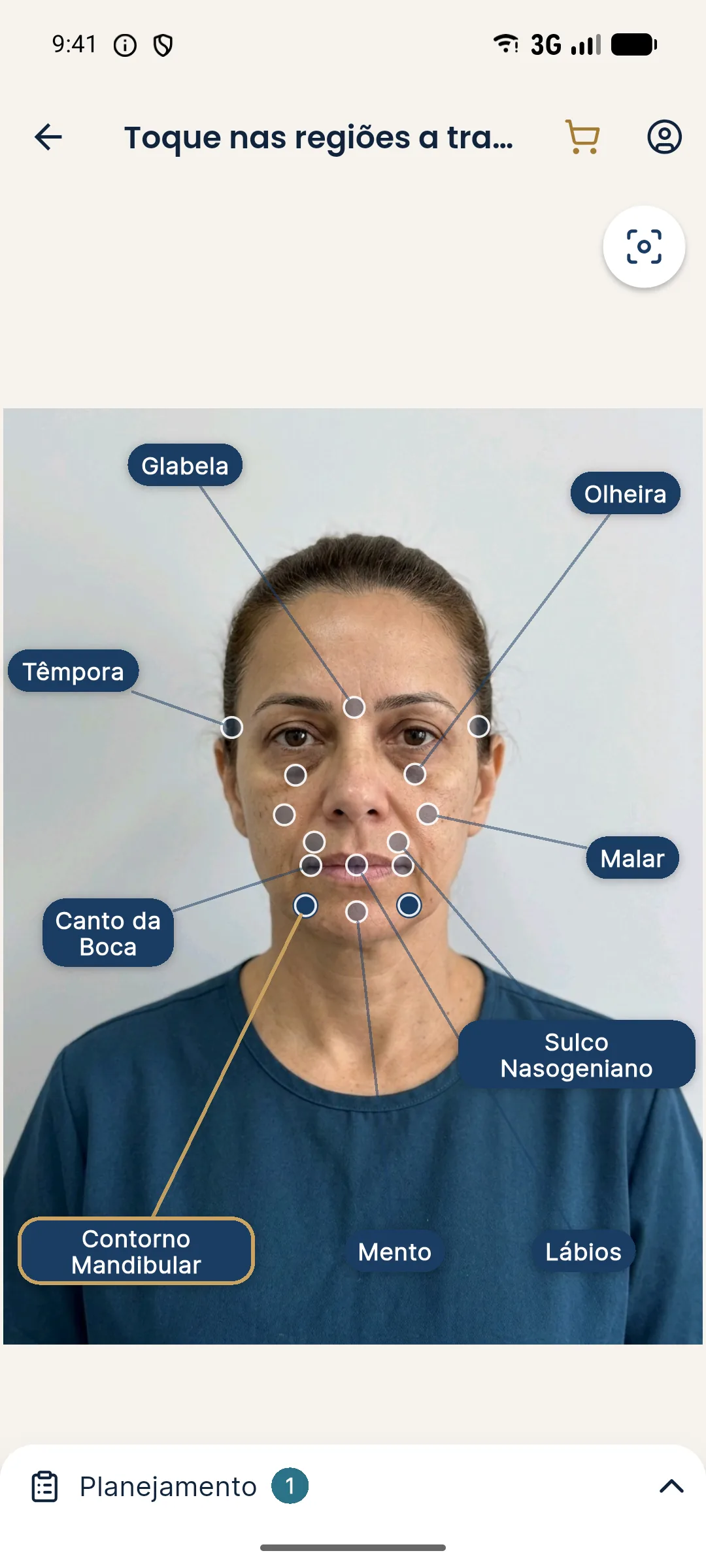
A good approach is to make the projection with Jawline and Cheekbone and ask the patient: "Is this what you call a slimmer face?" If the answer is "no", the conversation continues before any procedure. See also limits of 2D simulation and simulation to calibrate expectations.
How do you talk without promising?
Avoid "I'm going to slim your face". Prefer "I'm going to try to give more definition to the contour". Explain what is bone, what is fat and what is muscle, and say that some goals are not facial harmonization. Record in the patient record what was explained.
What is the decision order?
Reasoning quiz
Summary
Slimming the face is a goal of perception, not of removal. Define what the patient means, separate bone, fat, muscle and skin, treat what belongs to facial harmonization at a conservative volume and be honest about what does not change.
Frequently asked questions
Does filler slim the face?
It can give the impression of a slimmer face by defining the contour and supporting the midface, but it does not reduce facial fat. The perception comes from proportion, not from volume loss.
Does toxin in the masseter slim the face?
When the face looks wide because of masseter hypertrophy, toxin can reduce muscle volume over time, at the professional's discretion. It does not act on fat or bone.
Does buccal fat removal slim the face?
It is a surgical procedure with its own indication, which removes part of the cheek fat. In some cases it can age the face over time, and the topic is controversial. It is up to the surgeon to advise.
Does the simulation show a slimmer face?
In Harmy, the projection only adds volume in the marked areas, in a subtle way. It may suggest more contour definition, but it does not simulate fat or muscle reduction.
Harmy images are illustrative simulations generated by AI from the patient's photo to support the conversation between practitioner and patient. They are not a promise of results. Indication, technique, product and volume are solely the decision of the licensed practitioner. This content is for information only and does not replace a clinical assessment.