
Simulation to calibrate expectations, not to sell

Quick facts
- Topic
- Consultative use of simulation
- Goal
- Align what the patient expects with what is possible
- Stance
- Show to help understand, not to persuade
- Sign of abuse
- Showing a more pronounced image to make the plan look small
- Desired outcome
- A patient who decides with information and trusts the professional
There is a question that decides how a clinic uses simulation: what is it for? If the answer is "to close the plan," the image tends to be used as pressure, and the patient leaves with an inflated expectation. If the answer is "so the patient understands what is possible," the image becomes an instrument of honesty. This page argues for the second use and shows how to put it into practice.
What does consultative use mean?
It means using the simulation as part of a conversation in which the patient takes part, asks questions, adjusts and decides. The professional shows an illustration, explains what it shows and what it does not, asks what the patient notices and listens. The decision about the plan comes out of the conversation, not the image. In this model, the simulation is not the argument but the communication tool.
This ties in with ethics of result simulation and when the simulation helps in the plan. Both point to the line between supporting and pressuring.
Why is calibrating expectations worth more than persuading?
Because the result that matters is the one the patient feels months later. A patient who bought the plan because of the image and received a different result tends to complain, ask for touch-ups and distrust the professional. A patient who understood what the image was (a subtle illustration of a conservative plan) tends to judge the actual result more evenly. Calibration reduces rework, conflict and risk.
| Use | The patient leaves with | Likely effect |
|---|---|---|
| Consultative | Realistic expectation | Stable satisfaction, less conflict |
| Pressure | Inflated expectation | Disappointment and requests for adjustments |
| Omission (limits not explained) | Vague expectation | Misunderstandings and mistrust |
How does the simulation help calibrate?
Three features make a difference. The first is subtlety: in Harmy, the AI changes only what was marked, with no retouching of skin, expression, background or hair, which produces discreet, realistic differences. The second is comparing intensities: showing Subtle, Moderate and Pronounced on the same area teaches the patient to see the spectrum. The third is the magnifier, which enlarges only the treated area and shows the real size of the change.
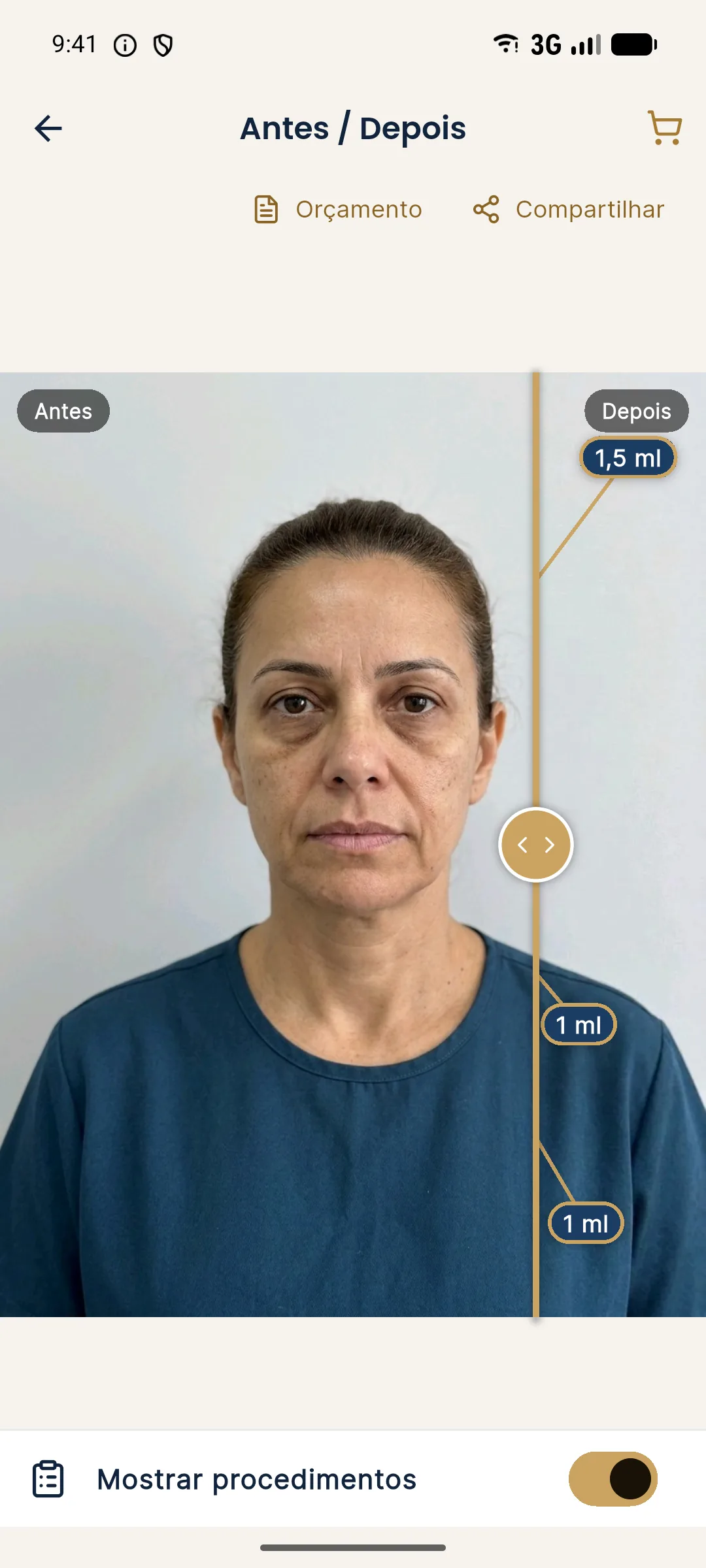
See comparing Subtle, Moderate and Pronounced intensities and why the simulation should be subtle.
How to lead the conversation?
Ask before asserting. An open "what did you think?" reveals expectations you would not have imagined.
What signs show the simulation has become pressure?
If any of these behaviors appears, it is worth stopping and revisiting the workflow. The patient's trust is a clinic's most valuable asset, and the simulation can strengthen it or erode it.
And when the patient wants more than the safe plan allows?
Here the simulation shows its consultative value. Instead of increasing the volume in the image to please, show the conservative version and explain why more is not better. If the patient insists, offer stages and reassessment: "we start with this, look again in a few weeks and decide whether it makes sense to add." This stance protects the patient and you. See when to say no to the aesthetic plan and conservative volume in the first session.
How to measure the success of consultative use?
Not by the number of plans closed on the spot, but by the quality of the decision: does the patient know what they are going to do and why? Do they return satisfied or with complaints? Do they recommend the clinic? Tracking these indicators helps you see whether the simulation is calibrating or just selling. See also plan completion rate and comparing the projection with the actual result.
In Harmy, adding the actual result and comparing it with the projection is a concrete way to learn: you see how close the illustration came to reality and adjust how you talk in future visits.
Hypothetical example of a consultative conversation
Hypothetical example: a patient arrives asking for "bigger lips." Instead of generating a pronounced image, the professional creates two projections, one with lips 0.5 ml at Subtle and another with 1 ml at Moderate, and shows both without comment. The patient notices that the first is almost imperceptible and that the second is clearer but still natural. The professional asks which seems closer to what she wants, explains the usual range and proposes starting with the smaller one, with reassessment. The patient decides with information, understands that the actual result may vary and returns for the follow-up with no surprises.
In this example, the image was not used to push volume but to help the patient learn to see. Note too what the professional did not do: did not hide the smaller option, did not increase the ml to impress and did not promise anything. This sequence costs two projections (R$ 3.99 each), a small amount compared with the gain in clarity and trust.
And the role of time?
Giving the patient time is part of consultative use. Avoid on-the-spot decisions when there is room for that. Offer the patient link or the material with the notice and schedule a short follow-up. Someone who decides at home, calmly, tends to be more confident. Someone who decides under pressure tends to regret it. See patient approval of the plan and prioritizing by the patient's budget.
Frequently asked questions
Is the simulation a sales tool?
It can support the decision, but the most ethical and most effective use is consultative: helping the patient understand what is possible and calibrate expectations. Using the image to pressure tends to produce disappointment and conflict.
How does the simulation calibrate expectations?
By showing subtle, realistic changes, comparing intensities and stressing that the image is illustrative. The patient learns what facial harmonization usually delivers, instead of imagining an unrealistic result.
What to do when the patient wants more than the simulation shows?
Explain that the image reflects a conservative plan and that more volume may be neither safe nor harmonious. Offer stages with reassessment, instead of increasing the simulation to please.
Does the simulation increase adherence to the plan?
It can help the patient picture the plan, but adherence should not be the focus. Measuring success by the clarity of the decision and later satisfaction is healthier.
Harmy images are illustrative simulations generated by AI from the patient's photo to support the conversation between practitioner and patient. They are not a promise of results. Indication, technique, product and volume are solely the decision of the licensed practitioner. This content is for information only and does not replace a clinical assessment.