
Beautiful face without harmony: what is missing
- Nerve
Quick facts
- Concern
- Each feature is beautiful on its own, but the whole does not "come together"
- Key insight
- Harmony comes from the relationship between areas, not from the quality of each one
- Supporting measure
- Thirds, fifths, profile and light transition between cheekbone, mouth and chin
- Limit
- Not every lack of harmony calls for a procedure, and some are solved with hair, glasses or makeup
This is a concern that challenges the professional's reasoning: the skin is good, the eyes are beautiful, the lips are well shaped, and yet the patient says the face "doesn't fit together." Anyone looking agrees that something is out of place, but no one can point to what. The work is to turn that feeling into measurements and observable relationships.
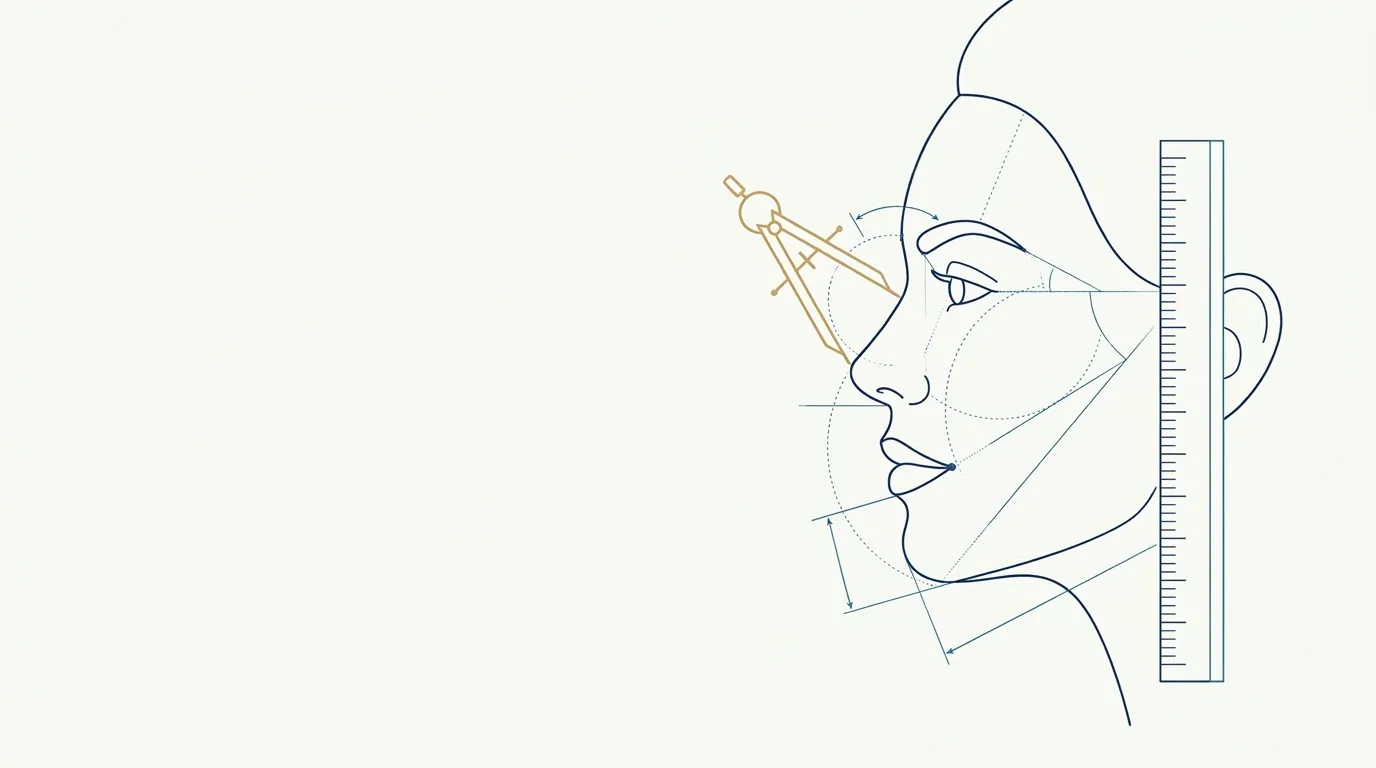
This page proposes an assessment path in four steps: divide the face into thirds, compare widths in fifths, read the profile and check the transitions between areas. At the end, you decide whether there is something to treat or whether harmony depends on other factors. For the case where the imbalance is one of scale, see also disproportionate face.
What is harmony, really?
Harmony is not beauty. Beauty describes each feature, and harmony describes the relationship between them. A strong nose pairs well with a chin and cheekbone of the same strength, and the same piece alone could look dominant. The clinical reading compares the size, projection and position of one area with its neighbors, and looks for where the gap between them is too large.
Classical proportions, such as thirds and fifths, are a ruler for conversation and not a destination. The discussion on the neoclassical canons shows that the ruler is useful and also that many admired faces depart from it. The page on average beauty and facial attractiveness reminds us that attractiveness has cultural and individual components.
How to read the thirds and fifths?
Divide the frontal photo into three equal heights: from the hairline to the glabella, from the glabella to the base of the nose, and from the base of the nose to the chin. Compare them. A third much larger than the others signals where to look for the imbalance. Then divide the width into five parts, each the size of an eye, and see whether the nose, the mouth and the distance between the eyes respect that logic. The method is in facial assessment by thirds and the conceptual basis in the rule of fifths.
| Third | What usually unbalances it | Useful question |
|---|---|---|
| Upper | Very high forehead or narrow forehead | Is the hairline part of the problem? |
| Middle | Low cheekbone projection or dominant nose | Does the cheekbone support the gaze? |
| Lower | Recessed chin, lips out of scale | Does the chin keep up with the lip and nose? |
Pay attention to the third the patient points to and the one you see. Often the patient complains about the lip, and the imbalance is in the chin. A global reading avoids injecting where the concern appears instead of where it originates.
Does the profile tell what the front does not show?
A great deal. A balanced frontal face can have a flat profile, and the reverse also happens. The transition between forehead, nose, lips and chin forms a sequence of curves that, when fluid, conveys a sense of harmony. The ogee curve describes that line in the midface, from the temple to the cheek. The full reading calls for the lateral photo described in profile facial analysis.
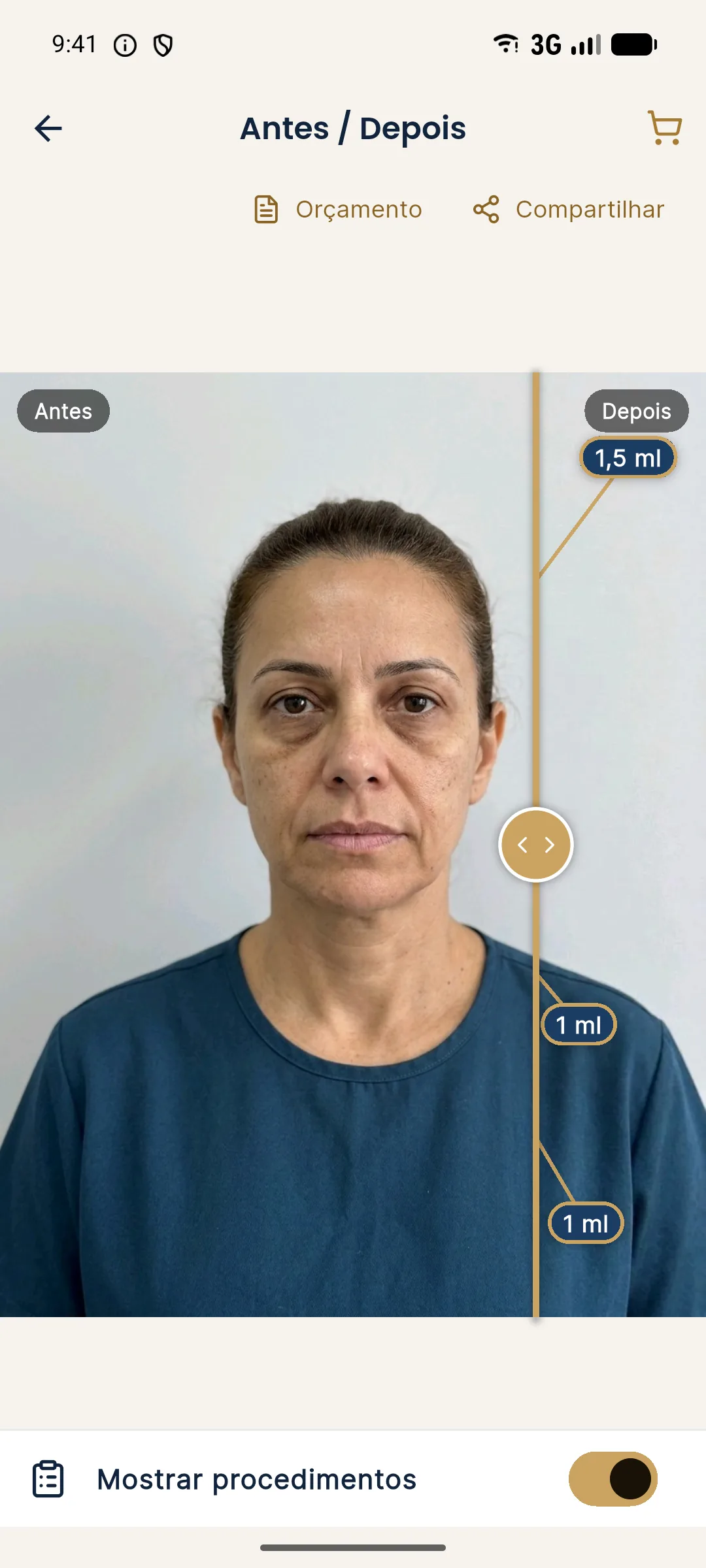
Remember that Harmy projects only from the frontal photo, so it does not show profile effects. This should be said to the patient plainly, and the conversation about chin or cheekbone projection needs to rely on the profile photo and the clinical exam. See also convex profile and concave profile.
When is the problem the transition, not the volume?
Some faces have good volume in each area, but the passage from one to the next is abrupt: a full cheek that ends in a deep fold, a projected chin that contrasts with a faded jaw. The eye reads a step, and the whole looks disconnected. In these cases, the plan is not to increase anything, but to soften the transition, paying special attention to how light falls on the face.
For light, the page on the face's highlight point shows why a well-positioned cheekbone reorganizes the shine. For contour, combining jaw and chin covers the relationship between the chin and the jawline.
When not to treat?
Some faces considered disharmonious have a strong identity precisely in that break of scale. A strong nose, an angular chin or wide-set eyes can be the person's charm. If the patient shows no clear distress and your reading points only to a difference of pattern, the best plan may be to do nothing. The page on how to tell the patient they don't need a procedure offers a script for that conversation, and facial identity shows what to preserve.
Other solutions exist outside the clinic: a haircut that changes the reading of the upper third, a glasses frame that balances the midface, a beard that reinforces the chin. Mentioning this to the patient is part of an honest consultation, and often they decide to wait before any injectable.
How does Harmy help test the hypothesis?
The app lets you mark an area and show the projection with the Subtle, Moderate or Pronounced intensity. Use this to test the hypothesis that a single point organizes the whole. A hypothetical example is to mark only the chin and compare with the before photo. If the patient notices improvement with just one point, the conversation becomes about structure, not about "doing more."
How to build the plan when there is something to treat?
Define one main area and leave the others as support. If the chin is the imbalance, start with it and only then assess the lip. If the midface is flat, restore support and leave the mouth for the second stage. The order is described in structure before detail, and the chain effect between areas in the domino effect between facial areas.
Frequently asked questions
What does a face without harmony mean?
Usually it means the parts do not keep a proportional relationship with each other: a dominant third, an area too projected for the whole, or abrupt transitions. Each feature can be beautiful in isolation.
How do you assess facial harmony?
With standardized frontal, oblique and profile photos, assessing thirds, fifths, reference lines and the transition between areas. The classical proportions serve as a guide, not a mold.
Does every imbalance need to be treated?
No. Often the imbalance is what gives the face character. The decision depends on the patient's distress and on whether a modest improvement is feasible.
Which area usually breaks harmony?
A recessed chin, a flattened midface and lips out of scale with the nose and chin appear often, but the diagnosis is always individual.
Harmy images are illustrative simulations generated by AI from the patient's photo to support the conversation between practitioner and patient. They are not a promise of results. Indication, technique, product and volume are solely the decision of the licensed practitioner. This content is for information only and does not replace a clinical assessment.