
Disproportionate face: how to assess thirds and proportions
- Nerve
- Highlighted area
Quick facts
- Concern
- One part of the face looks too big or too small compared with the others
- Key insight
- Thirds and fifths locate the imbalance, and the identity of the face decides what to change
- Supporting measure
- Division of the frontal photo into three heights and five widths, plus the profile
- Limit
- Proportions are a guide for conversation, and many admired faces depart from them
The patient points: "my nose is big," "my chin is small," "my forehead is huge." These are statements about size, but size only exists in relation to something. A disproportionate face is, above all, a concern about the relationship between parts. Measuring that relationship with a simple method is what separates an impression from a plan.
This page teaches the use of thirds and fifths as reading tools, shows how to avoid photography traps and proposes a final decision among treating, preserving or referring. For the reasoning on harmony, see also beautiful face but without harmony and facial assessment by thirds.
How to divide the face into thirds?
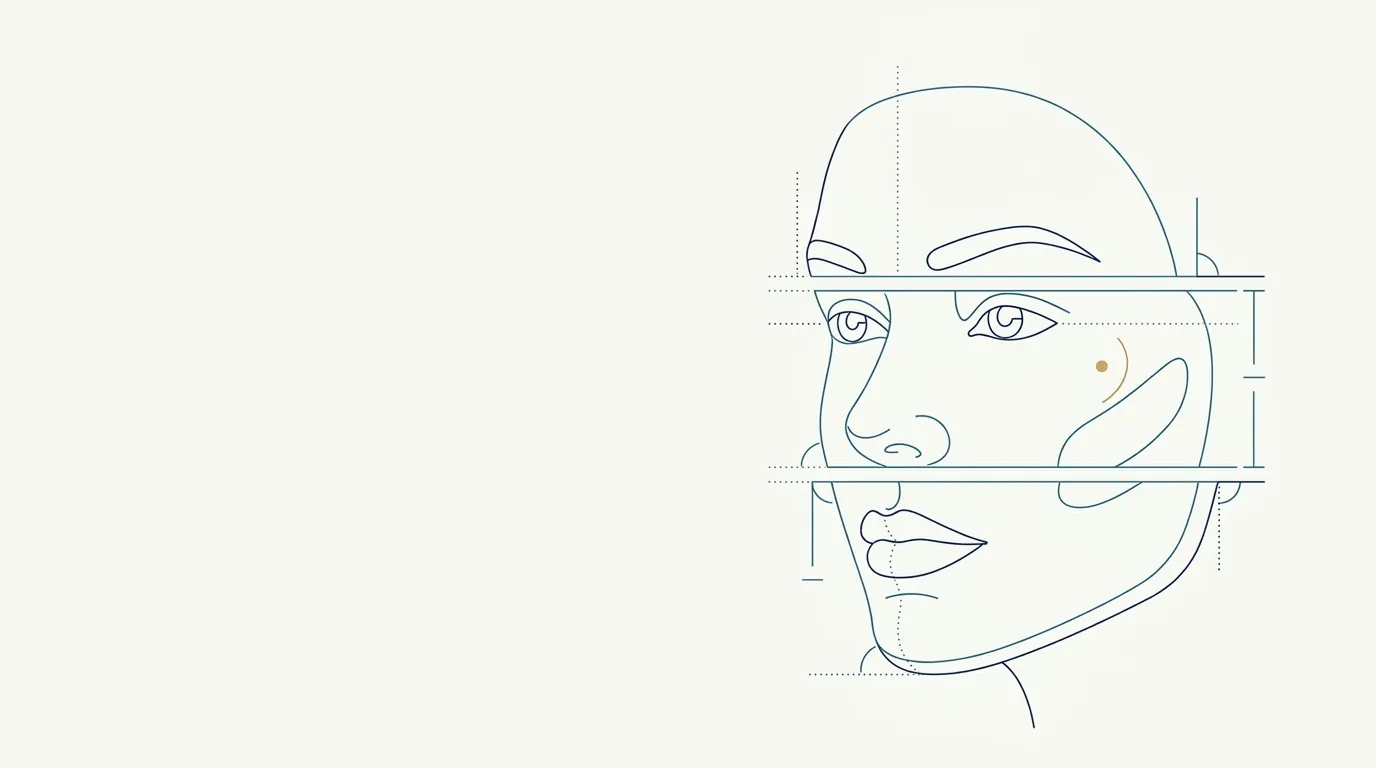
The method is visual and quick. On the frontal photo, draw horizontal lines: at the hairline, at the glabella (between the eyebrows), at the base of the nose and at the lowest point of the chin. The three resulting distances form the upper third, the middle third and the lower third. In faces usually considered balanced, the three heights are similar. Small differences are common and need no treatment.
When one third predominates, it is worth asking why. A high forehead or incipient baldness can inflate the upper third. A long nose or a low cheekbone, the middle third. A long chin or a long upper lip, the lower third. The cause is rarely just one bone, which is why the reading continues with the assessment of each area.
And the fifths, what are they for?
Fifths measure width. Divide the face into five equal parts, taking the width of one eye as the unit. In general, the distance between the eyes equals one eye, and each eye takes up one fifth, with the lateral sides completing the total. The width of the base of the nose tends to match the distance between the inner corners of the eyes, and the width of the mouth the distance between the pupils. See the rule of fifths and eye width and intercanthal distance.
| Measure | Usual reference | What a deviation may suggest |
|---|---|---|
| Distance between the eyes | About one eye | Close-set or wide-set eyes |
| Base of the nose | Near the intercanthal distance | Wide or narrow nose |
| Width of the mouth | Near the distance between the pupils | Large or small mouth |
| Height of the thirds | Roughly equal | Dominant third |
| Midline | Aligned vertical axis | Deviation of the nose, mouth or chin |
Remember that the references are statistical and cultural tendencies. The page neoclassical canons of the face discusses their origins and limits, and facial aesthetic assessment scales shows other ways of grading.
How can the photo deceive?
Before measuring, standardize. A close camera enlarges the nose and shrinks the ears. A head tilted up shortens the lower third. A smile compresses the middle third. Hair over the forehead hides the hairline. That is why the photo protocol comes before the ruler. See distance and lens in the assessment photo, neutral expression in the planning photo and standardized clinical photography.
When is the imbalance real and when is it perception?
Compare what you measure with what the patient says. If the lower third is truly longer and the chin is receding, the concern matches the finding. If the proportions are near the usual and the patient insists, the concern may be about perception, self-image or comparison with social media standards. The ethical response changes: instead of treating, listen and explain.
The reverse reasoning also exists. Some patients do not complain, but have an evident imbalance that influences how the face reads. Mentioning tactfully what you see can be useful, as long as it does not lead to a procedure. The page how to point out asymmetry without offending shows the language, and findings the patient did not ask about in the plan discusses when to speak and when to stay quiet.
What can and cannot facial harmonization adjust?
Facial harmonization adjusts proportions through projection, contour and soft tissue volume. It does not shorten a third, does not alter the bone base and does not change the hairline. A poorly projected chin can gain structure. A flat midface can gain support in the cheekbone. A lip out of scale can be balanced. But a third that is long for skeletal reasons will stay long, and the conversation needs to say so.
When the disproportion is skeletal and large, the path is referral to orthodontics or surgery, and facial harmonization comes in as finishing. The pages receding chin, elongated face and long face and receding chin show the most frequent patterns.
How does Harmy come in?
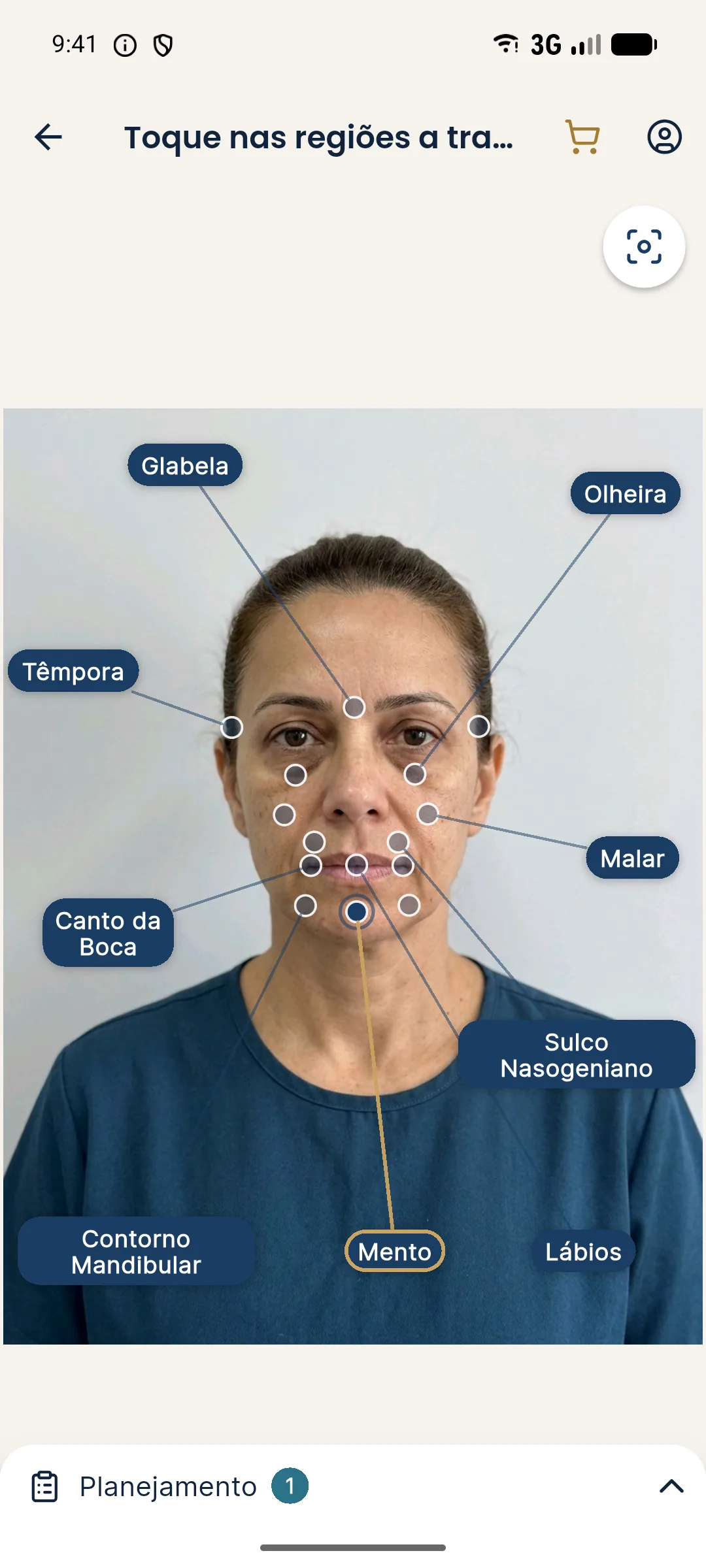
In Harmy you mark one area at a time and see the subtle projection. With disproportion, the most honest use is to test just one area, the one the measurement pointed to, and compare. The app does not alter bone or the hairline, and the projection starts only from the frontal photo, so the profile needs another assessment.
Frequently asked questions
What are the thirds of the face?
They are three heights: from the hairline to the glabella, from the glabella to the base of the nose, and from the base of the nose to the chin. They serve as a guide to see which area dominates the whole.
What is the rule of fifths?
The width of the face divided into five parts, each about the size of one eye. It helps assess the distance between the eyes and the width of the nose and mouth.
Do I need to correct every deviation from the proportions?
No. Many harmonious faces depart from the ruler. The criterion is the patient's concern and the feasibility of a discreet improvement, at the discretion of the qualified professional.
Can photography distort proportions?
Yes. Distance, lens and head tilt change the reading. That is why the assessment photo must be standardized before any measurement.
Harmy images are illustrative simulations generated by AI from the patient's photo to support the conversation between practitioner and patient. They are not a promise of results. Indication, technique, product and volume are solely the decision of the licensed practitioner. This content is for information only and does not replace a clinical assessment.