
Facial aesthetic assessment scales in a HOF treatment plan

Quick facts
- Topic
- Scales to standardize assessment
- Use
- Common language and comparison over time
- Limit
- A score is not a goal and does not replace the exam
- Caution
- Use the scale as validated and never invent scores
Two people describe the same fold as "mild" and "deep". The same professional describes the same concern with different words on different days. Without a common language, the patient record loses value and progress cannot be compared. Aesthetic assessment scales were created to solve this: they turn impressions into categories that can be recorded, repeated and compared.
What are they for in practice?
Four functions come up often:
- Describe findings in a standardized way (volume, folds, wrinkles, lips, skin).
- Record the patient's starting point.
- Compare progress between sessions, in the same patient.
- Communicate the case to another professional.
They do not define treatment. The scale describes the state, and the plan comes from the patient's concern, the risk and shared decision-making. This avoids a common mistake: using the score as a target ("let's take it from 3 to 1") and ending up with a plan driven by a number instead of a face.
What types of scales exist?
| Type | What it describes | Example of use |
|---|---|---|
| Wrinkles and folds | Severity of dynamic and static lines | Recording glabella, forehead and periorbital area |
| Volume | Volume loss in areas such as cheekbone and temple | Documenting the starting point |
| Lips | Volume, projection and definition | Recording before and after the plan |
| Photoaging | Degree of sun damage to the skin | Guiding skin care (see Glogau scale) |
| Skin phototype | Skin response to the sun | Guiding hyperpigmentation risk (see Fitzpatrick phototype) |
| Patient satisfaction | Subjective perception | Complementing the professional's assessment |
Published photographic and descriptive scales exist for many of these items. Cite them by name and original source, without reproducing scores from memory. If you use a validated scale, follow the published version.
How do you add a scale to your routine?
See the record field in facial treatment plan form: fields and the progress template in per-session progress log.
What precautions prevent misuse?
Three traps are common.
- Score as a goal. The goal of the plan is the patient's concern and a natural look, not the score.
- Scale without a photo. A score without a standardized photo cannot be compared. See standardized clinical photography.
- Scale instead of an exam. The live exam, at rest and in motion, is worth more than any number.
Does the scale work with Harmy?
Harmy does not apply scales or generate scores. It marks areas on the front-facing photo, takes ml and intensity, and generates an illustrative projection. A coherent way to use both: record the scale in the patient record and use the projection to talk with the patient about what can be improved, without tying the image to a score. Intensity (Subtle, Moderate, Pronounced) is an image parameter, not a clinical scale.
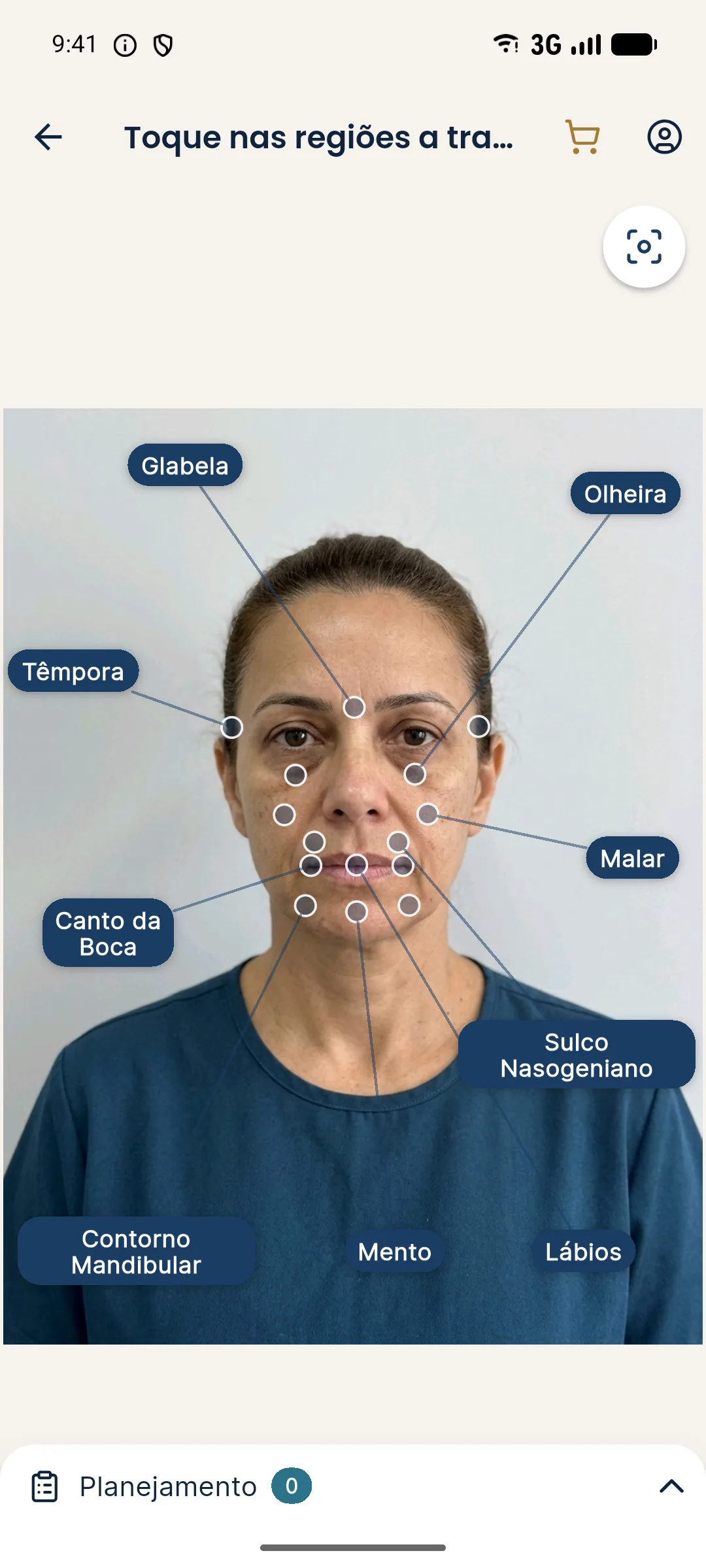
See also digital visual planning in HOF and limits of 2D simulation.
How do you explain the scale to the patient?
Carefully. A score can sound like a judgment. Describe the finding, not the patient.
How do you choose and maintain a scale in your routine?
Choosing well matters more than choosing many. Before adopting a scale, answer four questions:
- Does it describe something you actually decide? If the scale measures an item that does not change what you do, it is paperwork.
- Is there a published, accessible version? Prefer scales with a clear description and, when possible, reference images.
- Can the team apply it consistently? A hard-to-use scale produces different scores for the same finding.
- Does it fit the patient record? Simple fields with closed options make it easier to fill in.
To keep it consistent, run short calibration sessions: rate photos of older cases on two different dates and compare the scores. If they differ a lot, review the criteria. This check is quick and raises the reliability of the record.
It is also worth remembering that scales do not capture what the patient values. A "mild" fold on the scale may be someone's main concern. Combine the score with an open question, such as "what bothers you most about this area?", and record the answer. The concern sets the priority, and the scale documents the state. To build the written plan, see what to include in the written treatment plan.
What about scales in research and advertising?
Validated scales were created largely for clinical studies, and were not always designed for everyday use in a practice. That does not prevent adopting them, but it calls for humility: what works to compare groups in research may be just a record-keeping aid for one patient.
In advertising, the care required is greater. Never use a scale score to suggest results, and never present "an improvement of X points" as a promise. The advertising rules in Brazil are in what you can advertise: CFO and CONAR, and a patient's score is health data, not marketing material.
If you take part in studies or scientific presentations, follow research ethics rules and obtain the patient's specific consent, which is different from consent for care. Anonymized data lowers the risk but does not remove the need for caution: see anonymization.
Finally, store the scale in the patient record with the date and the rater. If more than one person on the team scores, align the criteria so that today's score and the one from six months ago mean the same thing.
Summary
Scales standardize recording and comparison, but they do not decide the plan. Use few, with a standardized photo, cite the source, do not turn them into goals and put the patient's concern first. Every decision belongs to the licensed professional, after assessment, in line with the rules of their professional council.
Frequently asked questions
What are facial aesthetic assessment scales for?
To standardize how findings such as volume, wrinkles, folds and lips are described, create a common language between professionals and compare the same patient's progress over time.
Do I need to use a scale with every patient?
It is not mandatory. Use is optional and helpful when the professional wants to standardize the record. The scale complements the exam and does not replace it.
Does the scale determine the volume to inject?
No. It describes the finding. The volume decision depends on the patient's concern, anatomy, product and the professional's assessment.
Can I create my own scale?
You can use an internal scale for the patient record, as long as it is consistent. When citing published scales, use them as described, without changing the scoring.
Harmy images are illustrative simulations generated by AI from the patient's photo to support the conversation between practitioner and patient. They are not a promise of results. Indication, technique, product and volume are solely the decision of the licensed practitioner. This content is for information only and does not replace a clinical assessment.