
Face at 40: first signs and planning

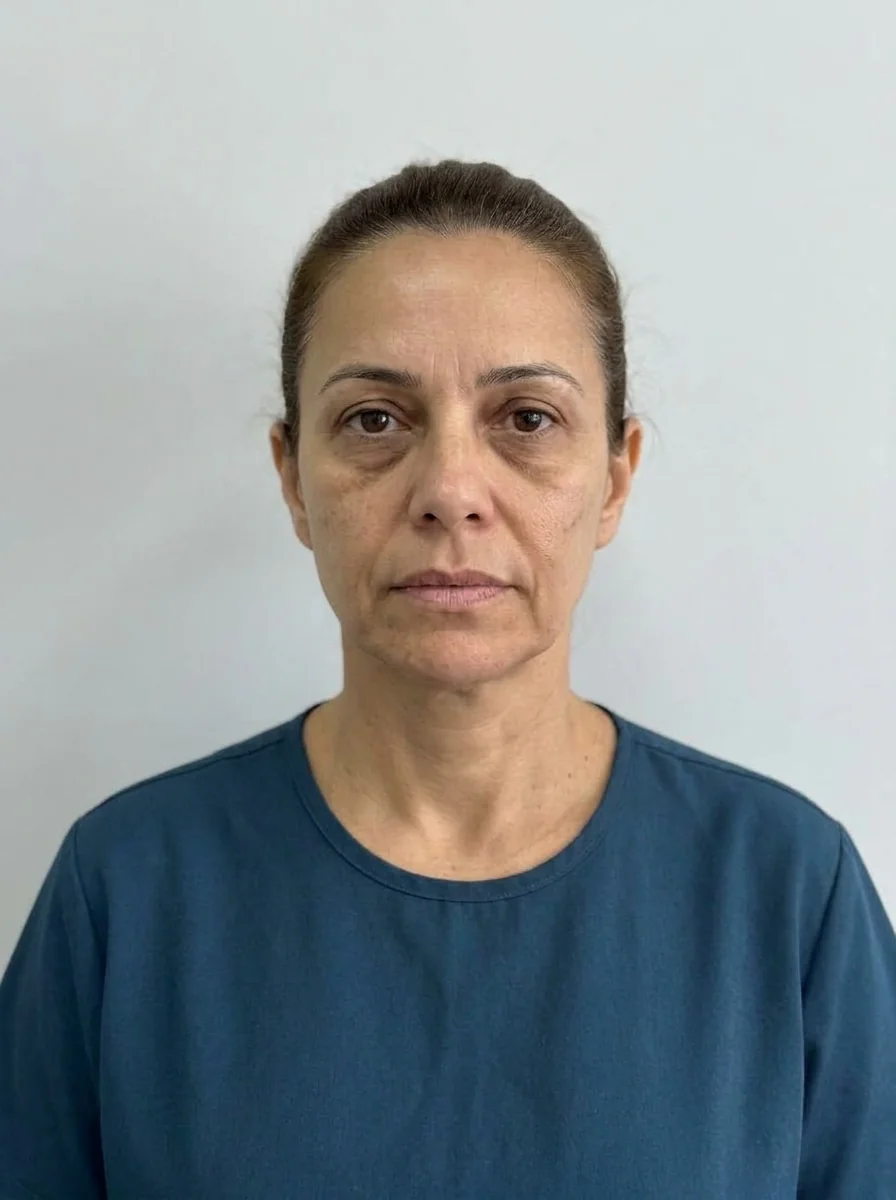 BeforeSimulation
Quick facts
- Concern
- Early signs of tiredness, a deeper nasolabial fold, less cheek support and set lines
- Key reading
- At 40 there is usually a mix of volume loss, early descent and dynamic lines setting in
- Supporting measurement
- Current standardized photo compared with a photo from 5 to 10 years earlier, when available
- Limit
- A conservative plan in stages; an abrupt change tends to look artificial at this age
At 40, many patients feel their face "changed suddenly." It was not sudden, but the sum of small changes crosses a threshold: lines become visible at rest, the fold beside the nose deepens, the cheek loses a little support and the gaze looks more tired. This is when demand for HOF (orofacial harmonization, in Brazil) grows, and when a well-thought-out plan makes the most difference.
This page organizes the first signs, shows how to set priorities and guides a conservative plan. For the earlier stage, see face at 30. For the next stage, sagging after 40 and face at 60. The step-by-step assessment is in facial analysis at 40.
What usually changes in the face at 40?
The changes are multifactorial and do not happen all at once. Four processes tend to add up:
- Volume loss in the fat compartments, mainly in the midface and temples.
- Mild bone resorption, which reduces support around the orbit, maxilla and jaw.
- Lower skin quality, with less collagen and elasticity, thinner and duller.
- Expression lines that shift from dynamic to static through repeated movement.
The result is a face that loses relief, gains shadow and shows lines. Tissue descent is usually mild at this age, and becomes a clearer concern later. If the patient already notices descent, see midface descent. For layer-by-layer reasoning, read facial aging by layers.
Which signs call for attention?
Some signs are more frequent and guide the conversation:
- Static lines in the glabella, forehead and around the eyes (so-called static wrinkles).
- Nasolabial fold (the smile lines) that is deeper.
- Loss of support in the cheek, with less projection of the cheekbone area.
- Under-eye hollow that is more evident from loss of volume or skin quality.
- Lips that are thinner, with less defined contours.
- Loss of definition of the jawline, early on.
| Sign | Possible mechanism | Options discussed |
|---|---|---|
| Fixed glabellar lines | Repeated movement, less elastic skin | Toxin and skin care |
| Marked nasolabial fold | Loss of midface support | Treat the cause and, afterward, the fold |
| Hollow under-eye | Volume loss and thin skin | Assess the cause; careful indication |
| Less defined lips | Loss of volume and collagen | Conservative filler |
| Dull, thin skin | Less collagen, external factors | Biostimulation and skincare |
How do you set priorities?
In general, the rule is to treat the cause before the sign and the structure before the detail. At 40, the dominant cause is usually loss of volume and support, and the most visible sign is the fold or the under-eye hollow. The plan starts with support, and only then reassesses the sign. See what to treat first in HOF and treating the fold or the cause of the fold.
Toxin comes in when movement is the main driver, mainly in the glabella and forehead. Biostimulator comes in when tissue quality weighs in. Filler comes in when volume is the main shortfall. To decide the order among them, see toxin or filler first and maintenance: toxin, filler and biostimulator.
What does HOF offer at this age?
The most discussed approaches, at the discretion of the qualified professional and after an assessment, include:
- Midface support, with conservative cheekbone filler. See cheekbone filler.
- Toxin in the glabella and forehead, when the lines bother the patient. See toxin in the glabella.
- Nasolabial fold, as a complement after support. See nasolabial fold filler.
- Collagen biostimulator, for tissue quality. See biostimulators: overview.
- Lips and under-eye hollows, with great judgment.
Every hyaluronic acid application requires hyaluronidase to be available, and areas such as the glabella, nasolabial fold and under-eye carry a relevant vascular risk. Complications include swelling, bruising, asymmetry, nodules and, rarely, vascular occlusion. See safety and complications.
How do you build a plan in stages?
A typical plan for this age combines few areas at a time, with reassessment. The patient needs to understand that harmonization is not a one-off event, and that maintenance is part of the treatment. For the design, see HOF plan in three sessions and facial rejuvenation plan.
And Harmy in this conversation?
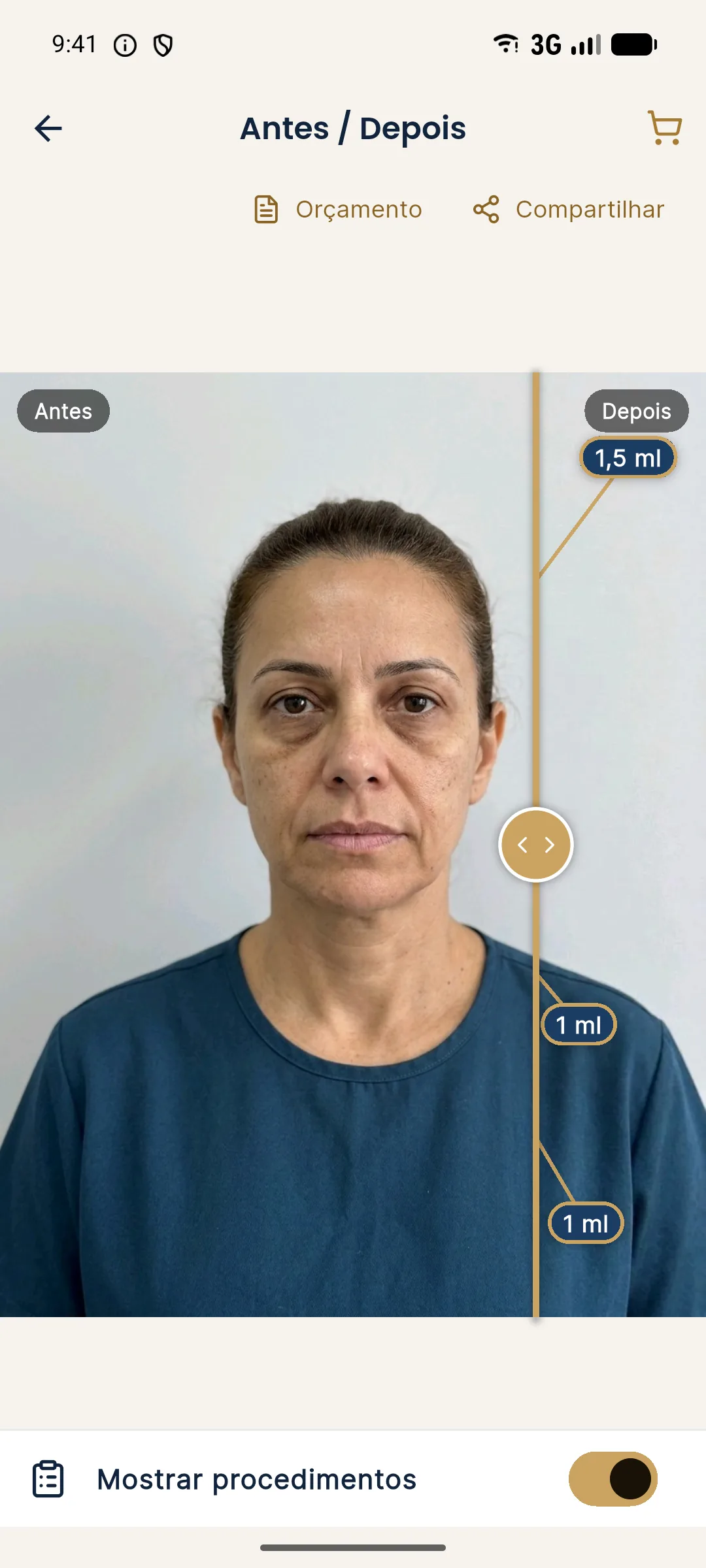
Harmy helps show, on the patient's real photos, what changes with each area, and that is valuable for the 40s, where naturalness is the priority. The projection is subtle and respects the marked volume. Seeing that cheek support changes the fold helps the patient understand why the plan starts with the cheekbone.
Record keeping
Record the concern, the comparison with the older photo, the layer-by-layer assessment, the planned range, the chosen order and awareness of the risks. At follow-up, repeat the photos at the same angle and lighting. The history per patient and standardized clinical photography help keep the method consistent.
Frequently asked questions
What are the first signs of aging at 40?
Expression lines that stay at rest, a deeper nasolabial fold, loss of cheek support, a more evident under-eye hollow and less defined lips. They vary widely from person to person.
What should be treated first at 40?
In general, what supports the face and accounts for most of the concern, such as midface support, and then the secondary signs. The order depends on the assessment of the qualified professional.
Toxin, filler or biostimulator?
Each acts through a different mechanism: toxin on movement, dermal filler on volume and biostimulator on tissue quality. The choice or combination depends on the concern and the assessment.
Is maintenance already needed at 40?
If there is treatment, yes, periodic follow-up is part of the plan. If there is not, monitoring with photos and skin care already helps decide the right moment.
Harmy images are illustrative simulations generated by AI from the patient's photo to support the conversation between practitioner and patient. They are not a promise of results. Indication, technique, product and volume are solely the decision of the licensed practitioner. This content is for information only and does not replace a clinical assessment.