
Buccal Corridor and Smile: How to Assess Them in Planning

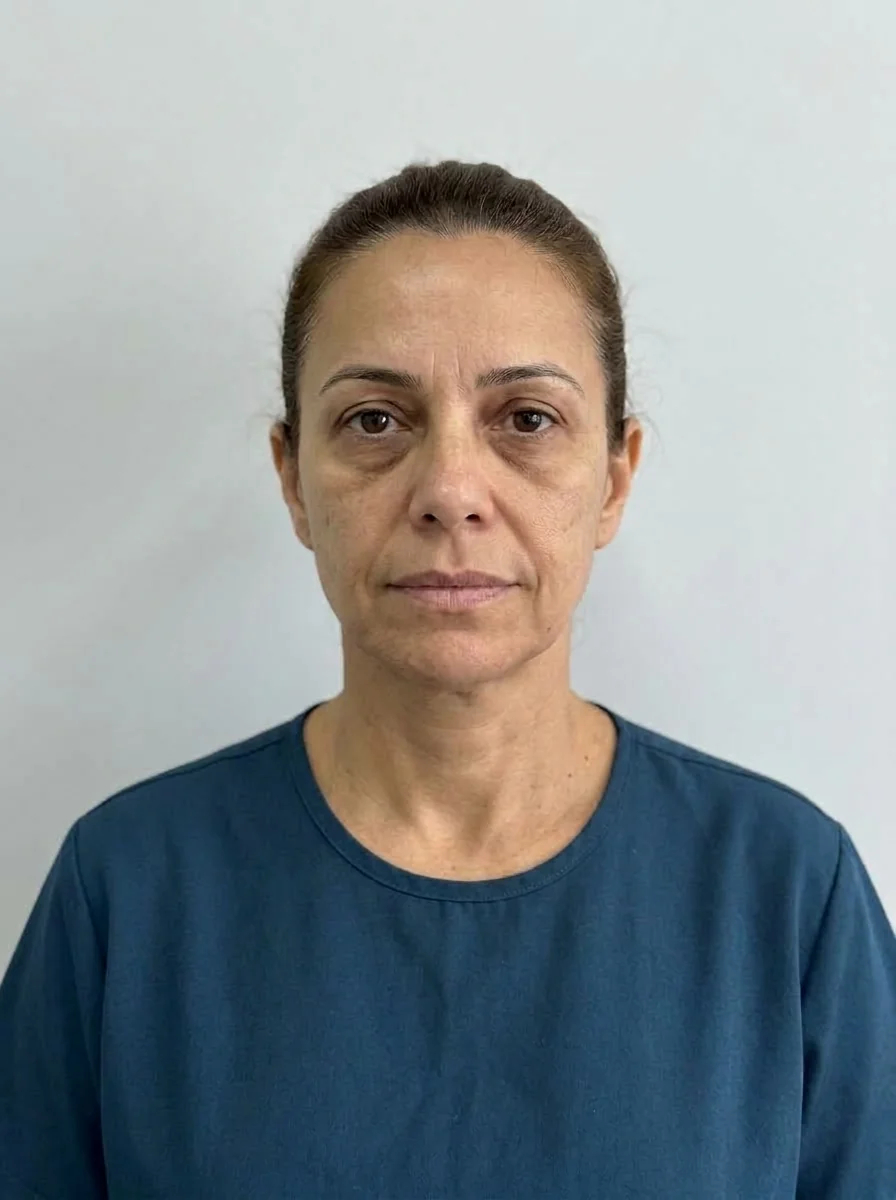 BeforeSimulation
Quick facts
- Topic
- Buccal corridor in the smile
- What it is
- Dark lateral space between the teeth and the mouth corner
- Relationship
- Mouth corners, cheekbone and smile arc
- Caution
- Not every wide corridor is a problem
In HOF, the smile is read as a whole: lips, teeth, gums, mouth corners, cheeks. The buccal corridor is a small piece of that whole, but patients notice it in photos and everyday portraits, when the lateral shadow of the mouth makes the smile look "empty" or "narrow". Before any decision about volume, it is worth understanding what it is, what influences it and when it enters the plan.
What is the buccal corridor?
It is the dark space that appears, in a smile, between the buccal surface of the back teeth and the lip commissure. It is tied to the width of the dental arch, the position and projection of the teeth, the width of the smile, the tone of the muscles and the support of the cheek. The concept comes from aesthetic dentistry and connects with the smile arc and incisor display.
The dynamic reading of the smile depends on the zygomaticus major muscle and the modiolus, where several muscles that pull the corner of the mouth converge. See also smile analysis in HOF.
Why does it matter in planning?
Because not every patient notices it, but those who do tend to have a specific concern: "my smile is dark at the sides", "my mouth looks small when I smile", "my face looks hollow when I smile". These phrases often point to a combination of factors:
- Narrow dental arch or recessed back teeth (a dentistry matter).
- Cheek with little lateral support (midface).
- Drooping mouth corner or one with muscle pull.
- Thin or poorly projected lips.
Each factor calls for a different approach, and HOF acts on only some of them. The relationship with the lips and mouth corners plan appears in lips and mouth corners: combining in the plan and in plan for a harmonious smile.
How do you assess it step by step?
The smile curves are in smile arc and lower lip curve, and dynamic assessment in dynamic facial analysis in expression.
What is the relationship with the mouth corners and cheekbone?
The buccal corridor is the lateral "window" of the smile. If the cheekbone has good projection, the cheek supports the side of the smile and the dark space tends to look smaller. If the mouth corner droops, the smile may look narrower. These relationships explain why the plan in this area is rarely a single point.
| Finding | Possible relationship | Area to consider |
|---|---|---|
| Wide corridor with flattened cheek | Little lateral support | Cheekbone, when indicated |
| Narrow smile with drooping corner | Depressor pull | Mouth corner and/or toxin |
| "Small" mouth when smiling with thin lips | Little lip presence | Lips, at conservative volume |
| Wide corridor with narrow dental arch | Dental cause | Refer to the dentist |
The table is only a reasoning guide. See the relationship with the corners in mouth corners, marionette lines and chin and with the midface in cheekbone and tear trough: combining in the plan.
What can HOF not solve?
The corridor depends heavily on the dental arch. Trying to compensate for a dental cause with cheek volume can produce an exaggerated cheekbone without solving the concern. In that case, the approach includes referring to the dentist or orthodontist, as in HOF integrated with dentistry. The relationship between HOF and orthodontics is in HOF plan after orthodontics, and care with contact lenses and veneers in HOF plan with dental contact lenses and veneers.
And the Harmy simulation?
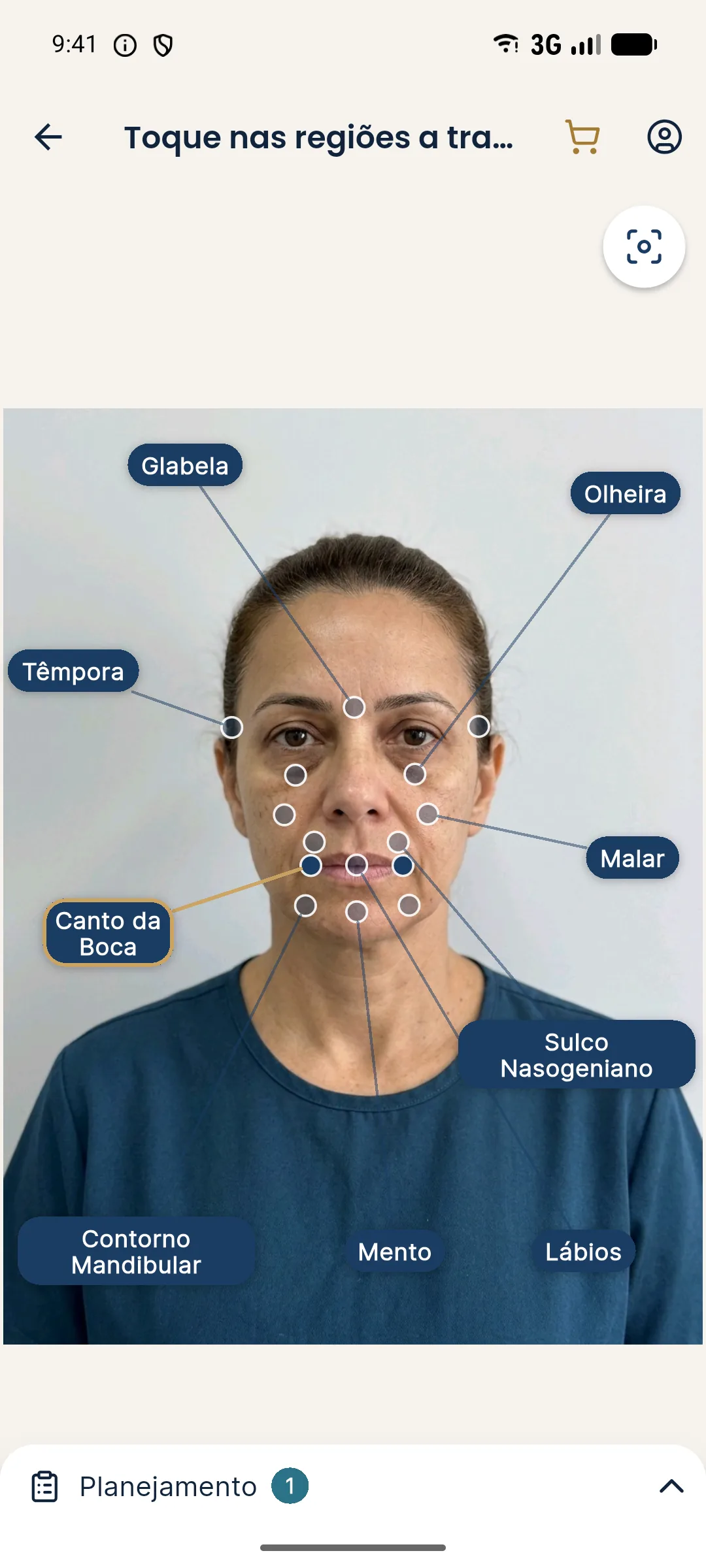
Harmy marks Mouth Corner and Cheekbone as separate points, with independent ml and intensity. For a patient who has concerns about their smile, you can show the effect of a light cheekbone and the effect of a light mouth corner in separate projections, and compare them. The projection uses a frontal photo, so the ideal photo has a neutral expression. The app does not simulate smiles, teeth or the buccal corridor.
How do you record and follow up?
The buccal corridor is a subtle and poorly documented finding, so a simple record is worthwhile. Photograph the patient at rest and in a spontaneous smile, from the front, with even lighting and the same distance at every session. Note in words what you observe: wide, narrow or absent corridor; symmetry between sides; relationship with the commissure. At reassessment, repeat the same photos.
Two questions guide the long-term approach:
- Does the patient notice the corridor, or is it your observation? If it is only yours, record it and do not propose treatment.
- Has the concern improved with what was done? If the answer is no, reassess the hypothesis about the cause before adding volume.
Remember that the smile changes with age, tooth loss, orthodontics and prostheses. Any relevant dental change calls for a new assessment of the facial plan. It is also useful to talk about what the patient considers a "beautiful smile" for themselves: for some, wide smiles with a lot of visible teeth; for others, discreet smiles. The plan should respect that preference, not a single standard.
If there is doubt about a dental cause, refer for a joint assessment. Integrated work tends to deliver a more coherent result than isolated actions, and protects the patient from unnecessary volume in the face.
Summary
Assess the smile in motion, relate corridor, mouth corner and cheekbone, and treat the concern, not the number. Refer when the cause is dental. Planning, volume and technique are at the discretion of the licensed professional, according to the rules of their professional board in Brazil.
Frequently asked questions
What is the buccal corridor?
It is the dark space that appears between the back teeth and the corner of the mouth when the patient smiles. Its size varies with the width of the dental arch, the position of the lips and the support of the cheek.
Does a large buccal corridor need treatment?
Not necessarily. It is a normal variation, and the need depends on the patient's concern and the professional's assessment, which may also involve the dentist.
Does the cheekbone influence the buccal corridor?
It can. Cheek projection and midface support change the lateral shadow of the smile, which is why the cheekbone enters the reading of the plan.
Does Harmy assess the smile?
Harmy works with a frontal photo, and the projection shows changes only in the marked areas. It does not measure the buccal corridor or simulate dental changes.
Harmy images are illustrative simulations generated by AI from the patient's photo to support the conversation between practitioner and patient. They are not a promise of results. Indication, technique, product and volume are solely the decision of the licensed practitioner. This content is for information only and does not replace a clinical assessment.