
Plan for a harmonious smile: lips, corners and cheekbone

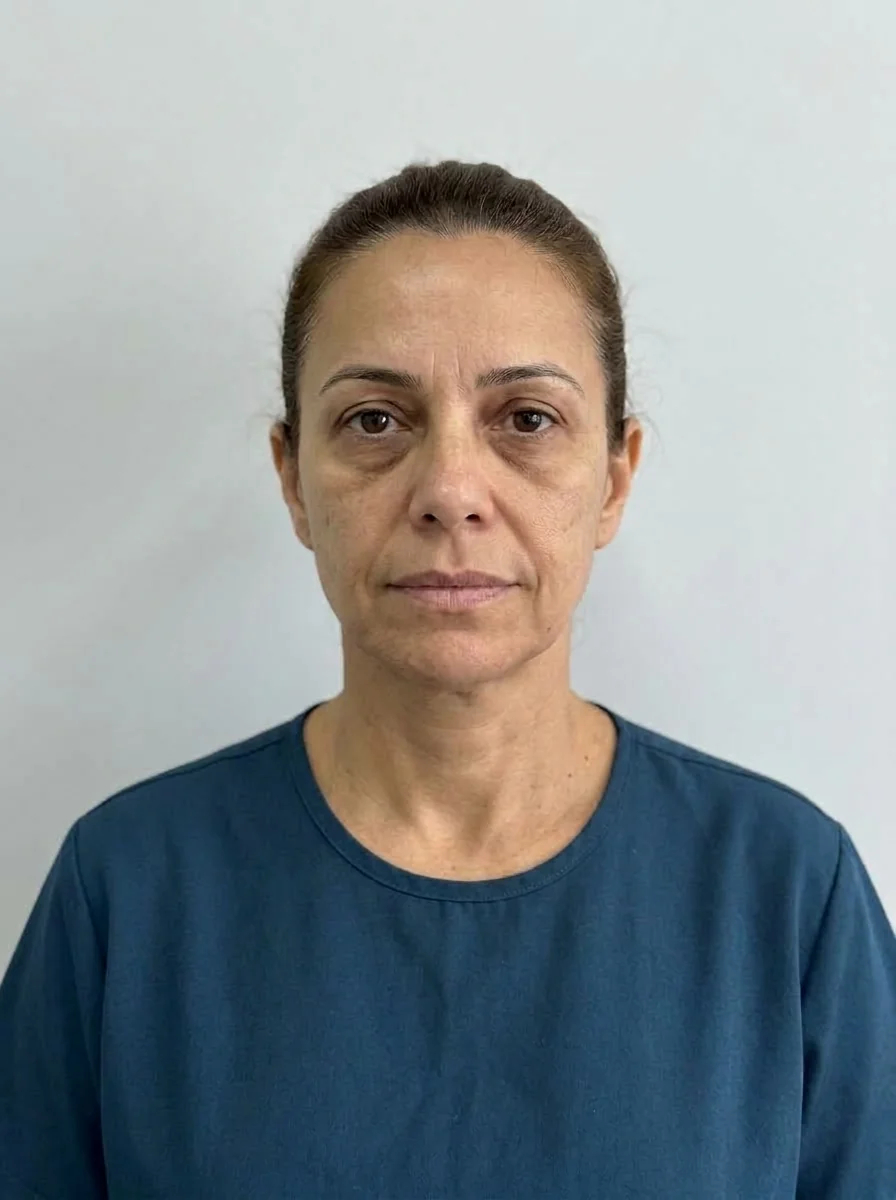 BeforeSimulation
- Muscle
- Highlighted area
Quick facts
- Topic
- Plan for a harmonious smile
- Smile structure
- Lips, mouth corners, cheekbone, teeth, gums and muscles
- Key assessment
- At rest and while smiling, from the front and the side
- Plan partners
- Dentist, orthodontist and others, when indicated
- Simulation limit
- Still frontal photo, without showing the smile in motion
A smile is a choreography between teeth, gums, lips, muscles and facial support. Working on the lip alone may improve one part and unbalance the rest. Planning a harmonious smile in facial harmonization requires looking at the whole, assessing in motion and, often, working with other professionals. This page organizes that reasoning, with a decision order, areas and the limits of the simulation.
What makes up the reading of a smile?
Six components: teeth (color, shape, position, incisor exposure), gums (amount exposed), lips (thickness, contour, cupid's bow, symmetry), mouth corners (commissures, inclination), middle third support (cheekbone, fold, buccal corridor) and muscles (elevators, depressors, orbicularis). Each one contributes, and the patient usually points to only one. See smile analysis in facial harmonization, smile arc and lower lip curve and buccal corridor and smile.
How do you assess the smile at the consultation?
Observe from the front and the side, with the patient relaxed. Ask for a spontaneous smile (tell a joke if needed) and a wide smile. Note the height of the upper lip, the exposure of teeth and gums, the inclination of the mouth corners, the position of the cheekbone, the depth of the folds and the buccal corridor. If possible, record a photo and a short video, with consent. See smile photo in facial assessment, photo with or without a smile in planning and gummy smile photo in documentation.
| Component | What to observe | Who may be involved |
|---|---|---|
| Teeth | Color, shape, position, exposure | Dentist, orthodontist |
| Gums | Amount visible when smiling | Dentist, periodontist; toxin in selected cases |
| Lips | Thickness, contour, symmetry | Facial harmonization professional |
| Mouth corners | Inclination and depth of the corners | Facial harmonization professional; muscle assessment |
| Middle third | Cheekbone support, fold, corridor | Facial harmonization professional |
Which areas usually enter the plan?
The lips (proportion between upper and lower, contour, projection), the mouth corners (support of the commissure and the marionette line), the cheekbone (projection that changes the position of the smile) and the nasolabial fold (depth, always with the logic of treating the cause). In a gummy smile, toxin in the elevator muscles can be considered. For teeth, dental assessment is part of the plan. See lip filler, mouth corner filler, cheekbone filler and nasolabial fold and smile.
What is the decision order?
The logic of starting with structure is in structure before detail in the facial harmonization plan, and the combination of areas is in lips and mouth corners: combining in the plan and mouth corners, marionette lines and chin: combining.
What about working with other professionals?
The smile is shared territory. Dark, misaligned teeth or teeth with inadequate exposure call for a dentist or orthodontist. Veneers and lenses change the thickness of the supporting lip and the buccal corridor, and may change the need for facial harmonization. When dental treatment is under way, talk with your colleague and agree on the order. See veneers and smile planning in facial harmonization, facial harmonization plan with lenses and veneers and facial harmonization plan after orthodontics.
How do you use the simulation, with its limits?
In Harmy, you mark Lips, Mouth Corner and Cheekbone, set the ml and intensity and see the Before and After. The projection starts from a still frontal photo. It shows the effect of volume on the lips and mouth corners, but it does not show the smile in motion, does not alter teeth or gums, and depends on the expression in the photo. So choose a photo with a neutral expression, or a discreet smile, and explain the limitation to the patient.
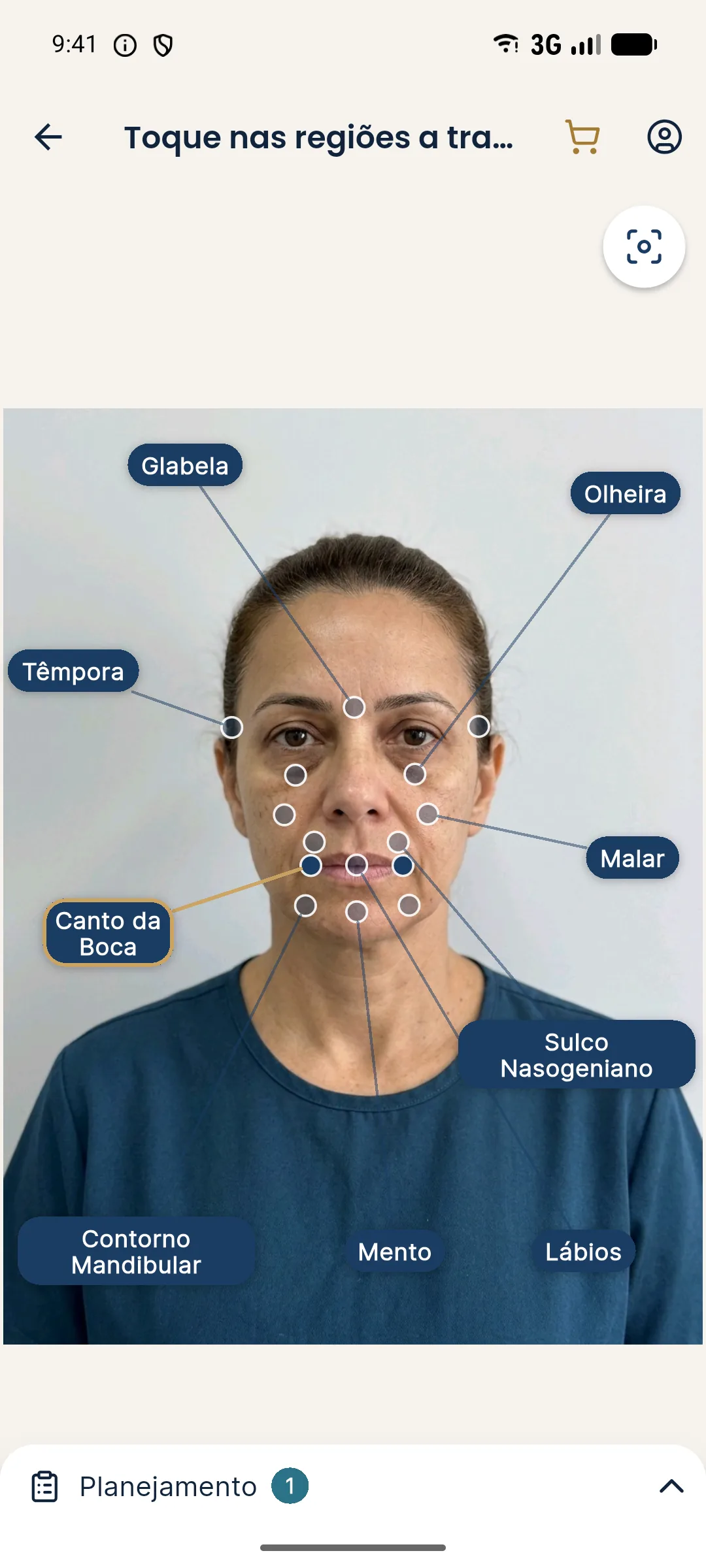
A good practice is to make two projections (lips only, and lips with cheekbone) so the patient can see the effect of each area. See comparing the Subtle, Moderate and Pronounced intensities and the simulation does not show movement.
How do you talk with the patient?
Ask "what would you change about your smile?" and have them show you in photos. Often the concern is a tooth or the gums, and the patient reached the facial harmonization office by an indirect path. Redirecting with care avoids an unnecessary procedure. If the concern is the lip, remember that the whole smile counts.
What changes at each age?
In younger people, the smile tends to show more tooth and the upper lip has more volume, and the concern is usually about proportion or gums. With age, the upper lip lengthens, incisor exposure decreases, the mouth corners drop and the fold deepens, and the concern becomes a "faded smile" or a "sad mouth". The same lip volume can be right at one stage and excessive at another. See faded smile, sad mouth and lips that disappeared with age.
Recording incisor exposure at rest today is useful for the future: if the patient returns in a few years, you will have a real point of comparison instead of their memory. It is one of the pieces of information most often missing from patient records.
Reasoning test
Summary
Planning a harmonious smile means looking at the whole: teeth, gums, lips, mouth corners, cheekbone and muscles. Assess in motion, work with other professionals when indicated, treat few areas per stage and use the simulation as static support.
Frequently asked questions
Which areas affect the way a smile reads the most?
Lips, mouth corners, cheekbone and the folds around the mouth, as well as teeth, gums and muscles. The relationship between them defines the harmony of the smile.
Does filling the lips improve the smile?
It can improve proportion, but it does not solve issues with teeth, gums or muscles. The plan needs to assess the whole smile, not just lip volume.
Is toxin used for a gummy smile?
In selected cases, toxin can reduce gum exposure by acting on the muscles that lift the lip. The indication and dose are the professional's call, after assessment.
Does the simulation show the smile?
The projection uses the frontal photo submitted by the professional. It does not show the movement of the smile, but it lets you see the effect of volume in areas such as the lips and mouth corners.
Harmy images are illustrative simulations generated by AI from the patient's photo to support the conversation between practitioner and patient. They are not a promise of results. Indication, technique, product and volume are solely the decision of the licensed practitioner. This content is for information only and does not replace a clinical assessment.