
Smiling or Neutral Photo in Facial Planning

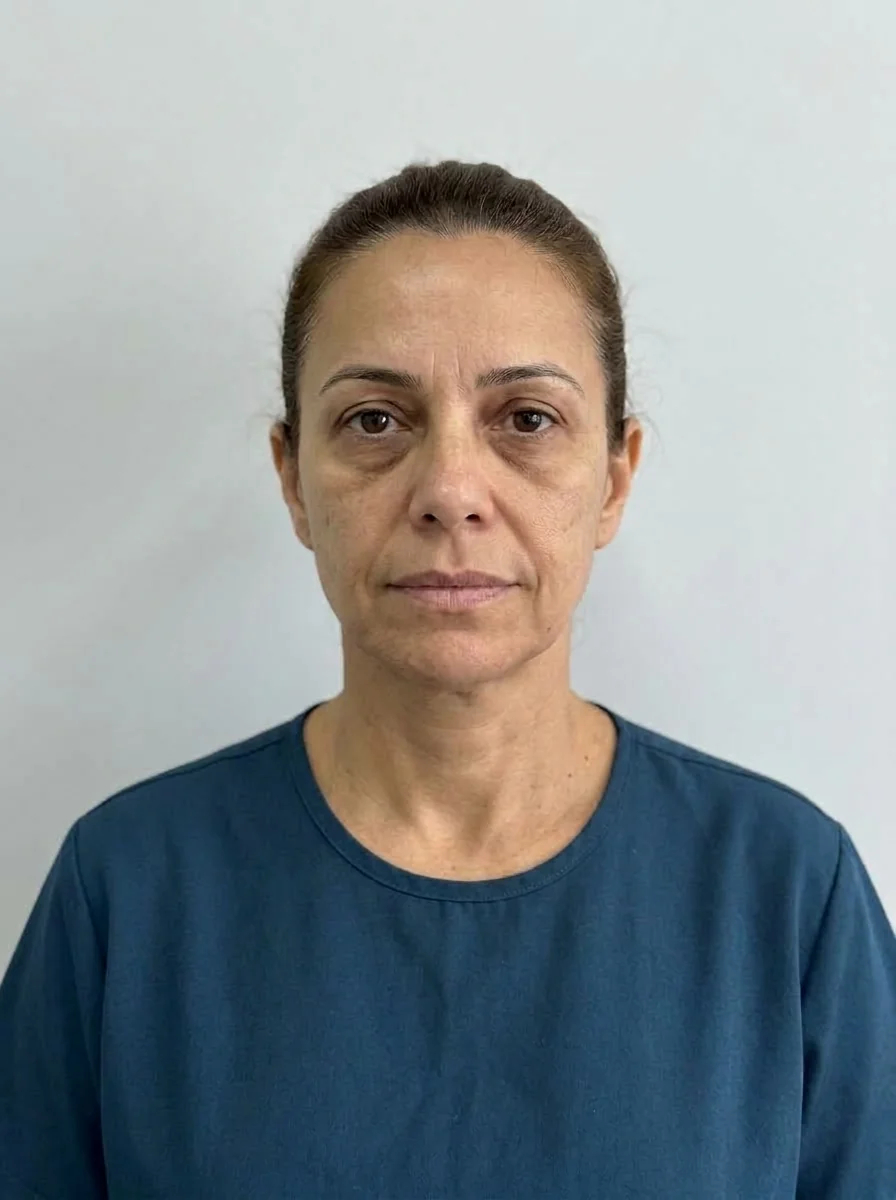 BeforeSimulation
- Muscle
- Highlighted area
Quick facts
- Short answer
- Both: neutral to measure, smiling to see the dynamics
- Neutral photo
- Measures thirds, symmetry, volume and position at rest
- Smiling photo
- Shows folds, mouth corners, tooth display and muscle action
- Rule
- Label every photo and never swap one for the other
The question comes up again and again for anyone organizing photo records: should the patient smile or stay serious in the planning photo? The honest answer is that each one answers a different question, and giving up either one makes the plan poorer. The neutral photo measures; the smiling photo shows what the face does.
This page explains what each photo reveals, how each one changes the reading of lips, mouth corners, nasolabial fold and midface, and when it makes sense to prioritize one or the other. The detail of smile analysis is in smile analysis in HOF.
What does the neutral photo measure?
It is the resting photo, with a neutral expression (see neutral expression in the planning photo). It serves everything that depends on static proportion:
- height of the thirds and the relationship between them;
- overall symmetry and position of the midline;
- lip volume at rest, which is the real volume that will be treated;
- position of the eyebrows, mouth corners and chin;
- contour of the jaw and cheekbone without the distortion of a smile.
Without this photo, every measurement carries the error of muscle contraction. It is the baseline for comparing before and after over time, because a neutral expression is the only reproducible one.
What does the smiling photo add?
A smile activates muscles that change the whole face. The zygomaticus major lifts the corner of the mouth, the modiolus shifts, the nasolabial fold deepens and the cheekbone rises. The smiling photo shows all of this and reveals:
- how the fold forms and how much it deepens when smiling;
- incisor display and the buccal corridor;
- the dynamic symmetry of the mouth corners;
- the expression lines around the eyes and mouth;
- the position of the upper and lower lip in motion.
| Question | Photo that answers it |
|---|---|
| What is the lip volume today? | Neutral |
| Is the fold deep at rest or only when smiling? | Both |
| Is the asymmetry structural or only dynamic? | Both, compared |
| How much tooth shows at rest? | Neutral |
| How does the mouth corner behave when smiling? | Smiling |
| Is the lower third proportional? | Neutral |
How does the smile change the plan for each area?
Lips
Lip volume is decided on the neutral photo, but how the lip behaves in the smile guides the distribution. A short upper lip that barely rises, or a lower lip that disappears when smiling, are findings that only the smile shows. The lip volume plan also depends on the relationship with the chin, covered in lips and chin: balance of the lower profile.
Mouth corners
A mouth corner that droops at rest may turn into an asymmetric smile, or the other way around. Only by comparing the two photos can you tell which situation it is. See also lips and mouth corners: why combine them in the plan.
Nasolabial fold
A fold that deepens a lot when smiling suggests muscle action and sagging of the midface at the same time. What looks like a deep fold at rest may be mild in the smile, and the reverse is also true. The approach depends on the cause, as discussed in treating the fold or the cause of the fold.
Midface
A smile lifts the cheekbone and changes its appearance. The reading of midface volume should come from the neutral photo, because the smile lends the face a volume that is not there at rest.
When is one photo worth more than the other?
The priority depends on the decision you are about to make.
- Deciding volume and proportion: neutral photo.
- Deciding muscle action and toxin: smiling and expression photos.
- Deciding folds and mouth corners: both, side by side.
- Comparing with the result: the same photo used for the before (neutral with neutral, smiling with smiling).
A correct comparison requires the same framing, light and expression, as in photo records at each stage of the plan.
What kind of smile to ask the patient for?
A forced smile is the worst for analysis: it pulls the mouth, lifts the midface artificially and hides the spontaneous one. Prefer these instructions:
- ask for a soft smile, the kind you give when greeting someone;
- ask for a spontaneous smile, after light conversation or a short joke;
- ask for the broad smile only afterward, when the analysis requires it;
- avoid commands such as "smile showing your teeth" without a clinical need.
Which photo to use in Harmy?
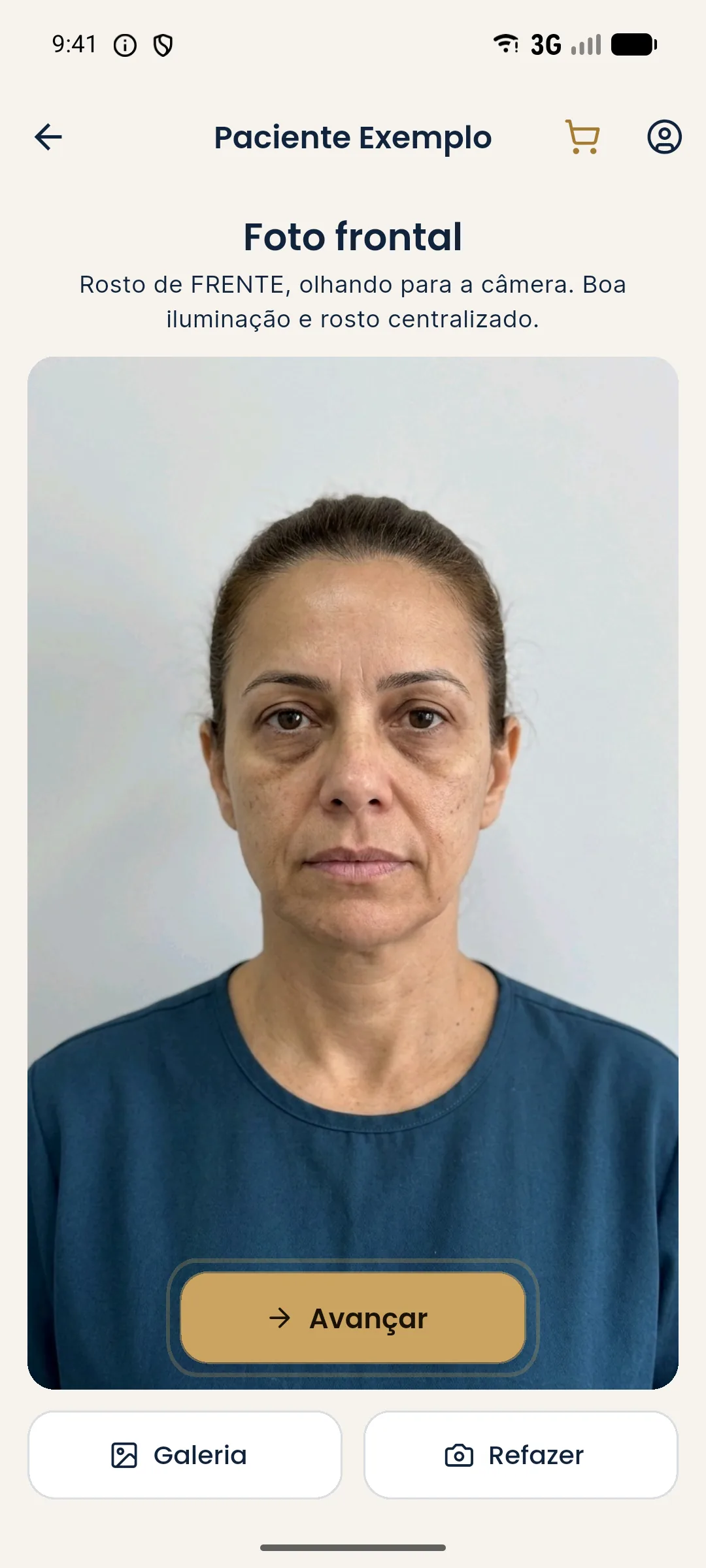
This does not mean the smiling photo has no value. Keep it in the patient record, as a record of the dynamics. For capturing the photo in the app, the step-by-step is in standardized front photo.
What if the patient only has smiling photos?
Social media photos tend to be smiling ones. If they are the only ones available, use them as a reference for dynamics and not as a measuring baseline. Take the neutral photo during the consultation itself. Explain to the patient that the still face is the basis of planning, not an "ugly" photo.
Another common situation is the patient who does not like to smile. In that case, the record of the spontaneous smile may come from a short video of them talking, with authorization, that shows natural movement. The question of movement is covered in dynamic facial analysis in expression.
Quiz: smile or not?
Summary
- Photograph both: neutral to measure, smiling to understand the dynamics.
- The neutral photo is the baseline for proportion and for comparison over time.
- The smile shows folds, mouth corners, tooth display and muscle action.
- Always compare photos with the same expression.
- In Harmy, upload the neutral photo and keep the smiling ones in the patient record.
Frequently asked questions
Should I photograph the patient smiling or not smiling for planning?
Both. The neutral photo is the measuring baseline; the smiling photo shows folds, mouth corners, tooth display and muscle action, which also factor into the plan.
Which photo do I use for the projection in the app?
The neutral photo, at rest, is usually the best choice, because the app does not change the expression and the projection keeps what is in the photo. Use the smiling one to study the dynamics outside the app.
Can the patient's smile hide an asymmetry?
It can hide one or create one. That is why it helps to compare the neutral and smiling photos: if the asymmetry shows up only when smiling, it is dynamic; if it shows in both, it is structural.
What kind of smile should I ask for?
Ask for a soft, spontaneous smile and, if possible, a broad one too. Avoid the forced smile, which changes the position of the lips and the midface.
Harmy images are illustrative simulations generated by AI from the patient's photo to support the conversation between practitioner and patient. They are not a promise of results. Indication, technique, product and volume are solely the decision of the licensed practitioner. This content is for information only and does not replace a clinical assessment.