
Skeletal-looking face: loss of fat and bone

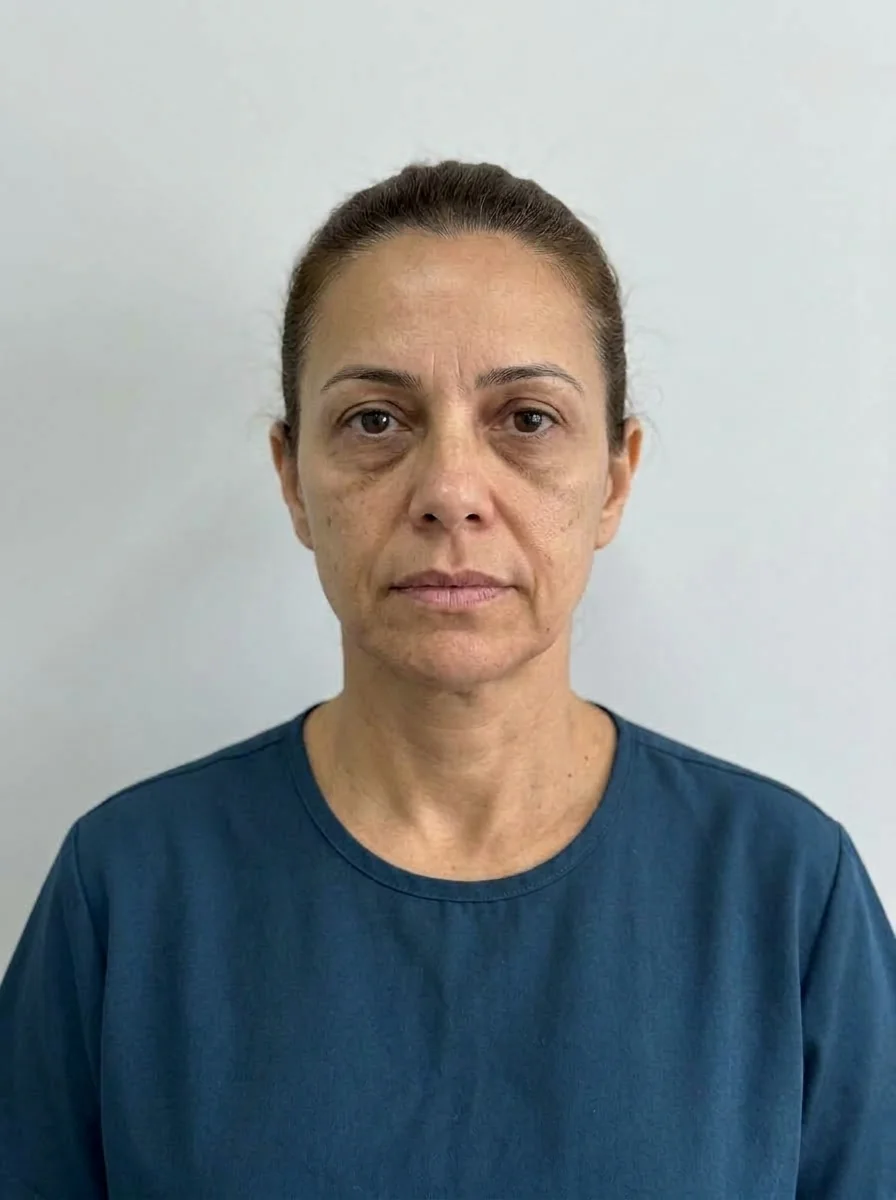 BeforeSimulation
- Nerve
- Highlighted area
Quick facts
- Concern
- Concave temples, sunken eyes and an empty cheekbone, with the bone very visible
- Key insight
- The sum of temple, orbit and cheekbone creates the look, and treating a single area is not enough
- Supporting measure
- Photo with light from above, temple profile and depth of the orbit
- Limit
- In extreme thinness or illness, the priority is medical assessment before any aesthetics
The skeletal look is a strong expression that patients rarely use. What they say is "my face is too thin," "my face is just bone" or "my eyes are very sunken." Anyone looking at the face notices the same thing: the temple forms a concavity, the orbit looks hollowed out, the cheekbone has no volume and the outline of the bone is on display.
It is a concern that touches a sensitive spot, because it can come from constitutional thinness, aging, a restrictive diet or illness. This page helps you read the three areas that contribute the most, recognize when the subject is not aesthetic and plan with caution. For related cases, see gaunt face, sunken eyes and facial bone loss.
Which areas form the skeletal look?
Three areas act together, and it is their sum that creates the effect. The temple loses the temporal fat pad and muscle volume, and the temporal fossa becomes accentuated as a lateral depression. The orbit looks deeper when the orbital rim becomes evident and the periorbital fat decreases, with the transition between eye and cheek marked. The cheekbone loses projection, and the zygomatic bone becomes more visible under the skin.
Each area on its own is common. Together and accentuated, they form the look the patient describes. That is why an approach that treats only the tear trough or only the temple usually disappoints: the shadow of one area extends into the other.
How to assess each area?
Examine one at a time, with the patient relaxed and with a neutral expression. In the temple, observe the concavity in frontal and oblique view and palpate the thickness of the tissue. In the orbit, observe the depth of the palpebromalar groove and how evident the rim is. In the cheekbone, assess projection in profile and the position of the highest point. The anatomy of each area has its own page: temporal anatomy for injectables, periorbital anatomy for injectables and orbital rim.
| Area | What is seen | What may be behind it |
|---|---|---|
| Temple | Lateral concavity in the forehead | Loss of the fat pad and muscle volume |
| Orbit | Sunken eye, marked groove | Rim resorption and fat loss |
| Cheekbone | Visible bone, no projection | Loss of deep fat and bone |
| Skin | Thin and translucent | Loss of collagen and thickness |
| Overall | Hollowed look | Sum of all the losses |
For the general reasoning, see deep facial fat loss and temple aging.
What can facial harmonization offer?
Facial harmonization offers support, not reconstruction. In very thin faces, the strategy is usually conservative, because the covering tissue is thin and any irregularity shows. The options discussed, at the discretion of the qualified professional, after assessment, are:
- Temple support, to soften the lateral concavity. See temple filler.
- Cheekbone support, to restore projection and reduce the shadow under the eye. See cheekbone filler.
- Softening of the tear trough, when relief remains, after cheek support. See tear trough filler.
- Biostimulator, in selected cases, for skin quality and thickness, as in biostimulator in the temples.
The risks need to be clear. The temple and tear trough are areas requiring vascular attention, and possible complications include swelling, bruising, asymmetry, nodules, the Tyndall effect in thin skin and, rarely, vascular occlusion. Hyaluronidase must be available. In very thin skin, visibility of the material is a real risk, and planning must take this into account.
In what order to act?
The usual order is structure before detail. This means starting with the temple and cheekbone, which support how the face reads, and leaving the tear trough for later, if still needed. Avoid filling the tear trough before the cheek gains support: the product may become visible and the shadow will remain. The logic is in cheekbone and tear trough combined in the plan and in facial skeleton before injecting.
How to talk to the patient?
Avoid harsh words. Speak of "loss of support" and "shadows," not "skeletal." Be clear about what facial harmonization does: it softens, it does not rebuild. Explain that the gain comes from the sum of small stages, and that looking fuller is not the goal. If the face looks unwell for clinical reasons, say so tactfully and refer.
And Harmy?
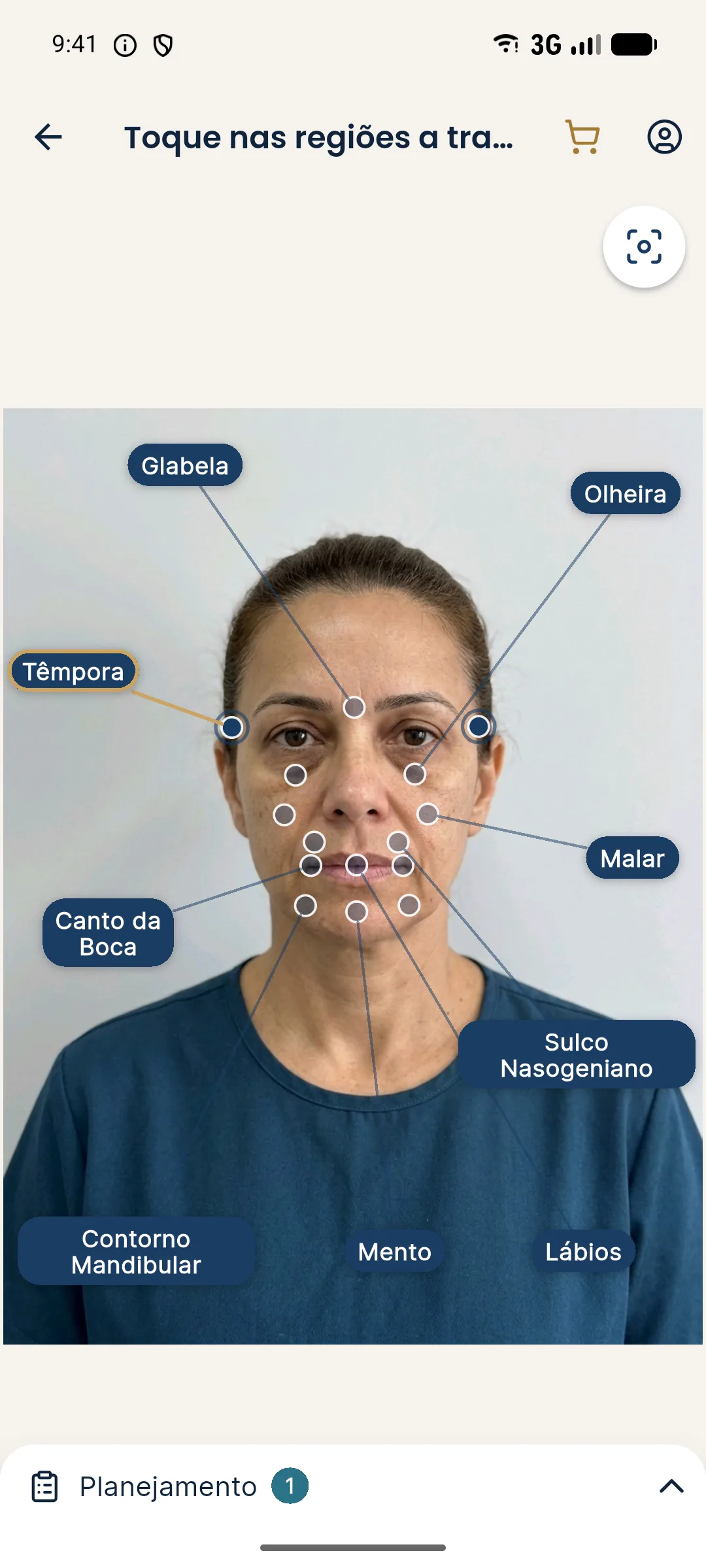
The app marks Temple, Tear Trough and Cheekbone, and the projection shows the added support discreetly. For this case, the simulation is especially useful to illustrate how the three areas interact: mark one first, then the other, and let the patient notice the cumulative effect. The projection uses only the frontal photo and does not alter the skin.
Frequently asked questions
What gives the face a skeletal look?
The combination of hollow temples, deep orbits, a cheekbone without volume and thin skin, which makes the bone more evident. Thinness and aging speed up the picture.
Does filler improve the skeletal look?
It can soften the shadows by restoring support in the temple, cheekbone and the transition between eye and cheek, in conservative volumes. The effect is one of softening, not reconstruction.
When does the concern require a physician before aesthetics?
When there is involuntary weight loss, chronic illness, malnutrition or an eating disorder. In these cases medical assessment comes first.
Is it safe to treat the temples and tear troughs?
These are areas requiring vascular attention. The professional must explain risks such as swelling, bruising, asymmetry and, rarely, vascular occlusion, with hyaluronidase available.
Harmy images are illustrative simulations generated by AI from the patient's photo to support the conversation between practitioner and patient. They are not a promise of results. Indication, technique, product and volume are solely the decision of the licensed practitioner. This content is for information only and does not replace a clinical assessment.