
Nasolabial Fold Filler: Risks and Blood Vessels

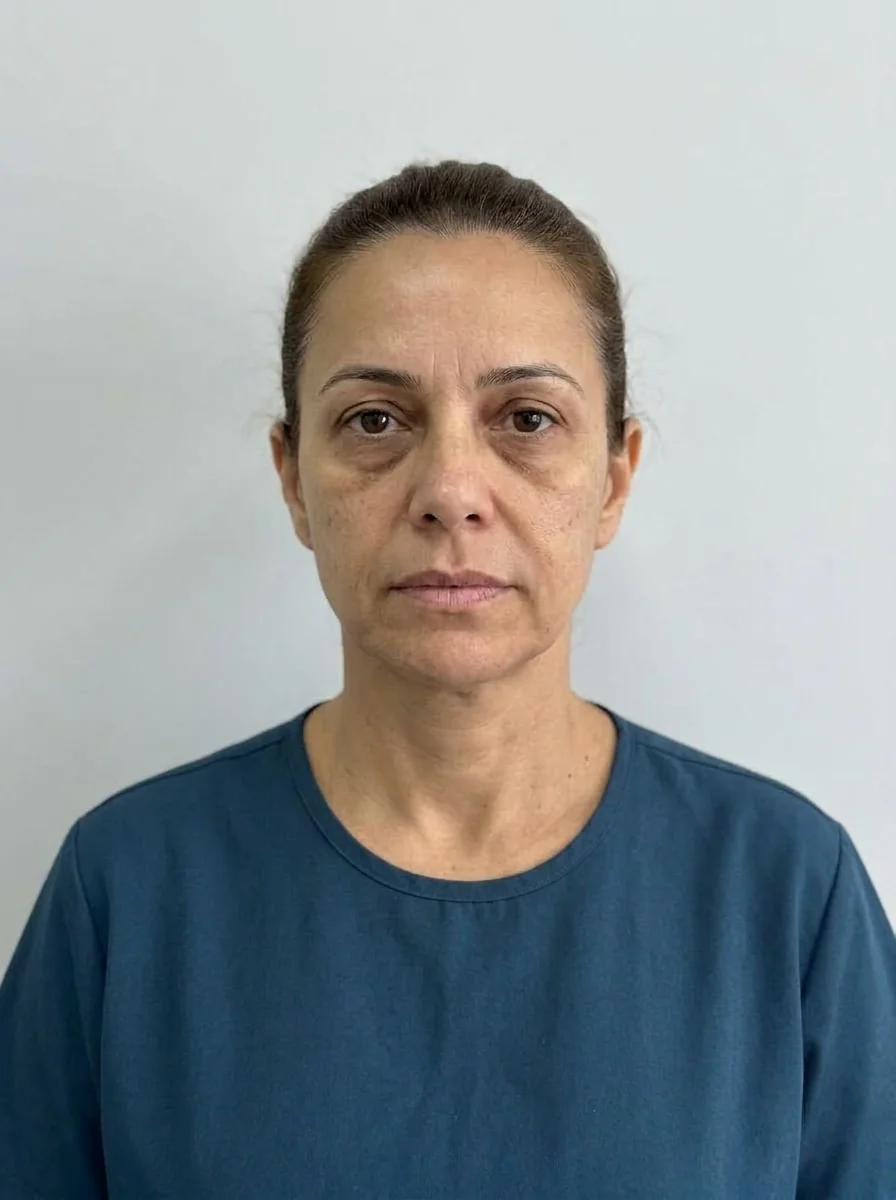 BeforeSimulation
- Artery
Quick facts
- Question
- What are the risks of filling the nasolabial fold
- Central risk
- Vascular occlusion through the angular artery and the facial artery
- Signs
- Intense pain, pallor, net-like patches, visual change
- Management
- Stop, recognize early, hyaluronidase and referral, at the professional's discretion
The nasolabial fold is one of the most frequent complaints in the clinic and, at the same time, one of the areas that demand the most respect for vascular anatomy. This page gathers the risks at review level, what the patient should know and how to organize consent. It is not an injection protocol: technique, plan and product choice belong to the licensed professional, in line with the rules of their professional board.
Why is the fold considered a high-risk area?
Because of the neighboring vessels. The facial artery rises from the jaw region toward the side of the nose, and its terminal branch, the angular artery, runs close to the fold and the side of the nose. Along their course these vessels show significant anatomical variation: caliber, depth and position change from person to person, and even between the two sides of the same face.
In addition, there are communications (anastomoses) between the territory of the face and that of the orbit and nose. In rare situations, material injected into a vessel can be carried to places where it is not expected. That is why the area appears on the list of high vascular risk zones, alongside the glabella, nose, temples and tear trough.
What complications are possible?
| Complication | Relative frequency | What can happen |
|---|---|---|
| Swelling | Very common | Swelling in the first days, which subsides |
| Bruise and discoloration | Common | Skin mark, sometimes more visible on the second day |
| Asymmetry and irregularity | Common | Volume difference between the sides or palpable contour |
| Nodules | Less common | Inflammatory hardening or hardening from product accumulation |
| Infection and biofilm | Rare | Redness, heat, pain and discharge, sometimes late |
| Vascular occlusion | Rare | Skin ischemia, with risk of necrosis |
| Visual complication | Very rare | Loss or change of vision (amaurosis) |
The terms "common" and "rare" here serve as a qualitative order of magnitude. No public page should be read as risk statistics, and each patient's consent must be personalized.
Which signs call for immediate action?
Early recognition is what most changes the prognosis. Watch for:
- Intense, disproportionate pain that does not improve, during or right after the injection.
- Pallor or darkening of the skin over the vessel's territory, sometimes with local coolness.
- Purplish net-like patches, the livedo reticularis, which can appear within minutes to hours.
- Slow capillary refill: the whitening caused by light pressure takes a long time to return.
- Visual symptoms: blurring, loss of visual field, eye pain or a drooping eyelid.
Specific protocols, doses and reversal regimens vary between services and in the literature, and must be defined by the person treating, according to their training and the rules of their board. For an overview of the topic, see vascular occlusion in the nasolabial fold and visual complication after filler.
How does risk enter the planning decision?
Reducing risk is not only about technique: it starts earlier, with the plan. Some decisions that usually enter the assessment:
- Treating the cause (midface support) can reduce the volume needed in the crease, which is a safety gain as well as an aesthetic one. The comparison is in filling the fold or the cheekbone.
- Conservative volumes and staged sessions allow reassessment without hurry.
- A history of surgeries, scars and previous fillers in the nose or face changes the vascular map.
- A patient who takes anticoagulants, has vascular disease or is going through a period of unstable health deserves careful assessment, as in anticoagulants and injectable procedures.
What does the patient need to hear?
Informed consent requires clear language about risks, even rare ones, and about what to do. The conversation should include: what the complication is, how it shows up, why the area carries this risk and that there is a way to reverse it when hyaluronic acid is used.
The document that formalizes this conversation is the consent form. There is a template in consent form for the nasolabial fold, which should be reviewed legally and adapted to the rules of your board. For the general concept, see informed consent.
Where Harmy fits in and where it does not
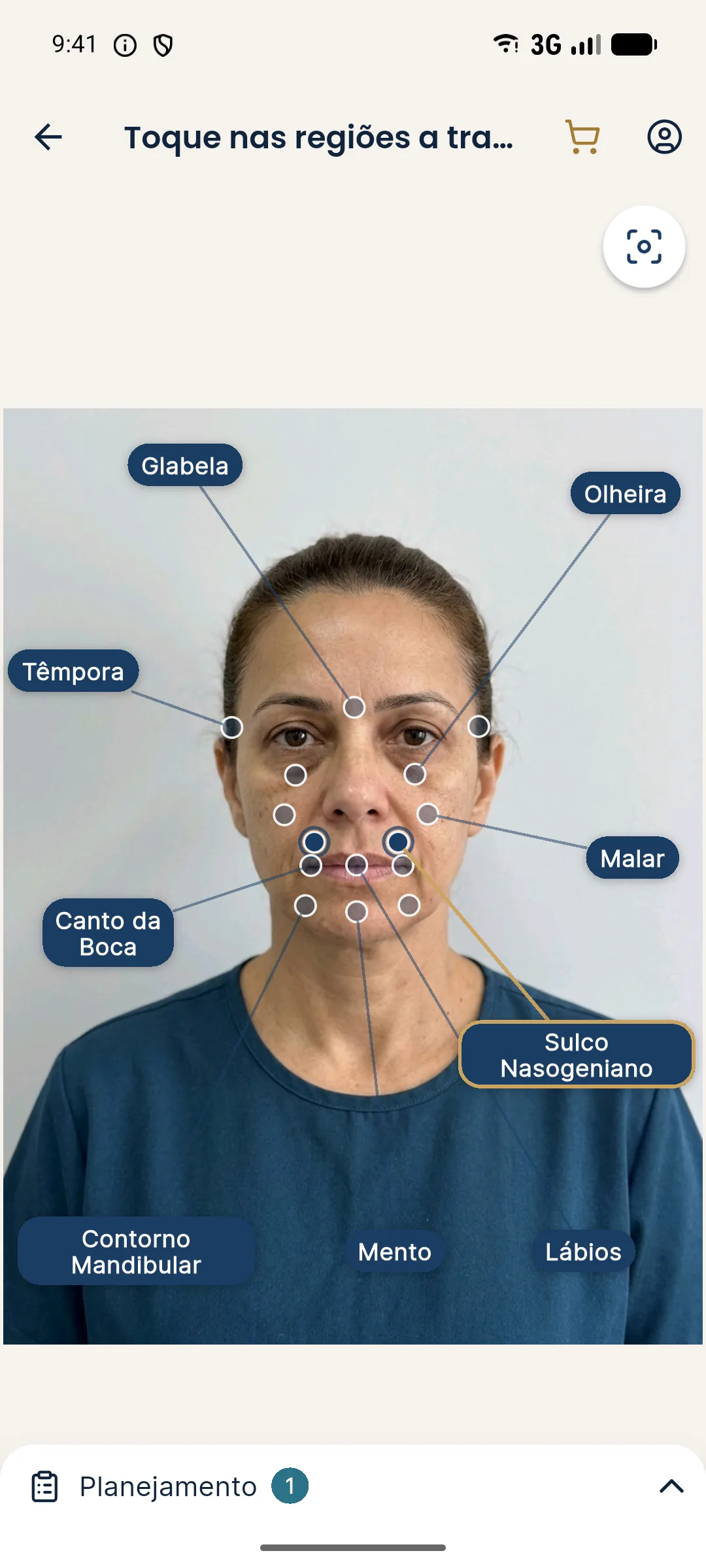
Harmy is a communication and visual planning tool: you mark the Nasolabial Fold area, set the volume in ml and show the projection. It does not assess vessels, recommend technique or measure risk. The safety gain is indirect: a conservative projection helps align expectations and justify smaller volumes, which reduces the pressure for "just a little more".
Frequently asked questions
Is the nasolabial fold a dangerous area to fill?
It is considered a high vascular risk area, because the facial artery and the angular artery run close by and communicate with vessels of the nose and the orbit. It requires anatomical knowledge and preparation for complications.
What can go wrong with fold filler?
Bruising, swelling, nodules, asymmetry and, more rarely, vascular occlusion with skin necrosis or visual change. Hyaluronidase must be available when hyaluronic acid is used.
Which signs indicate vascular occlusion?
Disproportionate pain, pale or darkened skin, purplish net-like patches, slow capillary refill and any visual change. They require immediate care.
How do I explain the risk to the patient without scaring them?
By saying that serious complications are rare, that the area requires technique and preparation, that there is a way to reverse them when hyaluronic acid is used and that the patient should speak up right away if anything seems out of the ordinary.
Harmy images are illustrative simulations generated by AI from the patient's photo to support the conversation between practitioner and patient. They are not a promise of results. Indication, technique, product and volume are solely the decision of the licensed practitioner. This content is for information only and does not replace a clinical assessment.