
Nasolabial fold and cheekbone: treat together or separately

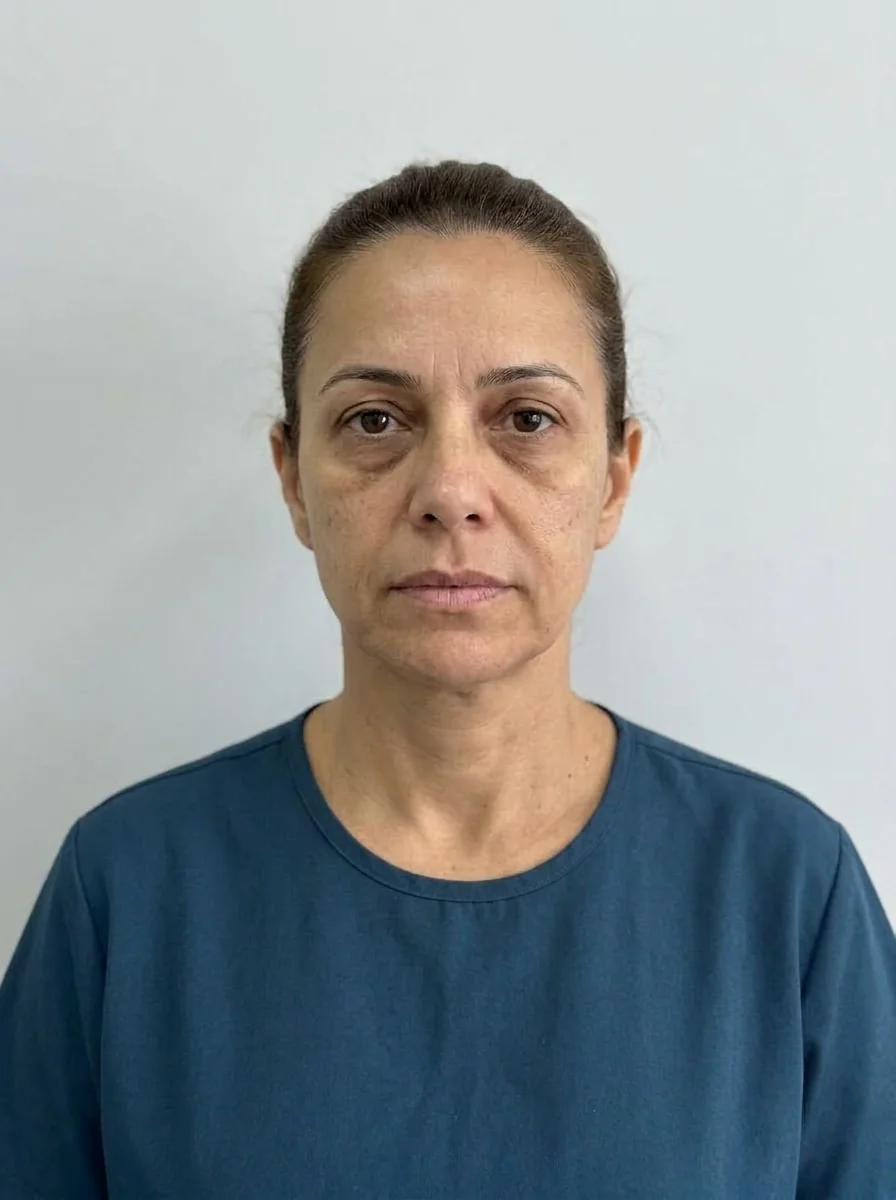 BeforeSimulation
- Highlighted area
Quick facts
- Central question
- Is the fold the cause of the concern, or the reflection of an unsupported cheekbone?
- Usual order of reasoning
- Assess the cheekbone first, reassess the fold afterward
- Vascular risk
- The nasolabial fold is a high-risk area, and the anteromedial cheekbone also calls for care
- Simulation in Harmy
- Cheekbone and Nasolabial Fold points, each with its own ml and intensity
- Who decides
- A licensed professional, after assessment
The concern "smile lines" (the so-called "Chinese mustache" in Brazilian Portuguese) reaches the office almost automatically, and the automatic answer is usually "fill the fold." But the nasolabial fold is often a consequence, not a cause: when the cheekbone loses support, the midface descends and the fold deepens. This page helps you decide whether cheekbone and fold go in together, in sequence or separately, and how to show that logic to the patient with the simulation. The final decision belongs to the licensed professional, following the rules of their professional council in Brazil.
Is the fold the concern or the symptom?
Look at the face before you look at the fold. If the cheek area is flat, if the light does not "land" on the highest point of the cheekbone and the skin around the fold seems to slide inward, there is a support component. In that scenario, treating only the fold usually takes more product for the same effect and can leave the midface heavy. The cause-and-consequence reasoning is also covered in treating the fold or the cause of the fold.
In other faces, the cheekbone is good and the fold is deep for local reasons: thin skin, expression habits, volume loss in the area itself, teeth and maxillary bone. There the fold deserves its own plan. The difference between the two scenarios changes the order, the volume and the conversation with the patient.
How does the cheekbone influence how the fold reads?
The cheekbone is the anchor point of the midface. When it projects well, the cheek skin has somewhere to "anchor" the transition into the fold, and the crease looks softer. When it sinks, the weight of the area falls onto the fold, and any volume placed only there tends to look filled. That is why the cheekbone so often comes before the fold in plans.
But there is a limit: the cheekbone does not solve everything. Deep folds related to movement and skin still call for a local assessment. And an overprojected cheekbone, used to compensate for the fold, can widen the face and change facial identity. The discussion on ideal projection is in ideal cheekbone projection, and the view on fat compartments in midface fat compartments in the plan.
Which criteria decide between together, in sequence or separately?
The table below organizes the reasoning. It is not a rule; it is a map for the technical conversation.
| Observed scenario | Reasoning | Possible plan organization |
|---|---|---|
| Flattened cheekbone, mild to moderate fold | Support is the main cause | Start with the cheekbone and reassess the fold |
| Adequate cheekbone, deep fold | Local cause | Plan focused on the fold, with conservative ml |
| Flattened cheekbone and deep fold | Two causes added together | Cheekbone first, fold in a second stage, or both with low ml |
| Patient wants the result in a single session | Pressure for volume | Explain the advantages of splitting; see when to split the volume across sessions |
| History of excess in the midface | Risk of an artificial look | Plan a reduction or a pause before adding product |
In every case, the starting point is the facial exam by thirds, not the isolated concern. The structure is in facial assessment by thirds.
What changes in risk when both are in the same plan?
The nasolabial fold is an important vascular risk area, because the facial artery and its branches run nearby. The anteromedial cheekbone also calls for anatomical care. Adding both areas in the same session increases the total volume and the procedure time, and makes it harder to observe each response on its own.
Possible complications are those of any filler: swelling, bruising, asymmetry, nodules and, rarely and seriously, vascular occlusion. When hyaluronic acid is used, hyaluronidase must be available on site and the team must know how to recognize warning signs. See vascular danger zones of the face and safety and complications, overview.
How do volumes fit in the plan without becoming a protocol?
Volumes are always reference ranges for conversation, at the professional's discretion after assessment. In many plans, the cheekbone receives more volume than the fold, precisely because the goal is support, and the fold gets a smaller amount, just for local adjustment. But there are exceptions, and no range fits every face. For the logic of ranges and distribution between areas, see ml per area: ranges in planning and percentage distribution of volume between areas.
A common mistake is to decide the fold's volume before reassessing the cheekbone. If the cheek has changed enough, the fold may need little, or nothing. Reassessing at follow-up and only then closing the second area protects against excess. More on excess in when total volume becomes excess.
How do you show the logic to the patient with Harmy?
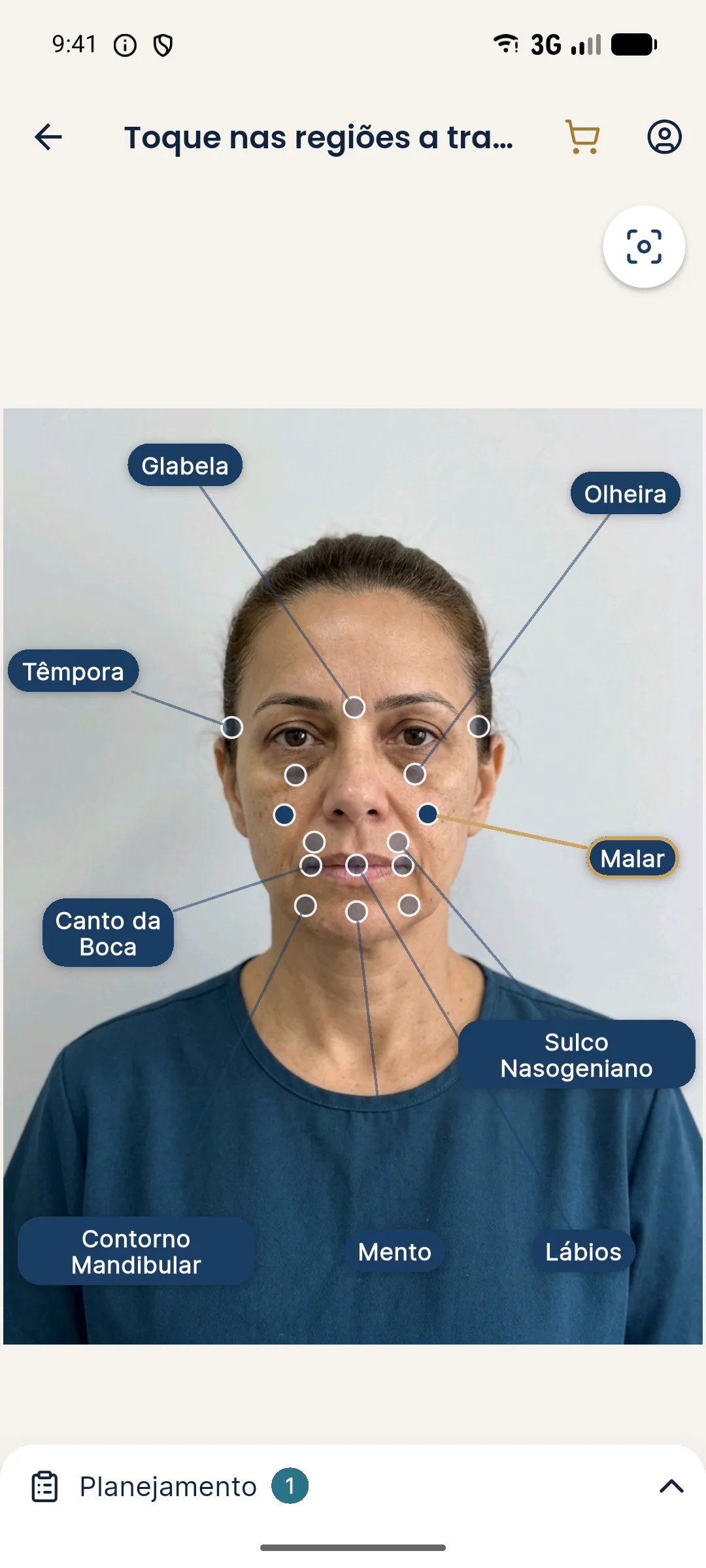
Patients tend to want "the fold gone," and the simulation helps show that the change can come from somewhere else. In Harmy, you mark the Cheekbone point and the Nasolabial Fold point on the same frontal photo, choose the ml and the intensity (Subtle, Moderate or Pronounced) for each and generate two projections to compare: cheekbone only, and cheekbone plus fold. For a bilateral area, the ml entered is the total, split between the two sides.
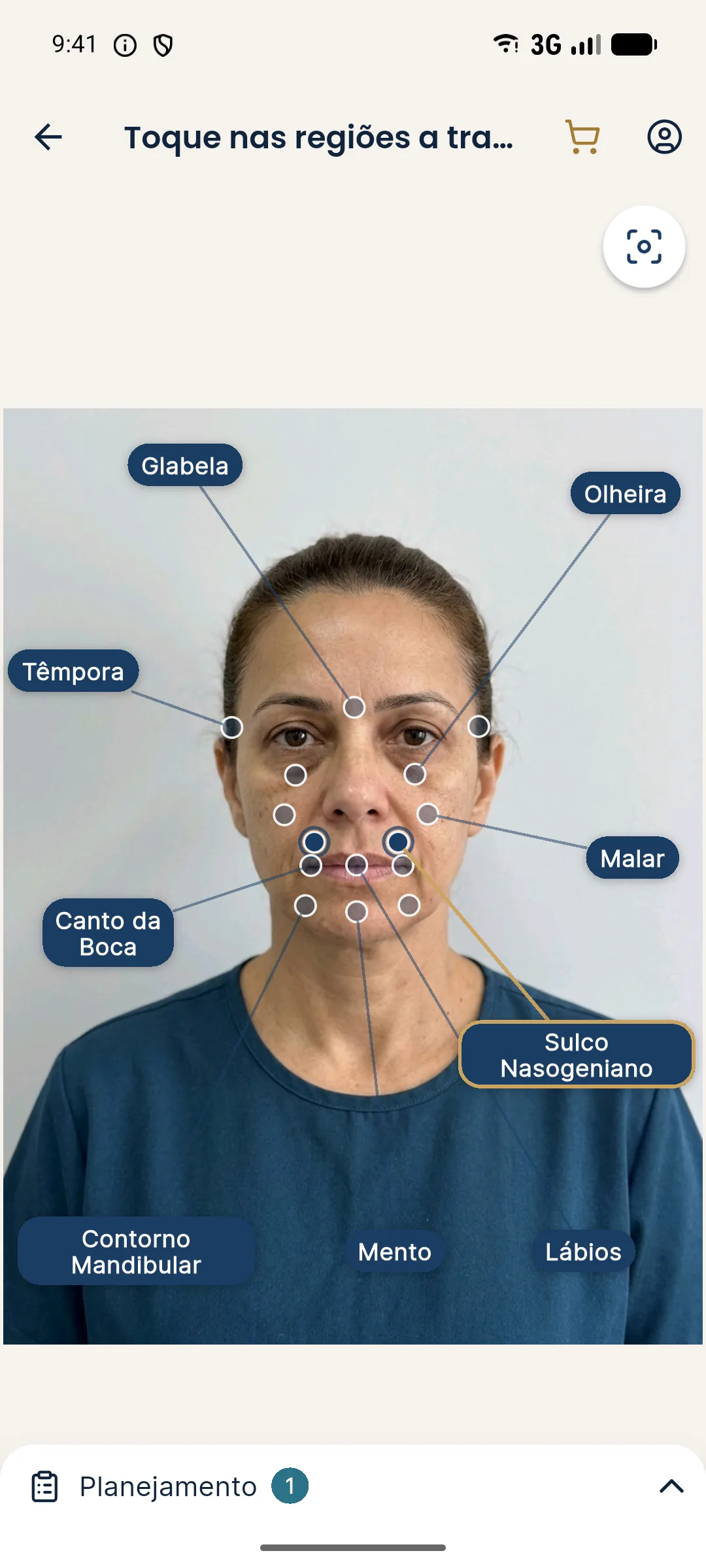
The AI respects the volume and changes only what was marked, so the differences are subtle and realistic. This helps show the patient that doubling the fold's ml does not double the benefit. To see the difference between intensities, see comparing the Subtle, Moderate and Pronounced intensities.
How do you avoid the heavy-face effect?
A heavy face usually appears when the fold is treated without looking at the cheekbone and the jawline. The fold receives volume, the crease shifts position, and the lower third ends up looking bigger. In other cases, the cheekbone gains volume to compensate, and the face widens. The way out is to look at the whole, use low volumes and reassess. The logic of the chain effect between areas is in the domino effect between facial areas.
Another safeguard is to record the visual goal in the plan: "soften the crease, keeping the expression natural." When the goal is described this way, it is easier to say no to a request to "erase" the fold. Saying no is also part of the plan; see when to say no to the aesthetic plan.
What should you tell the patient?
This line has two qualities: it does not promise that the fold will disappear and it makes clear that the decision is made in stages. If the patient insists on treating everything on the same day, return to the conversation about risk, recovery time and reassessment, and record the decision in the patient record. Recording the simulation is covered in recording the simulation in the patient record.
Check before closing the plan
Quick review
Summary
Cheekbone and nasolabial fold are neighboring, interdependent areas: the support of the first changes how the second reads. In practice, it is worth assessing the cheekbone first, reassessing the fold at follow-up and treating with low volumes, in stages, with attention to vascular safety. The Harmy simulation helps the conversation with the patient, as long as it is presented as an illustrative simulation and never as a promise.
Frequently asked questions
Does lifting the cheekbone resolve the nasolabial fold?
In some faces it improves how the fold reads because it restores support to the midface. In others, the fold stays visible and needs its own assessment. The decision is clinical and individual.
Which should be treated first, the cheekbone or the fold?
Many professionals start with the cheekbone and reassess the fold before deciding its volume. But that order is not a rule: it depends on the concern, the anatomy and the risk.
Can both be simulated together in Harmy?
Yes. You mark Cheekbone and Nasolabial Fold in the same projection, set the ml for each and compare the effect. The image is an illustrative simulation, not a promise of results.
Does treating both at the same time increase the risk?
It increases the complexity of the plan and the total volume of the session. Splitting into stages usually makes it easier to observe the tissue response and to reassess.
Harmy images are illustrative simulations generated by AI from the patient's photo to support the conversation between practitioner and patient. They are not a promise of results. Indication, technique, product and volume are solely the decision of the licensed practitioner. This content is for information only and does not replace a clinical assessment.