
Botox or filler for smile lines: which one works

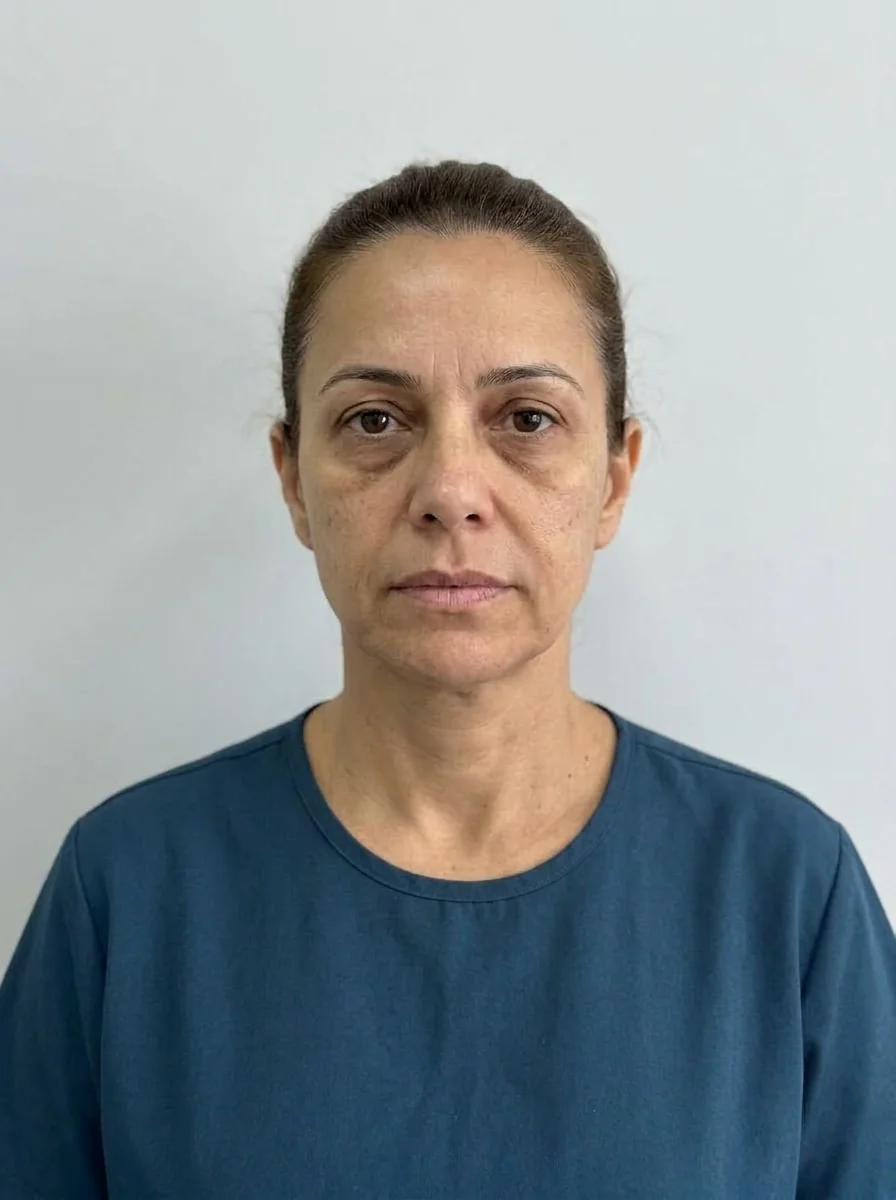 BeforeSimulation
Quick facts
- Key question
- Does the fold deepen with a smile (dynamic) or is it already marked with the face relaxed (static)?
- Toxin
- May have a role in specific cases, but it does not fill the fold.
- Filler
- Usually considered for the static fold, sometimes along with cheekbone support.
- Risk
- High vascular risk area: hyaluronidase on hand and warning signs explained.
"Smile lines" (in Brazil, "bigode chinês") is what patients call the nasolabial fold, the crease that runs from the side of the nose down to the corner of the mouth. The question they bring, botox or filler, assumes there is a product to "erase" the fold. It is almost never that direct.
Is the fold dynamic or static?
Every face has a nasolabial fold. What changes is its depth and what causes it. Three situations are worth observing:
- Dynamic: the fold deepens when the patient smiles and softens with the face relaxed.
- Static: the crease stays marked even at rest.
- Mixed: both, the most common.
A dynamic wrinkle is related to movement, and a static one to loss of support, volume and elasticity. To treat the fold, the professional's reasoning has to start there.
When does botox enter the conversation?
Botulinum toxin does not fill. It reduces muscle contraction. In some cases, the professional may think about relaxing muscles that influence the movement of the upper lip and the nostril wing, but that is an individual decision and not the standard path for the fold.
As a communication rule, it is more honest to tell the patient that botox is not usually the answer for smile lines, because the fold depends mostly on volume and support, not only on movement.
And filler: does it solve it?
Hyaluronic acid is the tool the professional usually considers, but there is a frequent point of disappointment: filling only the fold can leave the result heavy or "overstuffed". In a good share of cases, the improvement comes from supporting the area above (the midface, with the cheekbone) so the tissue stops hanging over the fold.
| Situation | What the professional usually considers |
|---|---|
| Mild, dynamic fold | Advise and monitor; sometimes there is nothing to do |
| Static fold, cheek with good support | Filler directed at the fold, in discreet volume |
| Static fold, cheek without support | Assess cheekbone support before or together with the fold |
| Significant laxity | Other strategies may come in, individual decision |
What are the specific risks of this area?
The nasolabial fold is a high vascular risk zone. The facial artery and its branches run close by, and vascular occlusion can cause skin necrosis and, in rare cases, more serious changes. This does not rule out the procedure, but it requires anatomical knowledge, aspiration and slow injection in small amounts, plus a known action plan.
What to tell the patient
Myth or fact
How to simulate in Harmy
The Nasolabial Fold point is one of the app's areas, and the "Maintenance" shortcut uses 1 ml Subtle. The projection shows an honest, subtle change, and lets you combine it with the cheekbone so the patient sees that supporting the cheek also changes the fold. It is an illustrative simulation, not a promise. More about the area in nasolabial fold filler and cheekbone filler.
When to refer or be more conservative?
Not every fold needs a procedure. In young people with a mild, symmetrical fold, the best advice may be to do nothing, and that is a service. It is also worth being more conservative when there is significant cheek laxity, because volume placed over tissue that is descending tends to accentuate the heaviness of the lower third. In those cases, the professional can discuss other support strategies, always without promising results.
Frequently asked questions
Does botox remove smile lines?
Generally not. Toxin relaxes muscle, but the nasolabial fold comes mainly from volume, laxity and skin creasing. In specific cases the professional may use it on muscles that influence movement in the area.
Is filler the best option for smile lines?
It may be considered when the fold is marked at rest, but often the gain comes from supporting the cheek above. The choice belongs to the professional, after assessing the whole face.
Can filling only the fold look artificial?
It can. When only the line is filled, without looking at the support of the area above, the result tends to look heavy. That is why assessing the midface is part of the planning.
What is the risk of nasolabial fold filler?
The area has larger-caliber vessels close to the skin, and vascular occlusion, although rare, is serious. Hyaluronidase must be available and the patient needs to know the warning signs.
Harmy images are illustrative simulations generated by AI from the patient's photo to support the conversation between practitioner and patient. They are not a promise of results. Indication, technique, product and volume are solely the decision of the licensed practitioner. This content is for information only and does not replace a clinical assessment.