
Shadow under the nose: what it is and what to assess

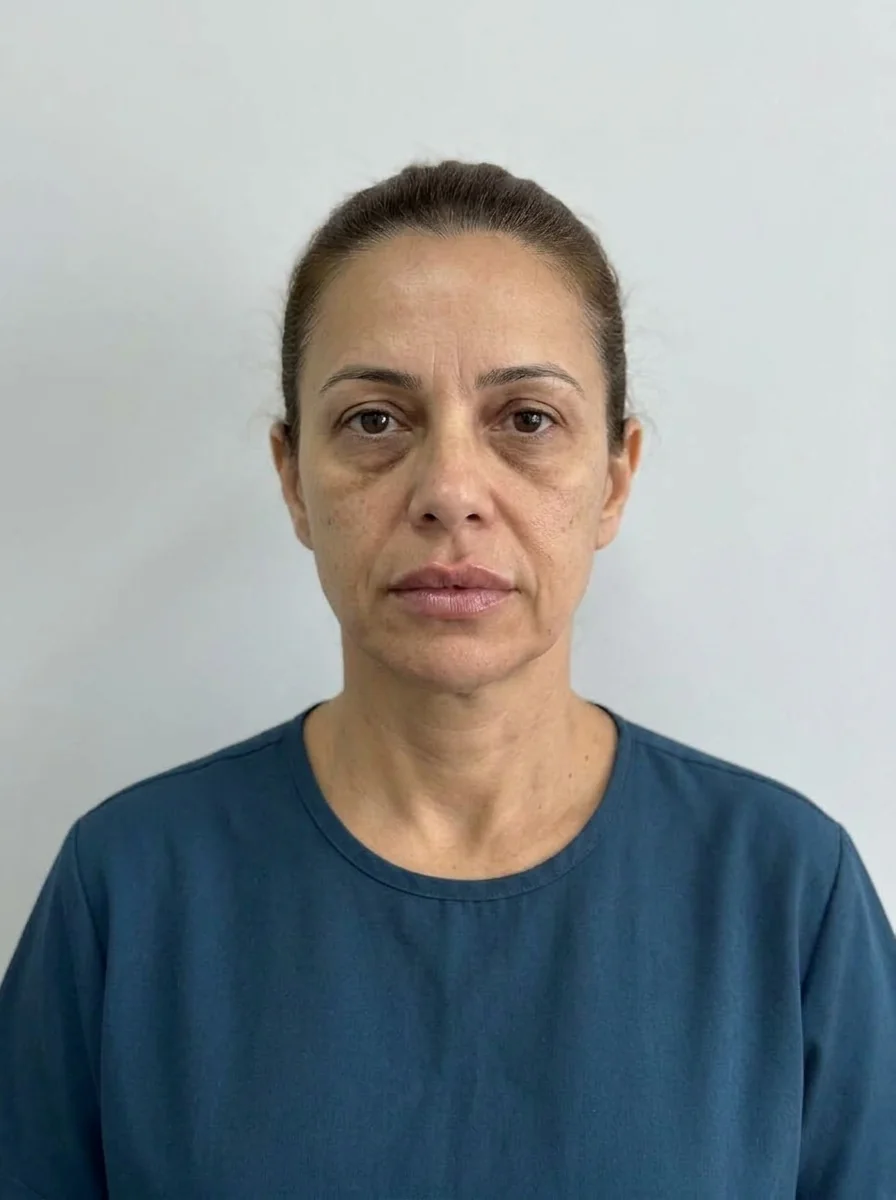 BeforeSimulation
- Nerve
- Highlighted area
Quick facts
- Concern
- A dark shadow under the nose and above the lip that "dirties" the photo
- Factors
- Overhead light, tip projection, nasolabial angle, upper lip and hair
- Distinction
- Lighting shadow is not an anatomical flaw and changes with every photo
- Limit
- Not every shadow under the nose is treatable; the first step is adjusting the light
A shadow appears under the nose in almost every photo taken under ceiling light. The person looks at the image and thinks they "have a stain" above the lip, that their upper lip hair is dark, that their lip is small. The mirror does not show this problem, and the camera does.
The concern is, in large part, about the physics of light. Before talking about procedures, it is worth understanding what is anatomy and what is lighting, so as not to propose treatment where only the lamp needs to move.
Why the shadow exists
Any nose that projects beyond the upper lip casts a shadow when light comes from above. The tip of the nose blocks the light and the nasal base throws a dark area over the philtrum and the lip. The greater the projection and the more closed the nasolabial angle, the more evident the shadow.
Four factors add up:
- Light direction. A ceiling lamp, a high window or a phone held above the head increase the shadow.
- Nose projection. A more prominent tip or a long columella casts more shadow.
- Upper lip position. A recessed or thin lip lets the shadow fall on a flat, dark surface.
- Hair and pigmentation. Upper lip hair and perioral pigmentation darken the area and sharpen the contrast.
The moving face, under diffuse light, rarely shows this problem with the intensity seen in the photo. See shadows on the face in photos and planning photo lighting.
Separating light from anatomy
| Finding | Points to | Initial approach |
|---|---|---|
| Shadow disappears with frontal light | Lighting | Advise the patient, no procedure |
| Shadow persists, projected nose tip | Nasal anatomy | Assess profile and nasolabial angle |
| Thin, recessed upper lip | Lack of lip support | Assess lip proportion |
| Dark hair above the lip | Pigmentation and hair | Refer, outside the scope of HOF |
| Perioral pigmentation | Melanin | Refer to dermatology |
| Deep, flattened philtrum | Philtrum structure | Assess the philtrum and the Cupid's bow |
Note that a good share of the causes does not belong to harmonization. The professional who recognizes them saves time, avoids unnecessary procedures and protects their reputation.
How to assess
The relationship with the nose calls for care: the patient may in fact be bothered by a projected nose or tip, and the "shadow" is the way they describe the discomfort. See large nose on the face, drooping nose tip and nose anatomy for injectables.
What HOF can contribute
The honest answer is: little, and in specific cases.
Upper lip. When the lip is thin and recessed, lip filler can bring the lip plane closer to the nasal base, reducing the space in which the shadow falls. It is an indirect consequence, not the main goal. See nose and upper lip: combining in the plan and long upper lip.
Philtrum and Cupid's bow. Defining the philtrum can improve how the area reads. See faded philtrum and faded Cupid's bow.
Nose tip. For subtle adjustments of projection or rotation, injectable approaches exist in selected cases, with important vascular risks. See large nose without surgery and nose anatomy for injectables. The nose is a high-risk area, requiring knowledge of the columellar artery and other vascular structures.
Perinasal toxin. In some situations, toxin in the nasal tip can change the tip position when smiling, with no direct relation to the shadow at rest.
Timeline of a consultation
Many cases end at the second step, with lighting advice and referral. That is a good consultation, not a lost one.
Risks
The nose and perinasal region carry high vascular risk, including visual, because of the communication between the facial and ophthalmic arteries. Possible complications: swelling, bruising, necrosis, blindness and others, all rare but serious. The upper lip has the superior labial artery and a risk of asymmetry, nodules and irregularities. Hyaluronidase must always be available. See vascular occlusion, visual complication after filler and safety and complications: overview.
How Harmy fits in
Harmy's Lips point simulates lip volume in the frontal photo. The projection helps show how a fuller upper lip relates to the nasal base in frontal view, but it does not represent the shadow or reproduce the ambient light.
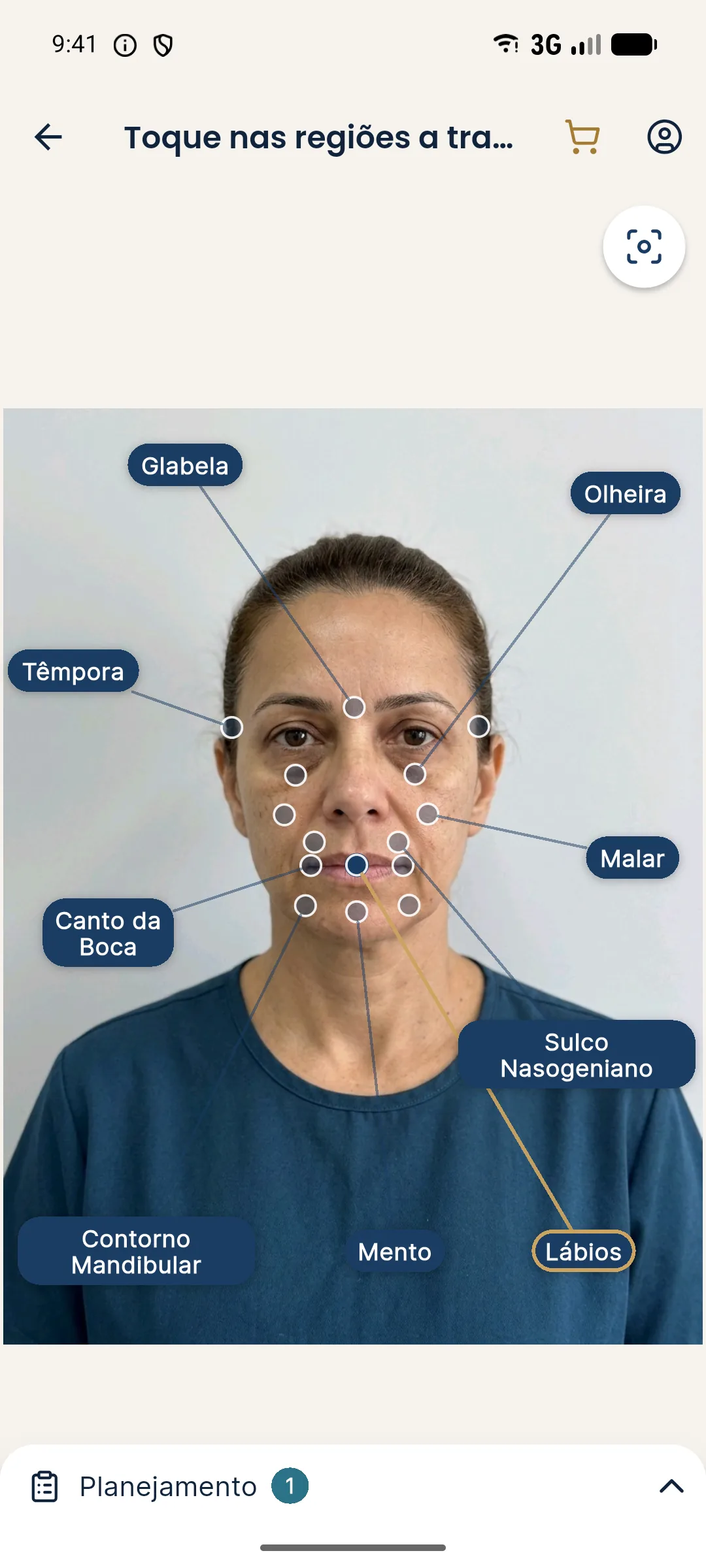
For the planning photo, avoid ceiling light. A photo with a strong shadow under the nose hampers the marking and the reading of the projection. See standardized frontal photo.
Record
Record the photos in the two lighting conditions, the classification and the decision. When the advice is not to treat, record that too. Volumes and techniques are at the discretion of the qualified professional, after assessment and in line with the rules of their professional council in Brazil.
Frequently asked questions
Why does a shadow appear under the nose in photos?
Light coming from above, such as ceiling lamps, casts the tip of the nose onto the upper lip. The more projected the nose and the more closed the nasolabial angle, the more evident the shadow.
Does filling the upper lip reduce that shadow?
It can change the relationship between the nose and the lip, but the lighting shadow still exists. The decision depends on the assessment of the profile and the nasolabial angle.
Is there a relationship with the nasolabial angle?
Yes. The angle between the columella and the upper lip influences how much the nose projects over the lip and, therefore, the shape and intensity of the shadow.
Can the shadow come from a mustache or facial hair?
Yes. Dark hair above the upper lip increases the impression of shadow, and the approach in that case is not harmonization.
Harmy images are illustrative simulations generated by AI from the patient's photo to support the conversation between practitioner and patient. They are not a promise of results. Indication, technique, product and volume are solely the decision of the licensed practitioner. This content is for information only and does not replace a clinical assessment.