
Long upper lip: assessing the philtrum and the plan

 BeforeSimulation
- Highlighted area
Quick facts
- Concern
- Large distance between the base of the nose and the vermilion, with little tooth display
- Method
- Measure the philtrum in a frontal and a profile photo, with the mouth relaxed
- Structures
- Philtrum, Cupid's bow, maxilla and position of the incisors
- Caution
- Volume in the upper vermilion can accentuate the feeling of a long lip
When a patient says they have "a long upper lip", they are almost never talking about the lip itself. They are talking about the distance between the nose and the mouth, the tooth that does not show when smiling, or the feeling that the lower third has become heavy. It is up to the professional to translate that perception into a measurement and decide what harmonization can influence.
This page organizes the philtrum assessment and shows how to avoid the most common mistake: adding volume to the upper vermilion and, without meaning to, reinforcing the sense of length. It connects with thin upper lip and thick lower lip, faded philtrum and smile that shows little tooth.
What does a long upper lip mean?
The philtrum is the vertical groove between the base of the nose and the Cupid's bow. It is considered long when, relative to the face as a whole, the distance between the subnasale and the vermilion looks larger than expected. There is no single number: the reading depends on the size of the nose, the lower third and the relationship between the upper and lower lip (see lip proportion).
Three situations tend to get mixed under the same concern:
| Situation | What you see | What weighs on the plan |
|---|---|---|
| Anatomically long philtrum | Large distance already in the profile photo | A limit of HOF, expectations should be low |
| Retracted lip from loss of support | Philtrum looks long, thin vermilion | Restoring support may help |
| Smile that lifts the lip little | Little tooth shows when smiling | Muscle dynamics and incisor position |
Separating the three avoids promising what the technique does not deliver. In a long lip of skeletal or dental origin, harmonization acts on perception, not on structure.
How to measure the philtrum in the consultation
Always measure with the patient's head in a natural position, mouth relaxed and without tensing the lip. Use the same camera distance in every record, as described in standardized clinical photography.
Incisor display at rest is one of the best indirect indicators. Long lips tend to hide the tooth at rest, and the absence of visible tooth reads as a trait of a more mature face. Record the finding and talk to the dentist, because wear of the incisal edges also weighs in.
What facial harmonization can and cannot do
The length of the philtrum does not shorten with an injectable. What changes, at the qualified professional's discretion, is the projection and the proportion of the whole:
- Lip projection in profile: subtle restoration of support can give presence to the vermilion without lengthening the perceived distance.
- Outline and Cupid's bow: defining the shape of the vermilion changes how the philtrum reads, as long as the volume is restrained.
- Lip dynamics: in selected cases, toxin can be considered, with caution, because of the risk of affecting speech and the smile.
- Support of the surrounding skin: the quality of the skin above the lip enters the conversation, and part of it is another kind of treatment.
Risks and precautions in the lip
An area of mucosa and thin skin, the lip has the known risks: swelling, bruising, asymmetry, nodules and irregularities, plus cold sores in predisposed patients. Vascular complications are rare but serious: the area is supplied by branches of the labial arteries, and the plan should include hyaluronidase on hand when hyaluronic acid is used. Signs of ischemia (paleness, disproportionate pain, a lacy pattern on the skin) call for immediate action, following the clinic's protocol.
The technical study of the procedure is in lip filler and the assessment of asymmetries in asymmetric lips.
How to show it in Harmy
In Harmy, the Lips point simulates vermilion volume on the frontal photo. Because the projection uses only the frontal photo, the app does not measure philtrum length and does not show the profile. Use the tool to talk about the volume and presence of the vermilion, never to suggest that the philtrum will become shorter.
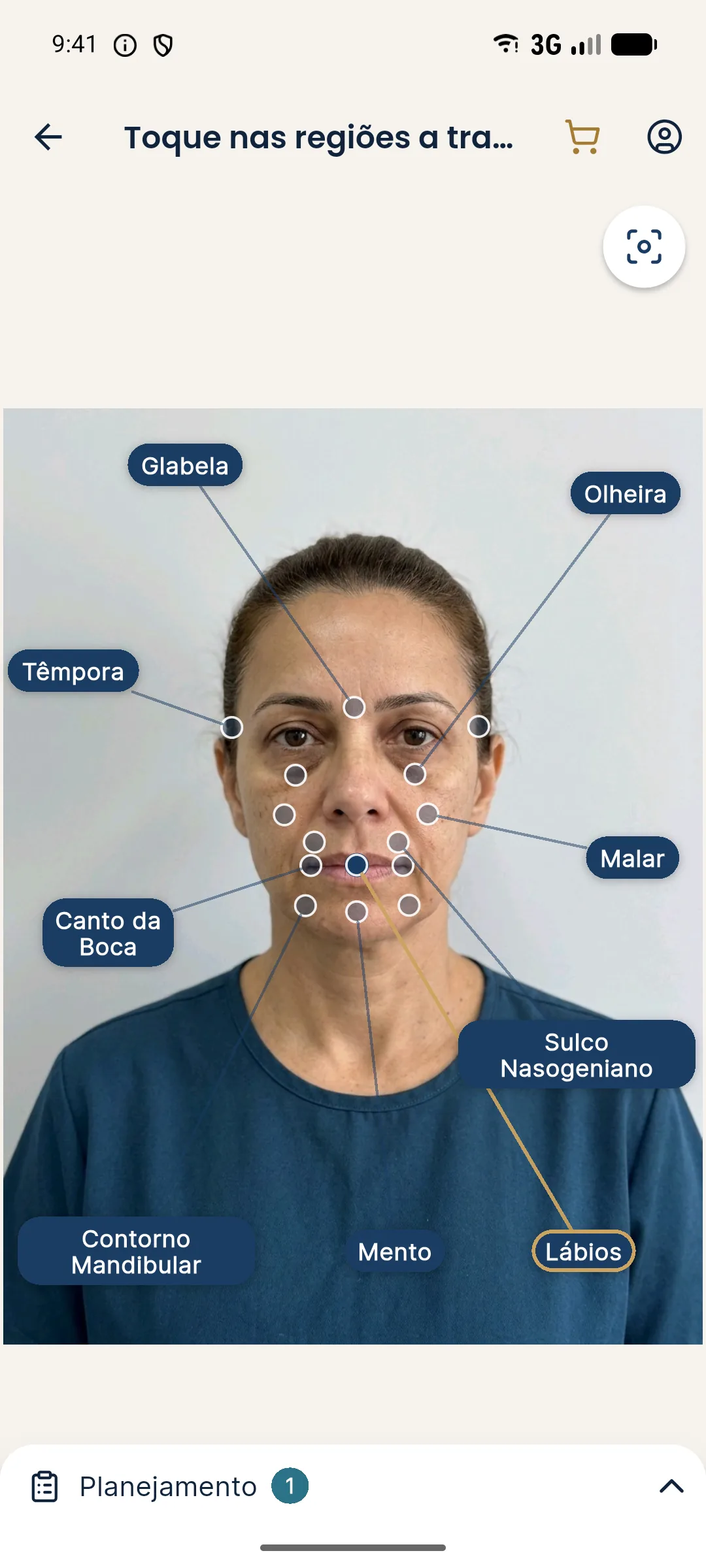
Two usage tips: compare the Subtle intensity with Moderate on the same patient, because a long lip usually calls for the conservative route, and use presentation mode to turn the phone to the patient with the slider in full screen. In a bilateral area, the ml is the total split across both sides.
When to refer
A long upper lip with an altered bite, an associated gummy smile, maxillary retrusion or a functional complaint may call for an orthodontic or surgical assessment. Harmonization can be part of the plan, but it does not replace correcting the skeletal base when that is the main cause. Record the concern, the measurements, the standardized photos and the conversation about limits.
Common mistakes in assessing the upper lip
The first mistake is measuring the philtrum with the patient smiling or tensing the lip. The measurement is only valid with the mouth relaxed, and a little tension already shortens the perceived distance. The second mistake is comparing with a magazine reference instead of with the face as a whole: a philtrum that looks long next to a small nose can be perfectly fine next to a larger nose.
The third mistake is treating the concern as if it were only about the lip. In many faces, what bothers is the absence of visible tooth at rest, and that issue involves incisor position, lip length and age. Talking to the dentist who follows the case can open options that harmonization alone does not have, and protects the professional from taking on an expectation that is not theirs.
Finally, avoid fitting the plan only to the immediate wish. Patients who ask for a "thicker lip" to disguise a long lip tend to be dissatisfied afterward, because the perceived length remains. Explaining this logic before injecting, profile photo in hand, avoids frustration and rework.
What to record in the patient record
Note the visual measurement of the philtrum relative to the lower third, incisor display at rest and when smiling, the presence of previous filler, the probable cause (retraction, anatomical length or dynamics) and what was explained to the patient about limits. Keep the standardized photos from the front, in profile and smiling, with the date. At the return visit, repeat the same photos, at the same distance, so the comparison is honest. If the patient accepts a staged plan, record the agreed interval and the criterion for deciding on the next step.
Closing
Measure, compare with the whole, separate a long philtrum from a lip without support and make the expectation clear before injecting any volume. For related concerns, see lips that faded with age and inward-turned lip. Volumes and techniques are at the discretion of the qualified professional, following the rules of their professional council in Brazil.
Frequently asked questions
Does lip filler fix a long upper lip?
Generally it does not shorten the philtrum. Volume can improve the projection and proportion of the vermilion, but philtrum length depends on bone, teeth and tissue, and expectations need to be aligned first.
How can I tell whether the lip is long or retracted?
Compare with the nose and the lower third in a frontal and a profile photo. A retracted lip, from loss of support, can look long without the philtrum being anatomically larger.
Does toxin in the upper lip help?
It can be considered in selected cases, at the qualified professional's discretion, for lip dynamics. It neither lengthens nor shortens the philtrum at rest and carries a risk of affecting speech and the smile.
Is a long upper lip related to the teeth?
Yes, incisor display at rest and when smiling is part of the reading. When the lip is long, little tooth shows, and that can age the expression. It is worth recording and discussing with the orthodontist or dentist on the case.
Harmy images are illustrative simulations generated by AI from the patient's photo to support the conversation between practitioner and patient. They are not a promise of results. Indication, technique, product and volume are solely the decision of the licensed practitioner. This content is for information only and does not replace a clinical assessment.