
Smile that shows little tooth: assessing the upper lip

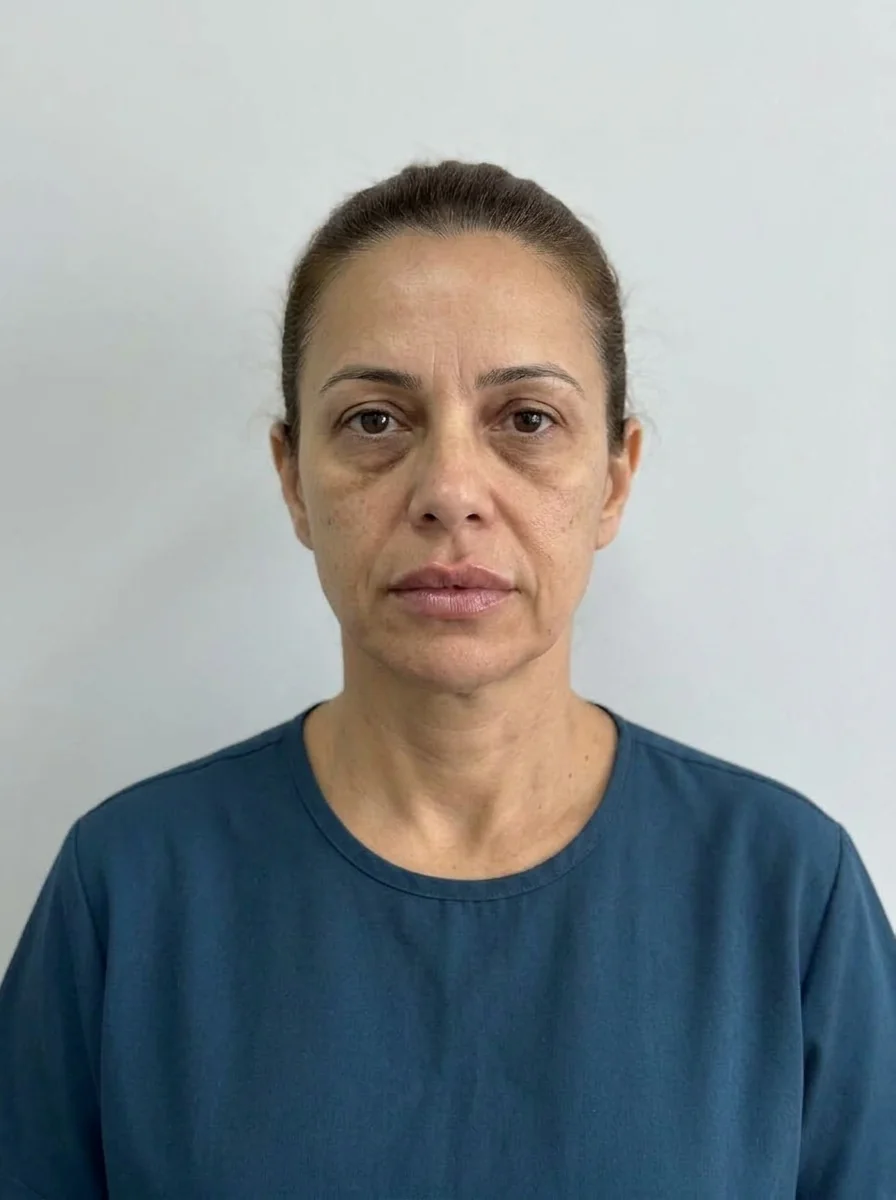 BeforeSimulation
- Nerve
- Highlighted area
Quick facts
- Concern
- When smiling, the upper lip rises little and the teeth show less than the patient would like
- Key question
- Is the lip long, is the elevation weak, or are the teeth lower than they should be?
- Plan risk
- Treating the lip when the cause is tooth length and leaving the smile heavier
- First step
- Measure incisor display at rest and in a spontaneous smile, in photo and short video
The patient says: "I smile and almost no tooth shows, my smile looks closed". Sometimes the photo confirms it, sometimes they smile in a restrained way out of habit and the spontaneous photo tells a different story. The concern is simple to state and hard to classify, because what the patient calls a "closed smile" can have four very different explanations.
This page organizes the reasoning for the person doing the assessment. The idea is to separate what lies in the lip, what lies in the tooth and what lies in the behavior of the smile, before any proposal of volume. The neighboring topic, a smile with excess gum, is in thin lip and a lot of gum and in gummy smile: beyond toxin.
What "showing little tooth" means
Incisor display is the amount of upper central incisor visible with the lip relaxed and, later, during the smile. The two numbers tell different stories. The first describes the length and position of the upper lip at rest. The second describes the lip's capacity to rise and its relation to the smile line.
In a young person, it is common to see a band of tooth at rest. With the years, the upper lip tends to lengthen and descend, and less tooth shows, while the lower teeth start to show more. For that reason, a smile that has "aged" may be described by the patient exactly as "shows little tooth". It is a useful clinical observation, but not a rule: each face has its own baseline, and the comparison is with the patient's own older photos, when available.
The four most common explanations
| Explanation | What is seen | Who usually takes part in the decision |
|---|---|---|
| Long upper lip | Little or no tooth at rest, subnasale far from the stomion | HOF professional, with a measurement at rest |
| Weak elevation in the smile | Tooth shows at rest, but the lip rises little when smiling | HOF professional, assessing movement |
| Low or worn dental edge | Lip rises normally, but the tooth is short or the edge is worn | Dentist |
| Smile restrained by habit | Spontaneous photo shows more tooth than the posed one | Conversation and photo in motion |
Rarely is only one present. A long lip often comes with teeth that look short, and a restrained smile can hide the real elevation. The table serves the reasoning, not to fit the patient into a single row.
What lip filler does in this scenario
Volume in the upper lip increases the thickness of the vermilion and, depending on the amount, can project the lip forward and downward. At rest, this can cover even more tooth. That is the opposite of what the concern calls for. For that reason, in a patient whose problem is that little tooth shows, lip filler is not the standard answer and is often what worsens the perception.
There are exceptions that the professional assesses case by case: when the lip is too thin and the border poorly defined, discreet shaping can make the smile more readable, even without showing more tooth. But the gain on offer is definition, not display. Explaining this difference before treating avoids frustration. The overview of the procedure is in lip filler.
The role of muscle and dynamics
The smile depends on a set of muscles that raise the lip and the corners. The levator labii superioris takes part in central elevation, and the orbicularis oris maintains the contour and competence of the lip. When elevation is weak or asymmetric, less tooth shows on one side and the patient describes the smile as "crooked" or "closed".
Botulinum toxin reduces muscle action; it does not increase elevation. For that reason, in a concern of little tooth display, toxin almost never comes into play, unless the professional identifies an antagonist muscle (one that pulls the lip down) as part of the picture and decides to treat it with caution. Even so, the risk of an expressionless or asymmetric smile exists, and the decision belongs to the qualified professional, after assessing the movement. On smile design, see botulinum toxin and smile design.
The tooth is also part of the face
In practice, a relevant share of smiles that show little tooth are solved outside HOF. Short teeth from wear, edges that follow the occlusal plane in an ascending way, old veneers that are too short or lack of lip support can be the cause. Recognizing this is part of the job, and referring is not losing the patient.
The ideal is to talk to the dentist before defining the order of treatments. When the dentist changes the length of the teeth, the lip starts to behave differently, and the HOF plan changes. If the order is reversed, the lip volume planned may turn out to be inadequate afterward. On this integration, see veneers and smile planning in HOF and smile analysis in HOF.
How to organize the approach
A prudent sequence, always at the professional's discretion and in line with the rules of their professional council in Brazil:
- Measure the visible tooth at rest and in the spontaneous smile and record it in photo and video.
- Classify the dominant cause: long lip, weak elevation, tooth or habit.
- If there are dental signs, refer to or coordinate with the dentist before any volume.
- If the concern is about definition, discuss a modest volume with the caveat that the tooth may show less.
- Reassess with new photos and compare with the initial ones.
When volume gets in the way
There are three situations in which volume in the upper lip tends to get in the way. The first is an already long lip, in which any added thickness lowers the edge. The second is an upper lip with little elevation, in which the extra weight reduces mobility further. The third is a patient with the concern of little tooth display and the expectation that the lip will "rise" after filling. None of the three is corrected with more volume.
When the decision is to treat, the principle of starting with a conservative amount and reassessing counts double. The patient must understand that adjustment is done in stages and that they can ask to stop.
Safety
The lip is supplied by the labial arteries, and hyaluronic acid can cause swelling, bruising, asymmetry, nodules and, rarely, vascular occlusion. Keep hyaluronidase available, know the signs of vascular compromise and review vascular occlusion before treating. For toxin, the list of complications is in complications with botulinum toxin.
How to use Harmy in this conversation
Harmy's projection starts from a frontal photo and changes only the marked area, without changing the expression in the photo. This means it does not simulate a lip that rises more or teeth that become bigger. What it shows is the effect of volume at the Lips point, at Subtle, Moderate or Pronounced.
For the conversation itself, the text explaining the lip to the patient offers supporting phrases, and thin lip: assessment covers the thickness angle.
Questions to test the reasoning
What to record in the patient record
Record the photos and video, the approximate measurement of display at rest and in the smile, the cause you considered dominant and what the patient was told about the limits. If you referred to the dentist, note the date and the reply. If the patient chose not to follow the referral, record that too. For clinical photos, standardization is in standardized clinical photography and data handling in consent and LGPD for photos.
Frequent mistakes
The first mistake is photographing only the posed smile. The patient smiles "for the photo" and the lip rises less than in loose conversation. The decision about the plan should use the spontaneous photo, and it is always worth asking how they smile when they are really laughing.
The second mistake is assuming that more volume makes the smile "fuller". A smile depends on tooth, lip and movement, not only on thickness. When only one of them is treated, harmony can end up unbalanced.
The third mistake is not aligning the timing. If the patient will also have dental treatment, the final result depends on the sequence, and the conversation should include what to do first and when to reassess. For the smile with the opposite concern, see thin lip and visible gum.
Summary for the decision
A smile that shows little tooth calls first for a measurement: how much shows at rest and how much in the spontaneous smile. Then it calls for a classification: long lip, weak elevation, low tooth or habit. Only then does it ask whether there is anything for HOF to do, and often the answer is little or nothing in the lip. In every case, explain the limits, document and, when in doubt, coordinate with dentistry, always at the discretion of the qualified professional and without promising results.
Frequently asked questions
Does filling the upper lip make more tooth show when smiling?
Generally not. Volume tends to increase the thickness of the vermilion and can even lower the lip edge slightly, which covers more tooth at rest. Display in the smile depends on lip length, muscle and tooth.
Is there an injectable solution for a long upper lip?
Injectables do not shorten the lip. In some cases the professional discusses approaches that change the position of the edge, but lip length is structural and the patient needs to know that before deciding.
Can a small or worn tooth also make the smile look dull?
Yes. If the edge of the incisors is worn or short, the lip rises normally and little tooth still shows. In that case, assessment with the dentist is the main step.
How much tooth should show at rest?
There is no single number. Display tends to be greater in young people and to decrease with age, and the reference is the whole face, the sex and the age of the patient, at the professional's discretion after assessment.
Harmy images are illustrative simulations generated by AI from the patient's photo to support the conversation between practitioner and patient. They are not a promise of results. Indication, technique, product and volume are solely the decision of the licensed practitioner. This content is for information only and does not replace a clinical assessment.