
Gummy smile: when to think beyond toxin

 BeforeSimulation
- Muscle
Quick facts
- Concern
- When smiling, a lot of gum shows above the upper teeth
- Three causes
- Muscular (overactive lip), bony (long maxilla) and dental (eruption and short crown)
- First test
- Measure gum display during a spontaneous smile and at rest
- Limit
- Toxin solves the muscular part; bony and dental causes call for dentistry or surgery
"When I smile, too much gum shows." It is a concern that mixes aesthetics and self-esteem. The patient learns to smile with a half-open mouth, covers the smile with a hand, avoids photos. In the office they hear that "toxin fixes it", and often it really does. Other times it does not, because a gummy smile has more than one cause.
This page shows how to tell the causes apart, in which cases toxin is the best answer and when the path goes through dentistry or surgery. Team reasoning is part of good practice.
What gum display is
A smile is considered gummy when the gum shows in a way that bothers the patient. In general, showing a small band of gum is considered normal by many authors, and the limit is subjective. What matters in practice is the patient's perception and the objective measurement of display in millimeters. See the measurement and concept in incisor display.
The relationship between the upper lip and the maxilla, at rest and in motion, also matters. A short or overactive upper lip, an elongated maxilla or small teeth change the equation. That is why, before thinking about treatment, you need to understand why the gum shows.
The three main causes
| Cause | What happens | Clues |
|---|---|---|
| Muscular | Upper lip elevators raise the lip too much | Upper lip rises a lot, uniform gum display, normal-sized teeth |
| Bony | Maxilla with vertical excess | Long lower third, short lip at rest, teeth exposed even without smiling |
| Dental | Altered passive eruption, short crowns | Small teeth, gum covering part of the crown |
There is also the lip cause: an upper lip that is short at rest exposes teeth and gum with no movement at all. The causes almost always combine, and the most common case is a mix of muscular and dental. See long upper lip, thin lip and visible gum and smile that shows little tooth, which covers the opposite case.
How to assess
Whenever a bony or dental cause is suspected, a joint assessment with the orthodontist or dentist is essential. The decision to treat only the muscular part must be made consciously, with the patient informed that the other causes remain.
When toxin is the answer
Botulinum toxin can reduce upper lip elevation when the cause is predominantly muscular. The logic is to partially relax the elevator muscles, especially the levator labii superioris alaeque nasi, so the lip rises less. Injection points and doses are at the discretion of the qualified professional. See botulinum toxin for a gummy smile, botox for a gummy smile and toxin and the nasal ala.
Possible effects to explain: temporary result, individual variation, asymmetric smile, a "heavy" upper lip or difficulty pronouncing some words, and asymmetry. Over-relaxing can leave the smile flat. See stiff smile after toxin and asymmetric smile after toxin.
When to think beyond toxin
There are three situations in which insisting on toxin is a mistake.
Dental cause. When the gum covers part of the crown, the approach is dental. Gum surgery and other dental approaches may be considered by the dentist. See veneers and smile planning in HOF.
Bony cause. Vertical excess of the maxilla usually requires orthodontics and orthognathic surgery. No injection solves a skeletal problem, and promising otherwise is an improper promise. See open bite and appearance.
Mixed cause. Many patients have a little of each factor. The best approach may be to treat the muscular part with toxin for a modest gain and, if the patient wants more, discuss dentistry. See concerns that HOF does not solve.
In some cases, upper lip filler is considered. Volume can reposition the lip edge and reduce display, but it changes the design of the smile and the lip. See lip filler and lips: assessing the thin lip.
Timeline of an approach
Risks
Toxin in the perinasal area and upper lip can cause smile asymmetry, a heavy lip, difficulty speaking and a "stiff smile" feeling. Upper lip filler carries risks of swelling, bruising, nodules and, more rarely, a serious vascular complication. Hyaluronidase must be available whenever hyaluronic acid is used. See complications with botulinum toxin and safety and complications: overview.
How Harmy fits in
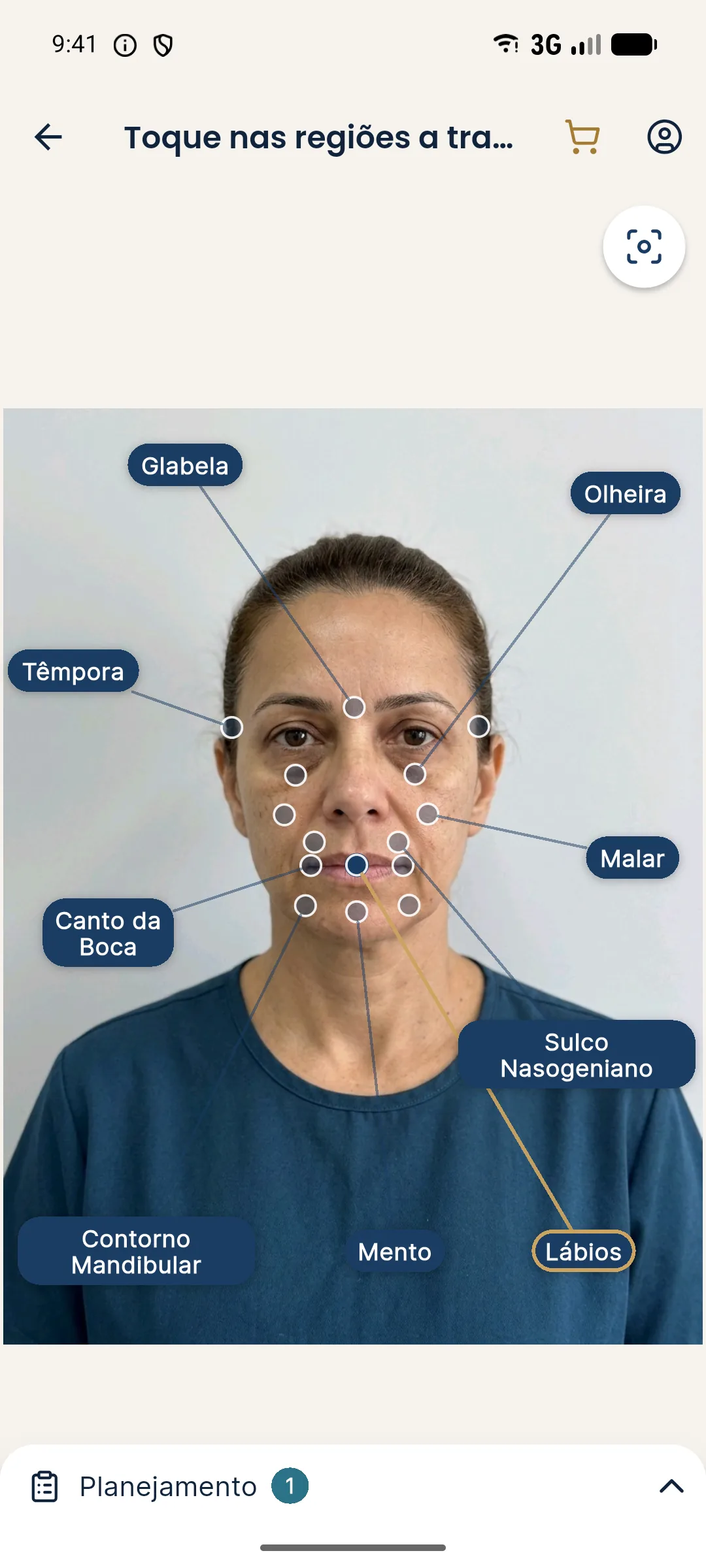
Harmy simulates volume, and a gummy smile is a concern of movement and muscle. For that reason, the app does not show the effect of toxin on a gummy smile or the reduction in gum display. At most, it can be used to plan the Lips point if the approach includes lip volume.
Record keeping
Record the measurements, the video (with consent and safe storage), the classification, the shared opinion and the guidance about limits. Doses and techniques are at the discretion of the qualified professional, after assessment and in line with the rules of their professional council in Brazil.
Frequently asked questions
Does toxin solve a gummy smile?
When the cause is muscular, with the upper lip rising too much, toxin can reduce gum display. If the cause is bony or dental, the effect is limited or none.
How can I tell whether the cause is muscular?
By measuring the exposed gum, the length of the upper lip and how the lip behaves when smiling. A joint assessment with the dentist helps.
Does lip filler help a gummy smile?
In selected cases, volume in the upper lip can reposition its edge and reduce display. The indication is judicious and may change the smile.
How long does the effect of toxin last in a gummy smile?
Usually a few months, with individual variation. The professional sets the expectation and schedules the reassessment.
Harmy images are illustrative simulations generated by AI from the patient's photo to support the conversation between practitioner and patient. They are not a promise of results. Indication, technique, product and volume are solely the decision of the licensed practitioner. This content is for information only and does not replace a clinical assessment.