
Faded Cupid's bow: assessment and what HOF can do

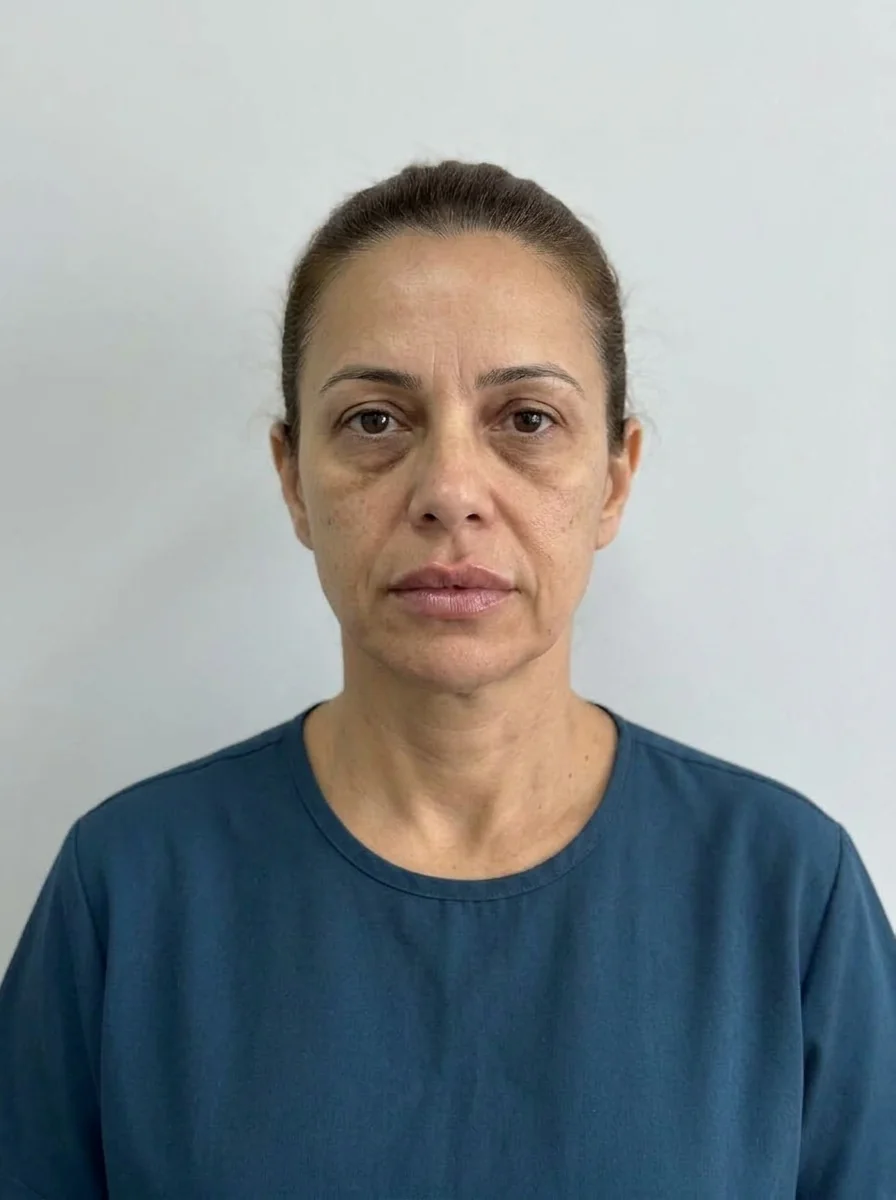 BeforeSimulation
- Nerve
- Highlighted area
Quick facts
- Concern
- Upper lip without the two curves of the bow, flattened contour
- Structures
- White roll, vermilion, philtrum and orbicularis oris muscle
- Common causes
- Age, perioral volume loss, sun, smoking, poorly distributed previous filler
- Central caution
- Vascular risk area, hyaluronidase on hand
The Cupid's bow is the double curve of the upper lip, with a small "v" in the center, supported by the two ridges of the philtrum. When it fades, the lip looks flat, the mouth loses definition and the patient often describes it as a "mouth with no outline." The concern shows up with age, after poorly distributed fillers and, in some cases, in young patients with subtle anatomy.
This page helps you assess the Cupid's bow before planning, tell loss of contour from loss of volume, and explain to the patient what is possible. It complements the area page on lips and the procedure page on lip filler.
Why does the Cupid's bow lose definition?
Over time, several factors add up. The skin of the upper lip thins, collagen decreases and the orbicularis oris muscle can become more visible when the patient talks and smiles. The white roll of the lip, the ridge that separates the skin from the vermilion, loses projection, and the contour stops catching the light. The result is a less defined border, even if the lip keeps the same thickness.
Other frequent contributors:
- Prolonged sun exposure, which speeds photoaging of the perioral area.
- Smoking and sucking habits, which etch the lines around the mouth.
- Tooth loss or poorly fitted dentures, which take support away from the lip.
- Marked weight loss, which reduces perioral volume.
- Previous filler that enlarged the body of the lip without preserving the contour.
For the relationship with lip aging as a whole, see lips that have disappeared with age and lip without contour.
How to assess the Cupid's bow
Assessment starts with the lip at rest, without a smile, and then in motion. The bow is a dynamic structure: a bow that looks faded at rest may become more visible when smiling, and the opposite also happens.
Three questions help classify the case:
- Did the contour fade, or did the whole lip thin out? If the vermilion is thin, the conversation is about volume; if the vermilion has thickness and it is the border that disappeared, the conversation is about definition.
- Is the philtrum shallow or deformed? A flattened philtrum without ridges is a frequent cause of a faded bow.
- Is there old product? Migration or excess volume in the body of the lip flattens the bow and may require correction before anything is added. See hyaluronic acid migration.
What harmonization can do
The most common resource is lip filler with low to medium firmness hyaluronic acid, aimed at restoring the outline rather than enlarging the lip. In many plans the goal is to reinforce the white roll and the philtral ridges to bring shadow and light back to the contour. Amounts are small and set at the discretion of the licensed professional, after assessment.
Other tools come in depending on the cause:
| Situation | Possible direction |
|---|---|
| Thin contour with no projection | Contour definition with a small amount of filler |
| Thin lip with scant vermilion | Volume in stages, preserving proportion |
| Thin skin with lines | Injectable hydration or biostimulation, as assessed |
| Very active muscle | Discuss a small amount of toxin, with the risk of affecting the smile |
| Old product in the body of the lip | Assess dissolving with hyaluronidase before redoing |
The limits also need to be stated to the patient. Not every faded bow regains its original outline: it depends on the anatomy that is still there, the quality of the skin and what has already been done. The same conversation about limits applies to a flattened philtrum and a thin lip.
Risks that cannot be left out
The upper lip is supplied by the superior labial artery, and vascular occlusion is a possible complication at any point in the area. The signs to know are disproportionate pain, pallor or a change in skin color, livedo and, in severe cases, necrosis. When hyaluronic acid was used, management includes hyaluronidase, which must be on hand. The protocol is in lip vascular occlusion.
In addition, the lip contour is a hard area to fine-tune: small irregularities show up with light and movement, and excess product in the bow creates a "duck lip" effect. That is why injection tends to be conservative, with reassessment at two weeks, and the patient should know that nodules, asymmetry, swelling and bruising can occur.
How to show the bow in Harmy
In Harmy, the Lips point is the closest to this concern. The app works with the frontal photo and generates an "after" projection that changes only the marked area, without altering expression, skin or lighting. The simulation serves to align expectations about volume and definition, never to promise the final outline.
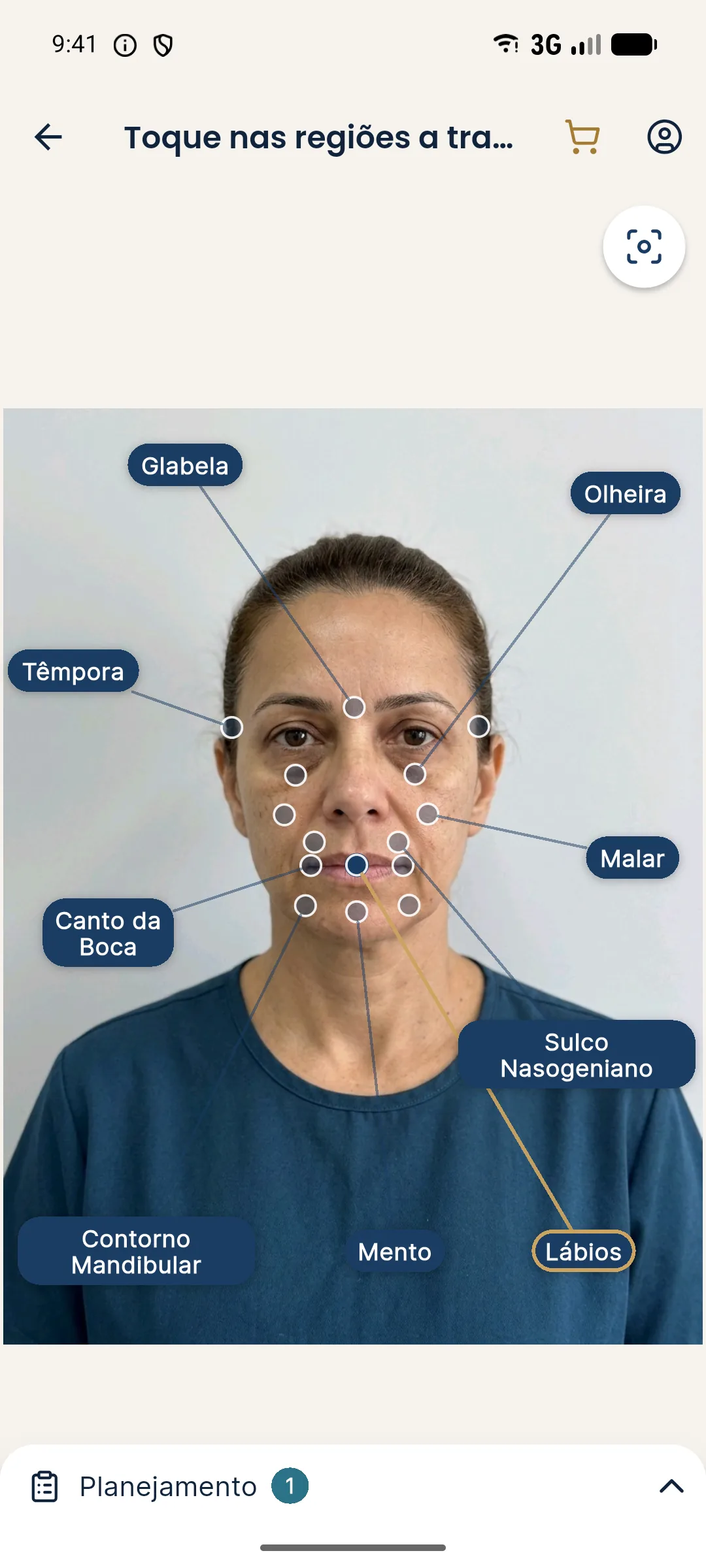
The app's Maintenance shortcut marks lips with 0.5 ml at Subtle intensity, which well represents the kind of discreet intervention usually discussed for this concern. The First time shortcut marks lips with 1 ml at Moderate intensity. In both, you can adjust the ml and the intensity before creating the projection.
Wrapping up the plan
Record the contour at rest and in motion, note the predominant cause and agree with the patient on a conservative plan, with reassessment. If the whole lip is thin, the approach is different; see thin upper lip and full lower lip and long upper lip. In every case, the decision on volume and technique belongs to the licensed professional, in line with the rules of their professional council in Brazil.
Frequently asked questions
Why does the Cupid's bow fade with age?
The skin loses collagen, the lip thins, the white roll that outlines the contour loses projection and the philtrum flattens. The result is a less crisp contour, even with no change in the total volume of the lip.
Can filler restore the Cupid's bow?
In many cases filler can give back part of the definition to the contour, but it depends on the anatomy, the skin and the amount of product. At the discretion of the licensed professional, after assessment.
Is a faded Cupid's bow a sign of overfilling?
It can be. When volume is placed in the body of the lip without respecting the contour, the bow flattens and the lip loses its shape. This is assessed before any new injection.
What is the risk of treating the Cupid's bow?
The area is supplied by the labial arteries, and vascular occlusion is a possible complication. Bruising, swelling, asymmetry and nodules also occur. Hyaluronidase must be on hand.
Harmy images are illustrative simulations generated by AI from the patient's photo to support the conversation between practitioner and patient. They are not a promise of results. Indication, technique, product and volume are solely the decision of the licensed practitioner. This content is for information only and does not replace a clinical assessment.