
Lip with no definition: Cupid's bow and white roll

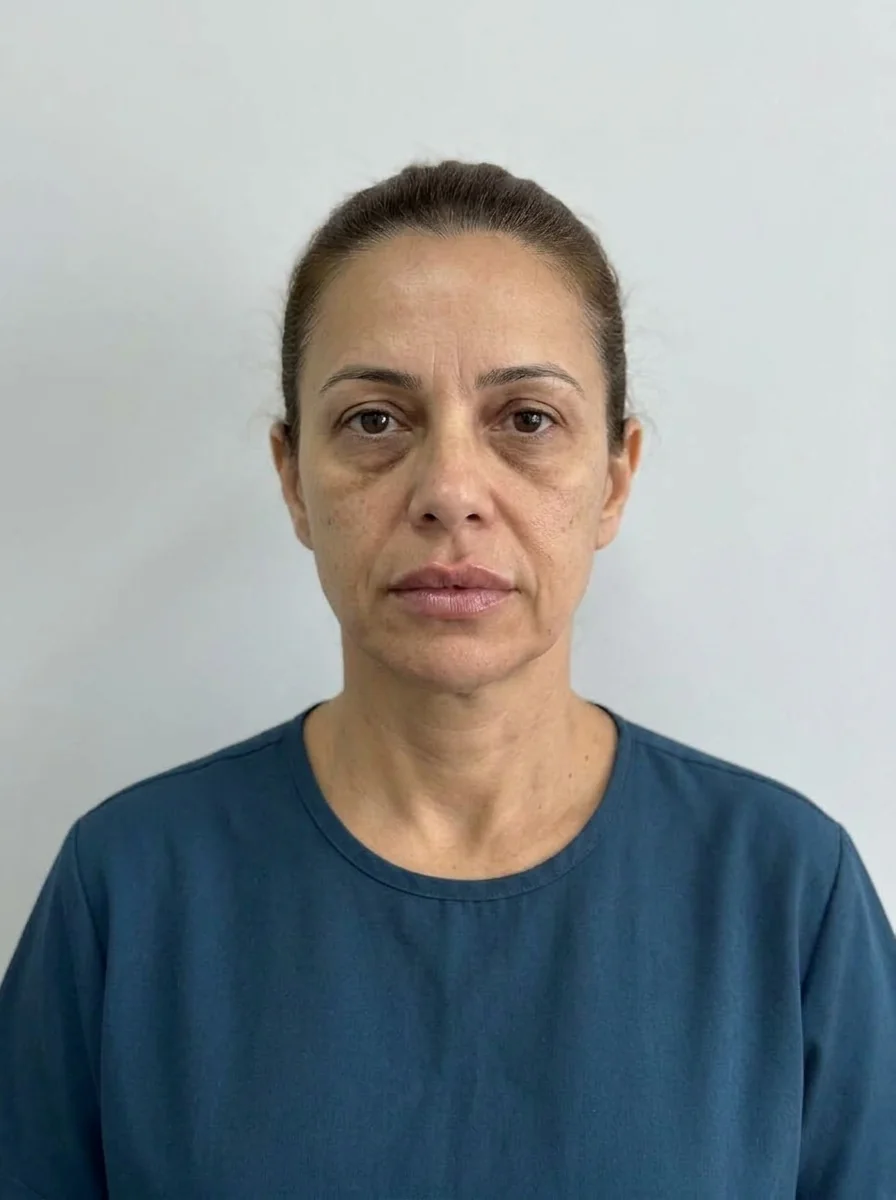 BeforeSimulation
- Nerve
Quick facts
- Concern
- Lip without a sharp border, faded Cupid's bow, vermilion blending into the skin
- Structures involved
- White roll, Cupid's bow, philtrum, tubercle, orbicularis oris
- Key question
- Is the border faded because of the skin, loss of definition or lack of volume?
- Plan risk
- An artificial border line or product migrating onto the skin
"My lip has no shape." It is a common way of saying the border is not sharp: the vermilion seems to blend into the skin, the Cupid's bow does not show, the lip looks "washed out". The concern is about definition, not necessarily size, and that difference changes the plan.
This page helps separate what is skin, muscle and volume in a faded border, and decide whether the path is outlining, volume, skin treatment or no procedure at all. The specific case of the central shape is covered in faded Cupid's bow.
What forms the outline of the lip
The border of the lip is built from several structures:
- The white roll of the lip is the raised ridge that separates the vermilion from the skin.
- The Cupid's bow is the two-arc shape of the upper lip, with a "V" in the center.
- The philtrum has two columns that run down from the nose and end at the bow.
- The labial tubercle is the small central projection of the upper vermilion.
- The orbicularis oris forms the muscular base that supports the border.
When one or more of these structures lose definition, the lip looks diffuse. The cause can be aging, collagen loss, sun exposure, habits such as smoking, or simply an anatomy that never had a marked border.
Skin, muscle or volume?
The central question is where the problem lies. Three different origins call for different approaches:
| Origin | How it shows | Direction of the conversation |
|---|---|---|
| Surrounding skin | Vertical lines, loss of tone, spots | See lip with vertical lines and skin quality approaches |
| Border structure | Faded white roll and bow, vermilion without relief | Outlining with care, at the professional's discretion |
| Volume and proportion | Thin lip that does not hold the border | See thin lip: assessment |
| Muscle dynamics | Good border at rest and faded in motion | Assess the smile, in lip that disappears when smiling |
In many patients, two or three origins are present at once, and the order of treatment matters.
What facial harmonization can offer
In lips with loss of border structure, a small amount of hyaluronic acid can help recover definition. The strategy, technique and product are decisions for the qualified professional, after assessment, and an outlining approach requires knowledge of the blood supply and of the risk of material migrating onto the skin.
When the skin is the main player (vertical lines, loss of tone, spots), outlining alone can make things look worse: the border gains definition, but the surrounding skin stays marked. In that case, the conversation shifts to skin quality and habits. The topic of vertical lines is in lip with vertical lines and in the glossary entry lip lines.
For an overview of the procedure, see lip filler.
Mind the order of the steps
When a faded border and marked skin come together, the order matters. One possible sequence, always individualized:
Safety
The lip area is supplied by the labial arteries, and outlining is done near the surface, where the risk of irregularity, nodules and migration is higher. Possible complications include swelling, bruising, asymmetry, nodules and, rarely, vascular occlusion. Hyaluronic acid requires hyaluronidase on hand, and your review of lip vascular occlusion should be up to date. At the consultation, explain what to do if severe pain, paleness or a color change appears.
Simulating the shape with Harmy
Harmy does not draw the white roll or the Cupid's bow with precision: the projection uses the Lips point and the volume in ml, and the AI changes only what was marked. Even so, a simulation at Subtle can show the patient that a discreet addition changes the presence of the mouth without creating an artificial shape.
Myth or fact to use in the conversation
For communication with the patient, see explaining the lip to the patient and the questions page lip outline or volume.
Common mistakes with a lip with no definition
Drawing the border with too much product. An over-marked outline can look artificial, and excess on the surface raises the chance of irregularities and migration. The natural border is subtle.
Forgetting that the skin counts. A lip with a restored border and marked perioral skin still looks aged. Vertical lines, spots and loss of tone call for their own strategy.
Using the same plan for everyone. The faded border of a young patient from birth is not the same as that of a sixty-year-old with collagen loss. The reasoning changes with age, habits and history.
Not asking about lipstick. Many patients spend years drawing the border with lip liner and only notice the concern when photographed without makeup. Ask for photos without lipstick, and ask whether drawing with liner is part of what bothers them.
Habits and factors that fade the border
Some factors that tend to contribute, and that deserve a direct question in the medical history:
- chronic sun exposure without lip protection;
- smoking and frequent straw use, which accentuate vertical lines;
- loss of collagen and volume with age;
- previous treatments with product that migrated or dissipated;
- a habit of biting or licking the lips.
These factors are treated at the root with guidance and care, not with an injectable. Telling the patient this is part of the assessment, and the medical history in HOF should include these questions.
What to record
Record the photos without lipstick, the patient's description, the cause you consider dominant, what was proposed, what was declined and the guidance on habits. For clinical photos, follow standardized photography and consent for photos.
Summary
A lip with no definition is a concern about definition, and definition depends on skin, border structure and volume. Separate the three, treat what is skin and habit at the root, use minimal additions and reassessment when you indicate outlining, and remind the patient that the app's simulation illustrates volume and does not draw the border. Approaches, volumes and technique belong to the qualified professional, following the rules of their professional council in Brazil, without promising results.
Frequently asked questions
What is the white roll of the lip?
It is the raised, lighter-looking edge that separates the vermilion from the surrounding skin. When it fades with age, sun or habits, the outline of the lip loses definition.
Does filler fix a lip with no definition?
It can help recover definition when the cause is loss of structure. For vertical lines, skin loss or spots, other strategies weigh more. The decision is the professional's, after assessment.
Is outlining the lip with hyaluronic acid safe?
It is a common procedure, but it carries a risk of swelling, bruising, asymmetry, nodules, migration and, rarely, vascular occlusion. Hyaluronidase must be available and the professional needs to know the anatomy.
Is a faded outline the same as a thin lip?
No. You can have a vermilion of good thickness with a diffuse border, or a thin lip with a well-defined border. Adjusting proportion and adjusting the outline are different questions.
Harmy images are illustrative simulations generated by AI from the patient's photo to support the conversation between practitioner and patient. They are not a promise of results. Indication, technique, product and volume are solely the decision of the licensed practitioner. This content is for information only and does not replace a clinical assessment.