
Vertical lip lines (barcode lines): assessment

 BeforeSimulation
- Highlighted area
Quick facts
- Concern
- Fine vertical lines above the upper lip, which can make lipstick bleed and give an aged look
- Common causes
- Orbicularis movement, thin skin, collagen loss, sun, smoking, straws and volume loss
- Particularity
- A skin line is different from lip volume loss
- Limit
- Deep lines are usually softened, not eliminated
Vertical lines above the upper lip, known as barcode lines, are a frequent concern in the office, especially after 40, but they appear earlier in people who smoke, sunbathe without protection or have repetitive mouth habits. Patients describe the problem in several ways: "my lipstick bleeds," "my mouth looks wrinkled," "my lip disappeared." These phrases point to different causes.
This page brings together the assessment of the condition. The anatomical entry is in barcode lines, and the specific techniques in hyaluronic acid for barcode lines and botulinum toxin for vertical lip lines. Here the focus is separating a skin line from volume loss and building an honest conversation.
What forms vertical lip lines?
The lines come from the meeting of three factors: the movement of the orbicularis oris muscle, which wrinkles the skin when it contracts; the loss of collagen and elastin, which makes the skin less able to spring back; and the thinning of the upper lip, which loses the support that kept the skin stretched. The result is fine, vertical grooves that, over time, become deeper and static.
Habits speed up the picture. Smoking, frequent straw use, whistling, playing wind instruments and sun exposure all contribute. In some cases there is a family predisposition. The age of the lips also changes their design: the upper lip lengthens, the vermilion thins and the contour fades.
| Factor | How it appears | What it suggests |
|---|---|---|
| Orbicularis movement | Lines appear when puckering or kissing | Dynamic component |
| Collagen loss | Lines present at rest, thin skin | Static component, skin quality |
| Sun and smoking | Skin that looks dry and uneven | Habits that sustain the picture |
| Lip volume loss | Thinned, inverted lip | Possible relationship with support |
| Tooth loss or ill-fitting denture | Collapsed lip | A support cause, not a skin cause |
Skin line or volume loss?
This is the distinction that organizes the conversation. If the lip has lost volume and the skin has been left without support, part of the concern may improve with support. If the skin is thin and damaged and the lip has good projection, adding volume may not solve it and may even accentuate the disproportion. If the dominant component is muscular, the reasoning includes movement.
A combination is usually the rule. In many patients, the most suitable approach is a sequence: treat skin quality, assess volume and, when appropriate, consider the muscle, always at the discretion of the qualified professional, after assessment. See also lips that have disappeared with age and loose skin around the mouth.
What each approach can and cannot do
Each approach acts on a different component. It helps to present this clearly to the patient, to avoid the expectation of a single solution.
- Skin quality: microneedling, skinbooster, peels and other resources act on texture and hydration, at the professional's discretion. See skinbooster for the lips and microneedling with biostimulator or hyaluronic acid.
- Support and volume: hyaluronic acid in a small amount can help soften the lines without increasing lip volume. See lip filler.
- Muscle movement: botulinum toxin at minimal doses, with caution, because the muscle is essential for speech, smiling and sucking. See microtoxin.
- Habits and protection: stopping smoking, sun protection, avoiding repeated straw use.
Each has its own risks and limits. None guarantees erasing the lines, and the result is individual.
When habit is part of the plan
A patient who smokes or keeps the habit of puckering the mouth needs to hear that treatment alone has a limit. This is not a reproach; it is information so he or she can decide. Smoking also affects healing, vascularization and how long the result lasts. See can smokers have facial harmonization and smoker's face, as well as habits that change the plan.
Without judging, present the habit as part of the picture and of the planning. Many patients are more motivated by understanding what speeds up the lines than by any generic advice.
Simulating the lip
The simulation helps show the effect of volume, but it does not show skin lines. In Harmy, the Lips point lets you view a projection of the after over the front photo.
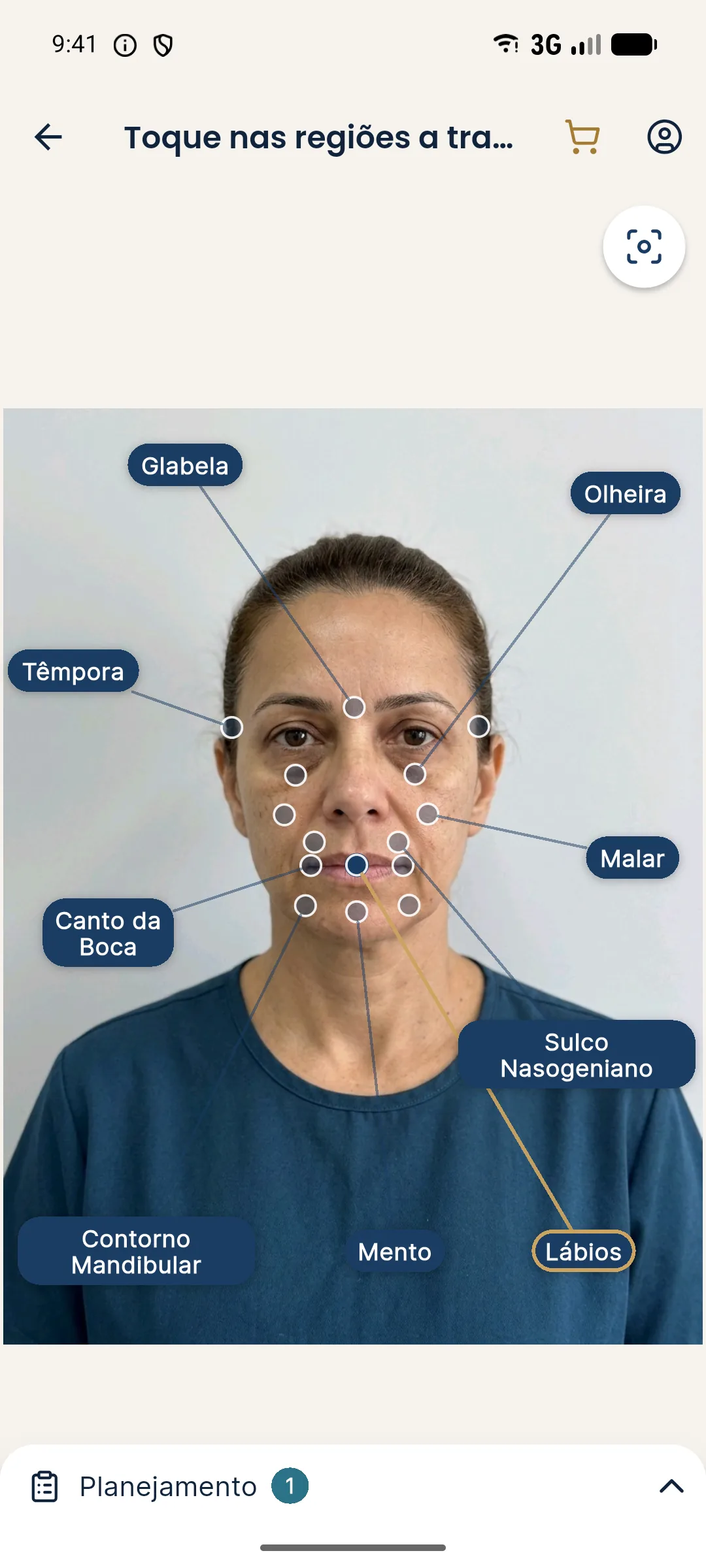
Warn the patient that fine lines are hard to represent in a simulated image and that the projection is illustrative. Promising the same erasing as in the image would be a mistake.
Risks and precautions
The lip is a highly vascular area. The superior labial artery and its variations require anatomical knowledge, and hyaluronidase must be available when hyaluronic acid is used. Possible complications include swelling, bruising, asymmetry, nodules, migration of the product above the contour, the Tyndall effect and, rarely, vascular occlusion. See lip vascular occlusion and filler above the lip: migration.
With toxin, the care is greater still: excess can cause difficulty speaking, an asymmetric smile, drooling or leaking of liquids and loss of mouth function for a while. The dose and technique depend on the professional and are their responsibility.
When barcode lines are not the target
- A lip that is too thin, where the concern is volume and proportion. See long upper lip.
- Dry lips, which change how the skin reads. See dry lips.
- Lack of support from teeth or dentures, which requires a dental assessment. See dentures and lip support.
- Expectation of smooth, line-free skin, which harmonization does not deliver.
Follow-up
Photograph the lip always under the same light, at rest and with the mouth puckered. Compare with the initial photo, not with memory. Schedule a follow-up and explain that skin improvement is usually gradual. Images follow informed consent and the LGPD (Brazil's data protection law).
Whoever treats barcode lines gains more from a clear conversation than from a promise: the lines can be softened, habit weighs in and the result varies from person to person. That is what keeps the patient close and satisfied.
Frequently asked questions
What causes barcode lines on the lip?
Usually a combination of factors: repeated movement of the muscle around the mouth, loss of collagen and elastin, thin skin, sun exposure, smoking and loss of volume in the lips and upper lip.
Does lip filler solve barcode lines?
Not always. Volume can help when the lip has lost support, but skin lines usually call for their own approach. The choice belongs to the professional, after assessment.
Does toxin in the upper lip help with vertical lines?
It can be considered in selected cases, at minimal doses and with caution, because the muscle is essential for speech, smiling and sucking. The decision belongs to the qualified professional.
Do the lip lines come back after being treated?
They can, especially if the factors that cause them, such as smoking and sun, continue. Habits, skin quality and maintenance influence how long the result lasts.
Harmy images are illustrative simulations generated by AI from the patient's photo to support the conversation between practitioner and patient. They are not a promise of results. Indication, technique, product and volume are solely the decision of the licensed practitioner. This content is for information only and does not replace a clinical assessment.