
Smoker's face: skin, lines and volume
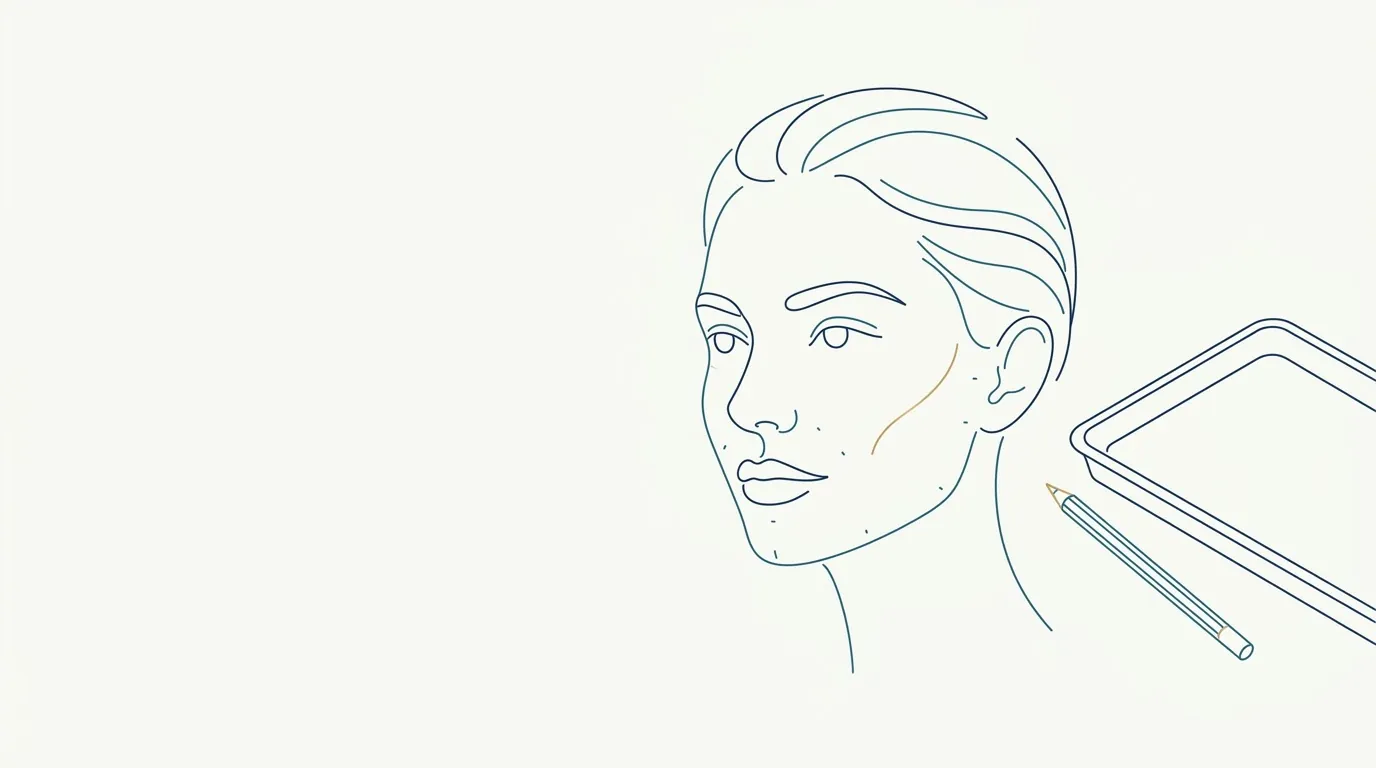
- Muscle
- Highlighted area
Quick facts
- Concern
- Grayish skin, lines around the mouth and an aged look in people who smoke or used to smoke
- Key insight
- Smoking affects the skin, healing and collagen, and the approach starts with a conversation about smoking
- Supporting measure
- Skin texture, perioral lines, smoking history and previous healing
- Limit
- Filler does not replace skin care or cancel the ongoing effect of cigarettes
"Smoker's face" is an informal label, but it describes something recognizable: grayer, duller skin, fine lines around the mouth, skin that looks aged before its time and, in some cases, loss of volume. Patients rarely bring it up directly. They may come asking for "lips" or "smile lines" when the real concern is the whole picture.
This page helps you read the picture honestly, separate what facial harmonization can soften from what depends on skin and habit, and handle the conversation about smoking without moralizing. For related cases, see loose skin around the mouth, lip with lip lines and habits that change the plan: sun, smoking and sleep.
What does smoking do to the skin of the face?
Cigarettes affect the skin in more than one way. Nicotine constricts vessels and reduces blood flow in the skin. The components of smoke increase the breakdown of collagen and elastin. On top of that, the repetitive gesture of pursing the lips when inhaling reinforces the vertical lines around the mouth. The result is skin with less glow, less elasticity and more creases.
It is important not to generalize. Not every smoker has an aged face, and not every aged face belongs to a smoker. Genetics, sun, sleep and diet all weigh in. What the professional needs to do is treat smoking as one more factor in the reasoning, not as an automatic diagnosis.
Where does aging show up first?
The signs tend to concentrate in three places. Around the mouth, fine vertical lines, known as lip lines, dominate. In the skin overall, color and texture change, with a dull look and more visible pores. And around the eyes, the lateral lines become more pronounced, partly from the habit of squinting against smoke.
| Area | Typical sign | Possible role of facial harmonization |
|---|---|---|
| Perioral | Fine vertical lines | Softening with superficial approaches, at the professional's discretion |
| Lips | Loss of contour and volume | Discreet restoration, without overdoing it |
| Skin overall | Dullness and texture | Skin care and biostimulation, in selected cases |
| Periorbital | Lateral lines | Toxin, when indicated |
| Mouth corners | Corners turned down | Discreet support, according to assessment |
The relationship between vertical lines and muscle action is covered in orbicularis oris muscle, and fine lines have a dedicated page at lip lines. For the aging factors in the area, see aging of the perioral region.
What can facial harmonization do?
Facial harmonization works on volume, contour, muscle and skin quality, and a smoker's face usually involves all these planes to varying degrees. The realistic approach combines small actions, not one big intervention.
- Softening of the perioral lines with superficial approaches and conservative doses, at the discretion of the qualified professional and according to the rules of their professional board. The page hyaluronic acid for lip lines describes the context.
- Collagen biostimulator, in selected cases, for quality and firmness. It does not act right away and depends on the condition of the skin.
- Discreet restoration in the lips and mouth corners, if there is loss of contour. See lip filler.
- Treatment of the fold or the support, when the cheek has descended, keeping the overall plan in mind.
The usual risks include swelling, bruising, asymmetry, nodules and, rarely, vascular complication, with hyaluronidase available. In the lips and perioral region, the presence of the labial artery requires anatomical knowledge. A smoking patient should be told that healing may be slower and that continuing to smoke raises their own risk.
How to talk about quitting smoking?
Avoid lecturing. You are an aesthetics and health professional, not the patient's physician, but you can and should talk about the effects of the habit on skin and healing. A short, judgment-free sentence works better than a speech. If the patient wants to quit, offer a referral for medical support.
Record in the patient record what was said and what was agreed, even when the patient decides to keep smoking. This protects you and helps the patient notice the effect over time. The same reasoning applies to sun and sleep, as described in habits that change the plan.
What is the most honest plan?
An honest plan combines small steps and modest goals. The first step can be assessing the skin and talking about the habit. The second, acting where there is a clear gain, such as lips or mouth corners, in conservative volumes. The third, reassessing with standardized photos and deciding whether it is worth pursuing. Avoid compensating for the skin with volume: a face with dull skin and overly large lips draws more attention to the problem.
And Harmy?
In Harmy, the projection shows changes in volume and contour, not in skin texture or color. For a smoker's face, this limitation is central: the app will not show a reduction in fine lines or an improvement in glow. If you use the Lips or Mouth Corner point, make it clear that the simulation illustrates volume, not skin quality.
Present the image as support for the conversation about proportion and leave skin care for the clinical part of the consultation. To track progress, the history per patient keeps the sessions organized.
Frequently asked questions
Does smoking age the face?
The clinical literature links smoking to duller skin and more lines, especially around the mouth. The intensity varies between people, but the habit is considered a factor in skin aging.
Can a smoker have facial harmonization?
Generally yes, but the professional should consider the effect of smoking on healing and skin quality, advise on quitting and adjust expectations.
Does filler erase a smoker's mouth lines?
It can soften fine lines when well indicated, always as an improvement and not a full correction. With deep lines and heavily damaged skin, the improvement is usually partial.
Does quitting smoking improve the skin?
It can improve the quality and oxygenation of the skin over time, which helps any treatment. The professional should encourage the decision without shaming the patient.
Harmy images are illustrative simulations generated by AI from the patient's photo to support the conversation between practitioner and patient. They are not a promise of results. Indication, technique, product and volume are solely the decision of the licensed practitioner. This content is for information only and does not replace a clinical assessment.