
Botulinum Toxin in the Nasal Tip: Indication and Limits
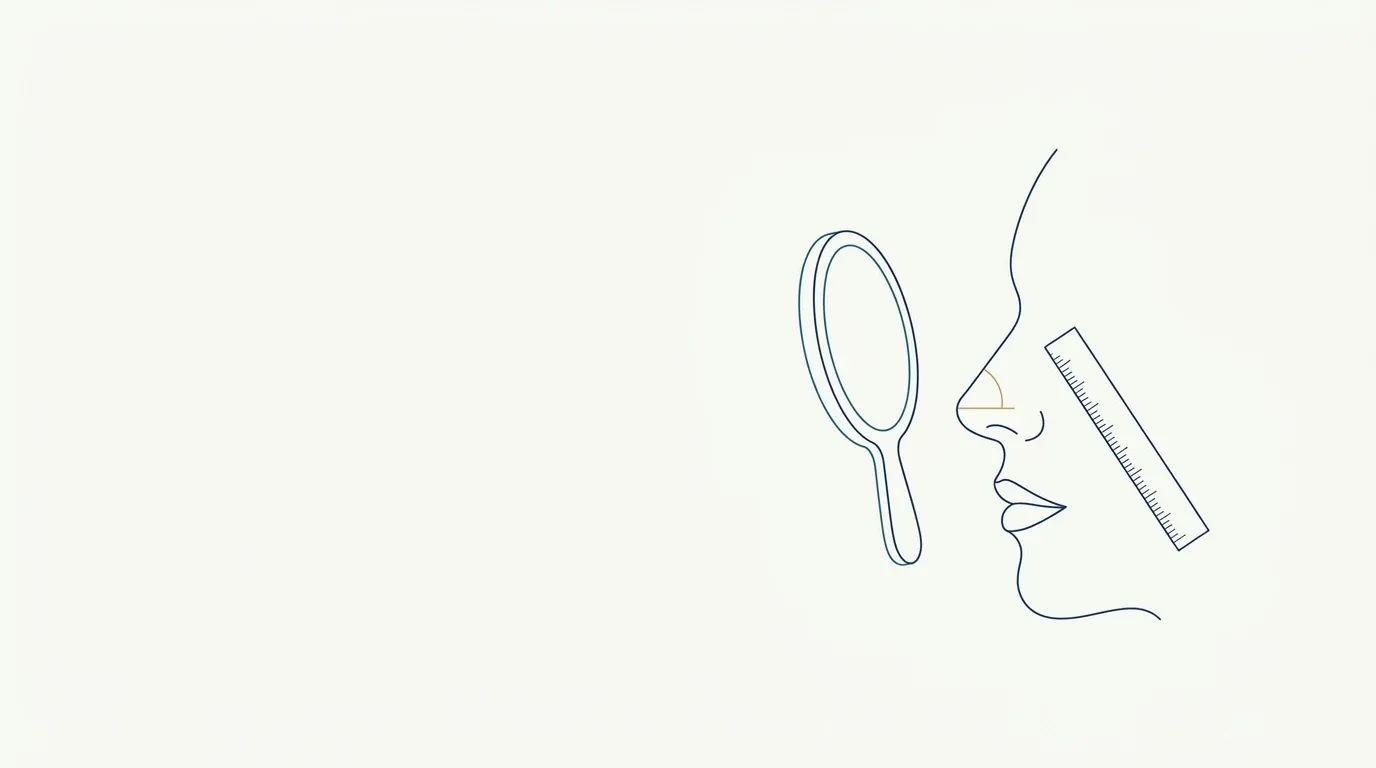
- Muscle
Quick facts
- Topic
- Toxin in the depressor septi nasi muscle and tip dynamics
- Who it is for
- Professionals who assess the nasal tip in motion
- Core idea
- Toxin acts on movement, not on the shape of the nose
- Main caution
- Avoid promising permanent rotation and spread to the upper lip
A nasal tip that drops when smiling is a classic concern with a relatively simple anatomical explanation: a small muscle, the depressor septi nasi, pulling the base of the columella and the upper lip downward. In theory, weakening that muscle could keep the tip higher during expression. In practice, the indication is restricted, the effect is subtle and the margin for error is narrow.
This page discusses, at review level, how to assess, when to consider and when to avoid. It gives no injection points or doses, which depend on training and individual assessment, at the discretion of the qualified professional and in line with the rules of their professional council.
What does the depressor septi nasi do?
The depressor septi nasi muscle arises in the premaxilla region, next to the orbicularis oris, and inserts at the base of the columella and the membranous septum. When it contracts, it pulls the nasal tip down and shortens the upper lip. In some people the action is small. In others it is striking: the tip "dives" when smiling and talking, the philtrum shortens and the nasolabial groove changes.
Keep in mind that the nose has many components (cartilage, ligaments, skin and musculature) and that the muscle is only one part of the dynamics. The tip also descends through the action of the orbicularis, the levator labii superioris and the nasal ala. The underlying discussion is in nasal anatomy for injectables and botulinum toxin and the nasal alae.
Which signs suggest a role for the muscle?
The decision rests on dynamic assessment, not on a static impression. A few findings favor involvement of the depressor:
- The tip clearly drops when the patient smiles but sits in a reasonable position at rest.
- The philtrum seems to shorten during the smile, and the upper lip slightly "disappears."
- The concern is that the nose "looks bigger" or "more droopy" in smiling photos and on video calls.
- Palpation shows a small active cord at the base of the columella during expression.
Conversely, when the tip is low at rest, projection is small or the nasolabial angle is acute, the cause is structural. In those cases toxin changes little, and the conversation should include other possibilities, including surgery or filler in high-risk areas. See hyaluronic acid in the columella and tip and nasal vascular occlusion to understand why the nose is a high-risk area.
What can toxin do, and what can it not?
The expected gain is small: reducing the downward pull during expression. It may help keep the tip in a steadier position and preserve the apparent length of the upper lip when smiling. But the limits are clear:
| Aspect | What to expect | What not to promise |
|---|---|---|
| Tip when smiling | Less drop, in selected cases | Permanent rotation |
| Philtrum | Less shortening during expression | Lengthening of the philtrum |
| Nose shape | No change | A "slimmer" or "upturned" nose |
| Duration | A few months | A permanent effect |
| Smile | Preserved, if well indicated | Guarantee of symmetry |
Toxin acts only on dynamics. Patients who ask to "lift the tip" usually have a structural concern, and toxin does not replace rhinoplasty or projection filler. See also botulinum toxin and smile design to compare with other muscles that shape the smile.
What are the risks?
Even though it is a small muscle, the depressor sits next to important structures of the upper lip. The main risks:
- Spread to the orbicularis oris or the levators, altering the smile, the cupid's bow and speech.
- "Heavy" upper lip or loss of definition, from weakening of the muscle group.
- Asymmetry, from variations in activity between the sides.
- Ecchymosis and local pain, common, and a burning sensation in the nasal mucosa.
- Difficulty whistling, kissing or using a straw, in cases of spread.
Because of the proximity to a high vascular-risk area, knowing the anatomy is indispensable. See vascular anatomical variations of the face to understand the variability, and complications with botulinum toxin for the general picture.
Who should not receive toxin in this area?
Some profiles call for special caution or abstention:
- Patients who depend on lip expression for work (actors, announcers, singers, wind instrument players).
- Those with a low tip at rest or very reduced projection, in whom toxin tends not to change the picture.
- Those who expect a structural result, such as an "upturned nose."
- Patients with prior lip asymmetry, which may become evident.
- Neuromuscular diseases or use of medications that affect neuromuscular transmission.
- Pregnant and breastfeeding patients, according to the professional's routine.
How to talk with the patient?
It is common for patients to arrive believing that "toxin lifts the nose." Explaining that it acts only when the muscle is "pulling" the tip helps calibrate expectations. Show it in the mirror: ask for a smile and point out the movement. If the tip barely drops, the answer is that there is nothing to treat with toxin.
How to follow the result?
The effect usually appears within a few days and peaks around two weeks. Schedule a reassessment in that window, with photos and video under the same conditions as at baseline. Ask about speech, smiling, kissing and straw use. If there is discomfort, listen, record it and explain that the effect wears off naturally.
Alternatives and combinations
When the concern is the look of the upper lip and tip, the plan may consider other options, at the professional's discretion: lip lift, rhinoplasty, filler in the philtrum or perinasal area. Each carries its own risks. For the overall picture, see nasal anatomy for injectables and hyaluronic acid in the philtrum. The goal is for toxin to come in only when the cause is truly dynamic.
Documentation
Record the dynamic assessment, the conversation about limits, the consent and the follow-up plan. If the patient insists on something you do not believe will be delivered, record the reasoned refusal. This care is part of good practice and prevents mismatched expectations.
Frequently asked questions
Does toxin in the nasal tip lift the nose?
It can reduce the drop of the tip that happens when smiling, in patients with an active depressor septi nasi. It does not change the shape of the nose at rest, and the effect is temporary.
Which muscle does toxin treat in the nasal tip?
The main one is the depressor septi nasi, which pulls the tip and the upper lip downward during a smile. It varies a lot in size and activity from person to person.
Can toxin in the nasal tip affect the lip?
It can, through spread to upper lip muscles, with a stiffer-feeling lip, a different smile or a change in the cupid's bow. That is why the indication is restricted and conservative.
Is a drooping nasal tip always dynamic?
No. It is often structural, due to cartilage, projection and the nasolabial angle. Only some cases are caused by movement of the depressor septi.
Harmy images are illustrative simulations generated by AI from the patient's photo to support the conversation between practitioner and patient. They are not a promise of results. Indication, technique, product and volume are solely the decision of the licensed practitioner. This content is for information only and does not replace a clinical assessment.