
Replanning the face after hyaluronidase: what to reassess
Quick facts
- Topic
- Resuming the plan after hyaluronidase
- Reasons for use
- Excess, asymmetry, nodule, unwanted result or complication
- First step
- Let the tissue settle before deciding
- Reassess
- What was dissolved, what remains and the patient's goal
- Caution
- If the cause was a vascular complication, clinical management comes before the plan
Hyaluronidase is a safety and adjustment tool. It lets you dissolve hyaluronic acid when there is excess, a nodule, a bothersome asymmetry or a complication. But after dissolution the face does not go back to square one: it is a face with a history, freshly handled tissue and a patient whose expectations have been shaken. Replanning this moment well avoids the mistake of rushing to rebuild what was just undone.
Why does the plan need to be redone?
Hyaluronidase changes three things at once. First, the volume: what was there is no longer there, sometimes only partly and unevenly. Second, the tissue: the area stays inflamed for a while and may change in appearance. Third, the patient: their confidence in the procedure and their expectations about the result change. A plan that ignores these three changes tends to repeat the problem or create a new one.
This reasoning is closely related to planning to correct previous excess and reducing volume gradually in the plan. In both, the idea is to give the tissue time and go back to talking about the goal.
When should you wait before reassessing?
Time is the first tool. Right after hyaluronidase, the face is swollen, the area may look thinner than it will end up, and the dissolution may still be completing. Deciding at that point is deciding blind. The exact timing is up to the professional, who watches the progress, but the principle is: wait for the tissue to settle, take standardized photos and only then reassess.
What should you reassess when the time comes?
| Question | Why it matters |
|---|---|
| What does the patient want now? | The goal may have changed after the experience |
| How much volume is left in the area? | Dissolution can be partial or uneven |
| Was the original reason resolved? | The excess, asymmetry or nodule must have improved |
| Is the area symmetrical at rest and in movement? | Compensations may have appeared |
| Is there another type of material in the area? | Hyaluronidase does not act on biostimulators |
| Does the patient trust the plan? | Without trust, any new injection is risky |
Knowing the history is essential. When the patient comes from another professional, ask what was injected, when and where, and whether there is a record. Without that information, replanning is done in the dark. See handing over a plan between professionals and planning to correct previous excess.
When should you rebuild volume, and when not?
Rebuilding makes sense when the reason for dissolving was specific (for example, a nodule or an asymmetry) and the rest of the plan is still valid. In that case, the follow-up can use less volume and be split into two steps. Not rebuilding makes sense when the dissolution showed that the excess was the problem, and the face without the material looks better to the patient. This is a common finding and worth listening to carefully.
There is also the option of changing approach: instead of replacing volume in the same area, consider another supporting area, a different type of treatment or a period of observation. The decision logic resembles treating the fold or the cause of the fold: sometimes the original problem was in another part of the face.
How should you talk with the patient?
The patient may be frustrated, afraid or even embarrassed. Start by acknowledging what happened, without blaming or downplaying. Explain what hyaluronidase did, what the tissue needs and what the reassessment plan is. Avoid promising that "it will turn out the way you wanted," and talk in terms of steps and observation.
For specific communication tips, see communicating the need for hyaluronidase and communicating a result below expectations.
How can Harmy support the next step?
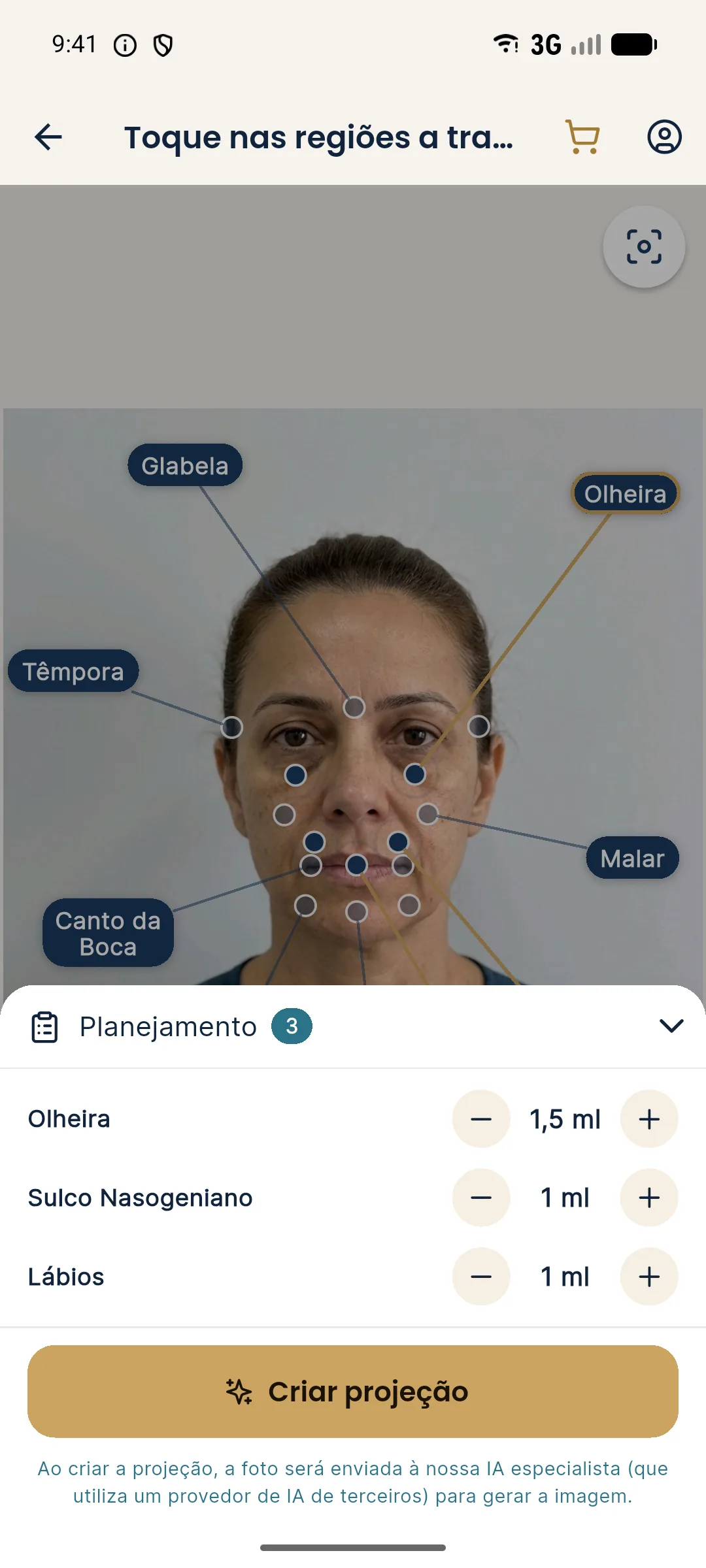
Once the swelling has gone down, you can take standardized photos of the patient and create a projection to talk through the next step. Mark the area, set a conservative ml and choose the intensity (Subtle is often a good conversation starter). The AI changes only what was marked and produces subtle, realistic differences, which helps show that the goal is balance, not volume.
What should you record?
Record the reason for the hyaluronidase, the area, the dose, the tissue response, the photos and the instructions given, along with the reassessment plan. If there was a complication, the notes follow your service's protocol. When the follow-up begins, record the new version of the plan and keep the previous one archived. See treatment plan versions and replanning after a complication.
What about the quote and the cost of the follow-up?
Hyaluronidase also changes the financial conversation. The patient may have paid for a volume that was just dissolved, and the follow-up can feel like double billing. Each practice sets its own policy, and the key is clarity: explain beforehand what is included, what will be charged in a new step and how the price relates to the planned ml. Avoid deciding on charges in the heat of a complication, when the conversation should be about care. Record what was agreed and provide it in writing.
If there is a follow-up, build the new quote by area and by step, with an expiration date, so the patient does not feel they have to accept everything at once. See linking plan and quote in facial harmonization and how to explain the quote by area.
When should you refer to another professional?
If the reason for dissolving was complex, if the patient lost trust or if the area calls for skills you do not have, referring is a responsible course of action. Hand over with a written summary of what was injected, dissolved and observed, always with the patient's authorization. See saying that the procedure is outside your scope.
Frequently asked questions
How long should I wait to redo filler after hyaluronidase?
Generally, long enough for the swelling and the tissue reaction to pass. The timing depends on the area, the dose used and the patient's response, and it is the professional's decision. Reassessing too early leads to adjustments on inflamed tissue.
Does hyaluronidase change the original plan?
Almost always. It removes volume that was part of the plan, so the goal, the area and the amount need to be reassessed with the face as it is now.
Can I use the simulation to plan the next step?
Yes, as a conversation aid. Use a current photo, taken after the swelling has gone down, and make clear to the patient that the image is illustrative and not a promise of results.
Does hyaluronidase work on any product?
It acts on hyaluronic acid. It does not act on other materials, such as biostimulators. Identifying the product that was previously applied is part of the assessment.
Harmy images are illustrative simulations generated by AI from the patient's photo to support the conversation between practitioner and patient. They are not a promise of results. Indication, technique, product and volume are solely the decision of the licensed practitioner. This content is for information only and does not replace a clinical assessment.