
Botulinum Toxin for the Mentalis (Orange-Peel Chin)

 BeforeSimulation
Botulinum toxin in the mentalis treats overactivity of the mentalis muscle, the muscle of the chin. When it contracts too much, the skin of the chin looks wrinkled and uneven, described as "orange peel" or "pebbly chin." Many patients do not even know this can be treated: they notice the look in photos or when talking, and arrive asking to "smooth the chin."
On this page you will find the indication, typical units in ranges, duration, risks, and how to set up the simulation in Harmy.
What is botulinum toxin in the mentalis?
It is the injection of botulinum toxin into the mentalis muscle to reduce its contraction. With the muscle more relaxed, the skin of the chin tends to look smoother, the horizontal dimple between lip and chin may soften, and the chin may look less "tense" when the mouth is closed.
As with the glabella, toxin does not add volume. It modulates movement, and for that reason it acts on dynamic lines and on irregularities caused by contraction.
Who is mentalis toxin usually indicated for?
Generally, for patients with:
- an "orange peel" look on the chin, at rest or when speaking;
- visible mentalis contraction when closing the mouth;
- a labiomental fold accentuated by muscle activity;
- a chin that seems to "ride up" and shorten with contraction.
In patients with retrogenia or lip incompetence, the mentalis usually works harder to close the mouth. In those cases, relaxing it without assessing the cause can worsen function. General contraindications include pregnancy, breastfeeding, neuromuscular junction disorders, active infection at the site, allergy to components of the formula, and medications that potentiate the toxin. The decision rests with the qualified professional, following the rules of their professional council in Brazil.
Which areas are involved?
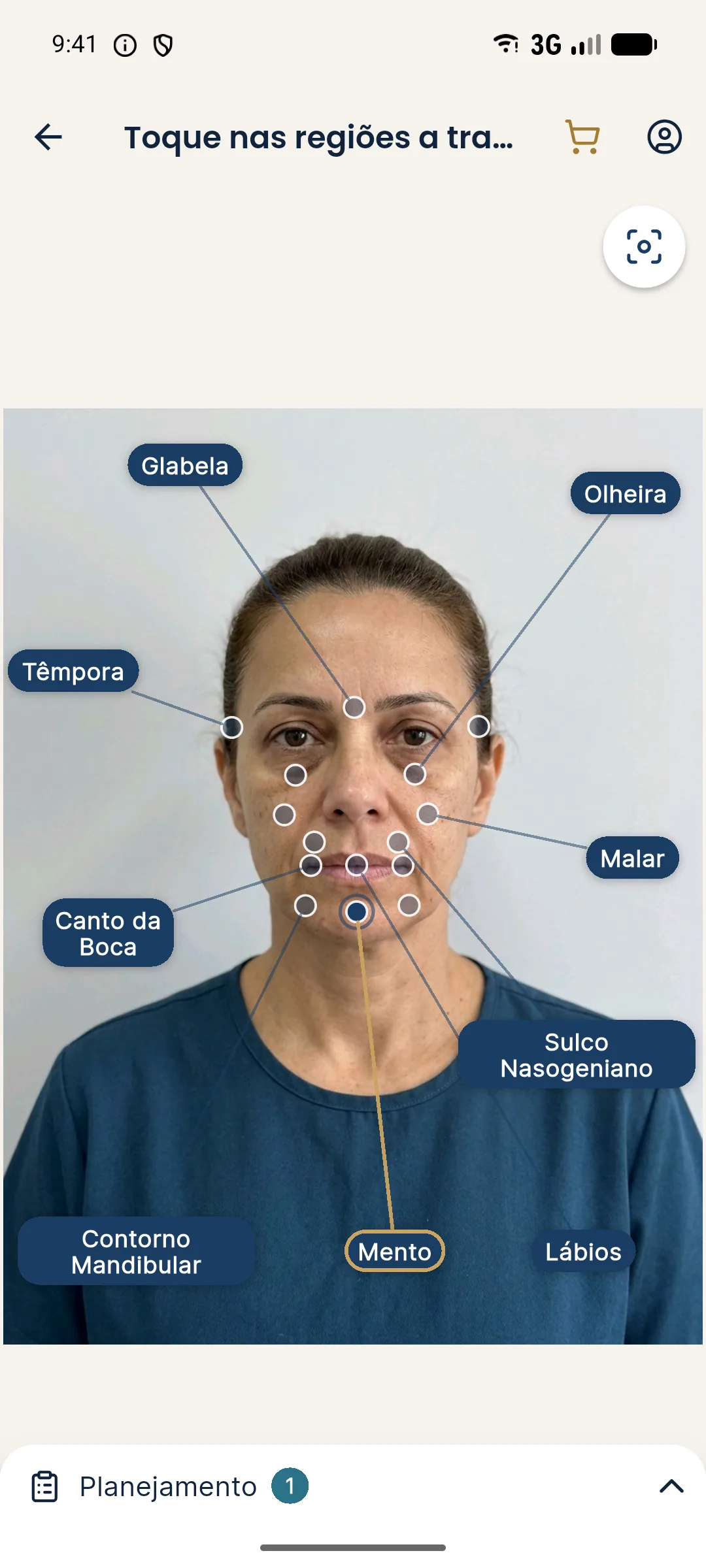
The main area is the chin, in the lower third. The plan also considers the lips, because the mentalis takes part in the position of the lower lip, and neighboring muscles, such as the depressor labii inferioris, which must not be reached.
Which product is used and how is the dose measured?
The product is botulinum toxin type A. The dose is expressed in toxin units, and units from different products are not interchangeable: each manufacturer has its own potency measure. Dilution changes the volume in which the units are delivered, not the dose.
What doses are typical in the mentalis?
The mentalis usually receives low doses, because the margin between smoothing the chin and affecting the lower lip is small. The ranges below are general references for products whose label uses the most widespread scale. The final dose is set by the qualified professional, after assessment.
| Profile | Typical total range | Note |
|---|---|---|
| Mild overactivity, first treatment | Generally 4 to 6 U | Start low and reassess |
| Moderate overactivity | Generally 6 to 10 U | At the professional's discretion |
| Cases with retrogenia or incompetent lip | Assess with caution | May not be indicated |
For presentations with a different potency scale, follow the label of the chosen product.
How long does mentalis toxin last?
The effect usually starts between 2 and 5 days, peaking around 2 weeks. The usual duration is generally between 3 and 4 months. Dose, muscle strength, metabolism, and the product all influence this time. A follow-up at about 15 days allows assessment of symmetry and function.
What are the risks and complications?
The most common effects are mild: pain at the injection site, a small bruise, and redness. The complications that deserve attention during the consultation are:
- Smile or lower lip asymmetry, due to spread to the depressor labii inferioris.
- Slight change in speech or difficulty pronouncing some sounds.
- Difficulty containing liquids when drinking, in cases of spread or a high dose.
- Spread to neighboring muscles, with an effect outside the plan.
- Allergic reaction and, rarely, loss of response over time.
These effects are usually temporary, but they are bothersome and must be stated in the informed consent. Toxin does not use hyaluronidase as a reversal agent. If the plan combines toxin and chin filler with hyaluronic acid, hyaluronidase must be available for the filler part. See also safety and complications in HOF.
What care is recommended before and after?
Before, the medical history should record current medications, neuromuscular diseases, previous toxin treatments (dates and doses), and any complaints about speech or lip seal. Afterward, the usual instructions include not massaging the area, avoiding lying down right after the injection, and avoiding heavy exercise on the same day, following the professional's guidance.
What not to promise the patient
- That the chin will be "smooth" in every expression.
- Increased chin projection. That is the job of filler.
- Absolute smile symmetry.
- An exact duration.
- That toxin corrects retrogenia or bite problems.
Simulation in Harmy
The image at the top of this page was generated by Harmy itself, with the fictional person we use across all our pages, marking only the Chin point. Drag the line to compare. The change is subtle on purpose: the AI alters only the marked area and does not retouch the skin, apply makeup, or change the expression, lighting, or background. It is an honest projection, an illustrative simulation, not a promise of results.
In the app, mentalis toxin and chin filler share the same point, Chin. The simulation shows the effect of the point as a whole: when you tap Chin, the projection considers both indications together, the smoothing of the chin skin and the projection of the chin. There is no way to simulate toxin alone at that point, and it is worth telling the patient so if the plan is toxin only.
What does "ml" mean for a toxin in Harmy?
In the Plan, each point gets a value from 0.5 to 5, in steps of 0.5, labeled ml. For fillers it is the real volume. For toxin, it is not the dose in units or the dilution volume: it is a planning unit of the app that guides the intensity of the simulation. Low values, such as 0.5 or 1, correspond to a light smoothing.
A practical convention is to use "1 = standard mentalis treatment" and keep that value in the PDF quote, where the price is set per ml of each area. When the same point has both toxin and filler, agree in your price table on how that value will be charged, so the quote does not confuse the patient. The actual dose, in units, is a clinical decision and goes into the patient record.
How to simulate in 3 steps
- In New projection, enter the patient's name and use a frontal photo with the mouth closed, preferably showing the chin's usual contraction.
- In the marking screen, tap the Chin point and set the value in the Plan (start with 0.5 or 1).
- Tap Create projection and compare with the Before / After slider.
Details and screenshots in how to mark areas and volumes.
Frequently asked questions
What is botulinum toxin used for in the chin?
To reduce overactivity of the mentalis muscle, which causes the "orange peel" look on the chin and the visible contraction when closing the mouth.
How long does toxin last in the mentalis?
Generally 3 to 4 months, varying with the product, the dose, muscle strength, and the patient's metabolism.
Can chin toxin affect the smile?
It can. Spread to neighboring muscles of the lower lip may cause smile asymmetry or slight difficulty speaking, usually temporary.
Can I do toxin and filler in the chin in the same consultation?
It is a combination used in practice, at the professional's discretion, who decides the order, the interval, and the doses after assessment.
Harmy images are illustrative simulations generated by AI from the patient's photo to support the conversation between practitioner and patient. They are not a promise of results. Indication, technique, product and volume are solely the decision of the licensed practitioner. This content is for information only and does not replace a clinical assessment.