
Plan to balance the profile: nose, lips and chin

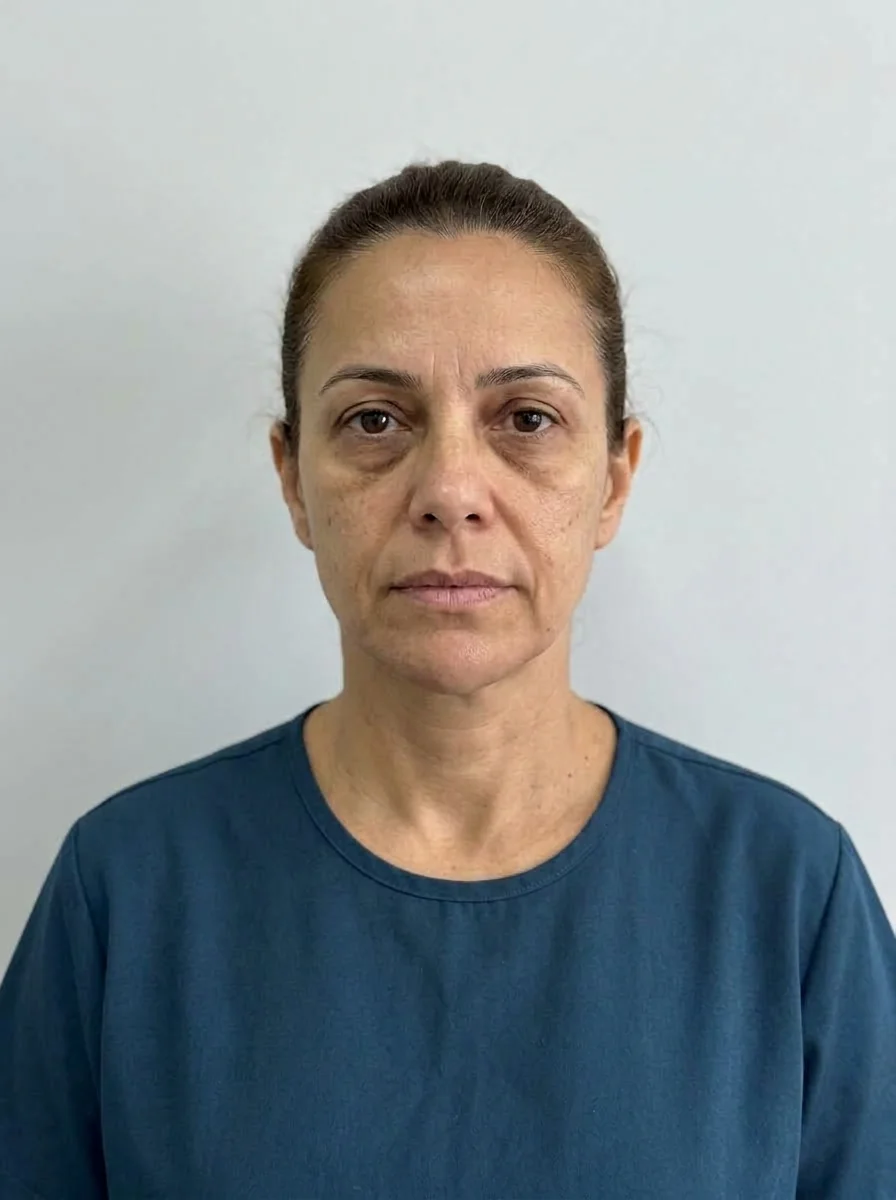 BeforeSimulation
- Nerve
- Highlighted area
Quick facts
- Topic
- Profile balance between nose, lips and chin
- Reading tool
- Reference lines and angles on the profile
- Usual order of reasoning
- Bone base and chin, then lips, and nose last
- Limit of injectables
- Does not correct malocclusion or marked bone structure
- Limit of the simulation
- Harmy uses only a frontal photo and does not show the profile
A good part of what gives a face harmony shows from the side. The balance between nose, lips and chin is a relationship, not three separate measurements: changing one alters how the others read. That is why a profile plan needs a decision map, with an order, reference lines and clear limits. This page proposes that map and states plainly what facial harmonization and Harmy's simulation can and cannot reach.
Why think of the profile as a whole?
Because the eye reads proportion. A nose that looks big may be normal, and what is missing is chin projection. A lip that looks thin may be fine, and what is missing is support from the maxilla. Treating each part as an isolated problem leads to excess, and the result can be a "remade" profile that no longer fits the patient's identity. See aesthetic profile: lips, nose and chin and the domino effect between facial areas.
Which lines and angles guide the reading?
There are reference lines (such as the Ricketts, Steiner or Burstone aesthetic lines) and angles (nasolabial, mentolabial, convexity). They are conversation guides, not mandatory targets, and they vary between populations and between people. They help name what the professional sees and record changes. The reading calls for a standardized profile photo, with the Frankfort plane, as in standardized clinical photography and profile photo of the face in the clinic.
| Reference | What it describes | Caution |
|---|---|---|
| Ricketts line | Position of the lips relative to the nose and chin | Varies with sex, age and ethnicity |
| Nasolabial angle | Relationship between the columella and the upper lip | Depends on the rotation of the nasal tip |
| Mentolabial angle | Depth of the fold below the lower lip | Changes with chin projection |
| Convexity angle | Convex, straight or concave profile | More skeletal than soft tissue |
See the glossary entries: Ricketts line, nasolabial angle, mentolabial angle and facial profile. Photo-based analysis is covered in profile facial analysis: checklist and reference lines of the aesthetic profile.
What is the order of the decision map?
The logic of starting from the base is supported by structure before detail in the harmonization plan and ideal chin projection by sex.
What does each area offer on the profile?
The chin is the anchor: gaining projection can improve the relationship with the lips and nose, and vice versa. Beware of excess, which lengthens the lower third. See chin filler and plan to project the chin. The lips respond to support from the chin and maxilla, and treating the lip before assessing the chin can create the impression of a "bigger mouth" without harmony. See lip filler and lips and chin: combining in the plan.
The nose has its own treatment and carries a high vascular risk when dermal filler is used: nonsurgical rhinoplasty requires detailed anatomy and knowledge of complications, with hyaluronidase on hand. In a profile where the nose looks big because the chin is lacking, the approach may be to treat the chin and reassess the nose. See nonsurgical rhinoplasty, nose and chin: combining in the plan and nose and upper lip: combining in the plan.
When is the profile not a case for facial harmonization?
When the discrepancy comes from bone or occlusion: significant retrognathia, prognathism, open or deep bite, class II or III. Injectables can compensate for part of it but do not solve the cause, and an orthodontic or surgical assessment may be more appropriate. Record the guidance you gave. See retrognathic profile: assessment, orthodontics and facial profile in harmonization and concave profile, convex profile.
How does the simulation fit in, with its limits?
In Harmy, the projection is made on the frontal photo. It shows the change in the chin and lips from the front, and that helps part of the conversation, but it does not show the profile or the mentolabial angle. Tell the patient so. Use the simulation to align on volume and naturalness, and use the clinical profile photo to talk about projection.
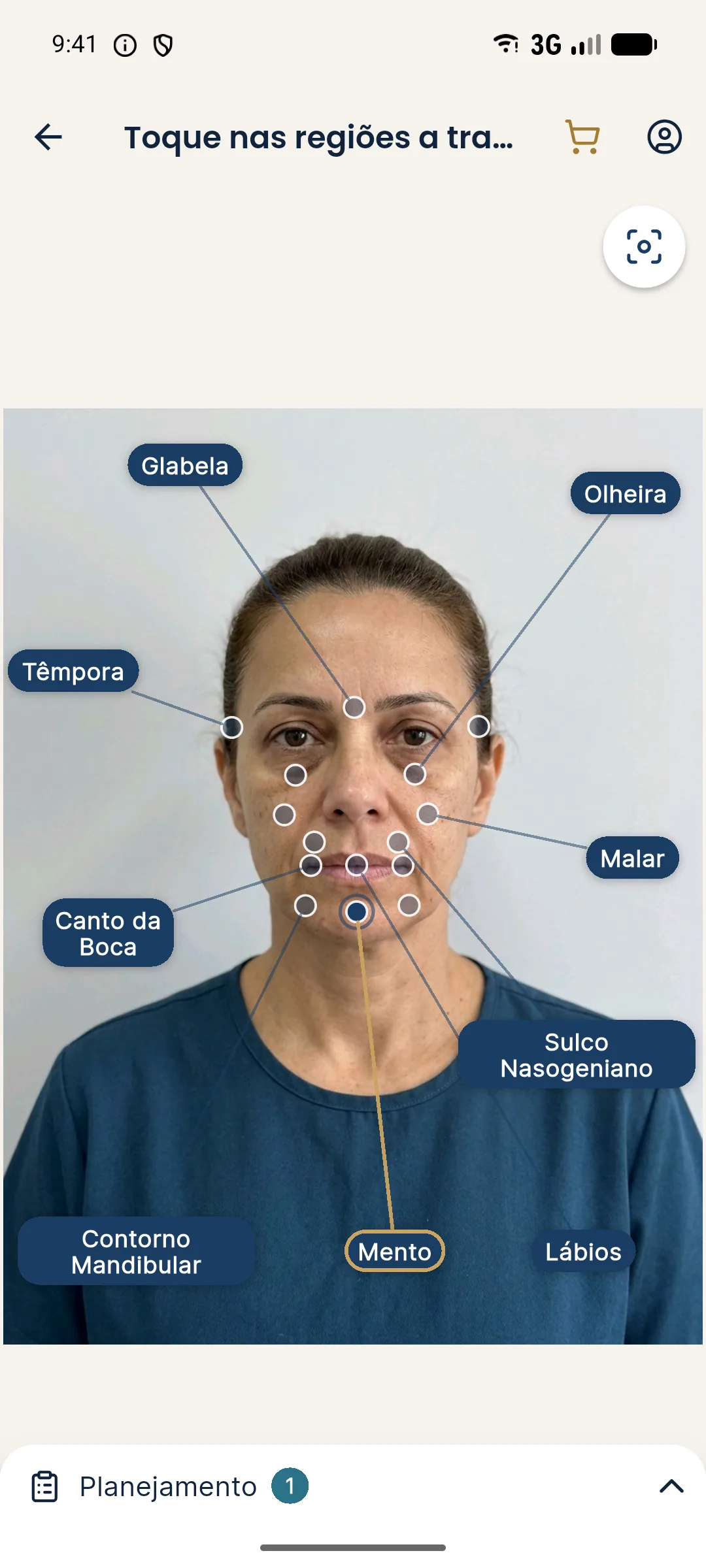
For an explanation of the limits, see limits of 2D simulation and face at rest vs in motion.
How do you talk to the patient?
Use the language of proportion: "your chin sits a little back relative to your lips, and that makes the nose look bigger". This shifts the patient's focus, which is usually "make my nose smaller", to the relationship between the parts. Show a profile photo of them and, if they agree, draw the lines on the screen. This makes the conversation concrete and lowers the risk of requests based on social media references.
Reasoning quiz
Summary
Balancing the profile is about reading relationships. Start with the base and the chin, assess lips and nose, respect identity and the limits of injectables, and use the frontal simulation only for what it shows. For the profile, the exam and profile photos are irreplaceable.
Frequently asked questions
Where should you start when balancing the profile?
In general, the base (chin and maxilla) is assessed before the lips and nose, because the chin changes how the other two read. The final order depends on the case and is the professional's decision.
Does chin filler change the nose?
Visually it can change how the nose reads in profile, because balance is relative. The nose does not change size, but it looks smaller when the chin gains projection.
Does Harmy simulate the profile?
No. The projection uses only the frontal photo, with no profile or 45-degree view. The profile assessment must be done at the exam and with your own clinical photos.
When is the profile not a case for facial harmonization?
When the cause is a marked bone or occlusal problem, such as significant retrognathia or malocclusion. Injectables can compensate for part of it, but an orthodontic or surgical assessment may be indicated.
Harmy images are illustrative simulations generated by AI from the patient's photo to support the conversation between practitioner and patient. They are not a promise of results. Indication, technique, product and volume are solely the decision of the licensed practitioner. This content is for information only and does not replace a clinical assessment.