
Neck and Chest in the Facial Plan: When to Include Them

- Muscle
- Highlighted area
Quick facts
- Topic
- Coherence between the quality of the face and that of the neck and chest
- Central question
- Whether the neck matches what the plan proposes for the face
- Structures
- Thin skin, platysma, fat and horizontal neck lines
- App limit
- Harmy does not mark or simulate the neck or chest
The face and the neck belong to the same person, but they are often treated as separate territories. The patient looks after the face, has facial harmonization, improves the skin, and the neck stays as it was. The result, in some cases, is a contrast: a face with good support and texture above a neck with thin skin, marked lines and visible bands. The eye notices the difference, even if the patient cannot name it.
This page helps you decide when the neck and chest deserve a place in the facial plan assessment, what to look for, how to talk to the patient, what precautions to take and what Harmy does not do. For the neighboring area, read chin and double chin: when the plan needs both.
Why does the neck belong in the plan's reasoning?
The eye reads the face and neck as one. The transition between the lower third and the neck is where the contour is defined, and it is also where the signs of time tend to appear: thin skin, horizontal lines, platysmal bands, fat and laxity. When the plan proposes improving contour definition or the quality of the lower third, the neck is the frame that can support or undercut that improvement.
This does not oblige you to treat the neck. It obliges you to look. A professional who assesses and talks is more likely to deliver a coherent plan than one who treats only what the patient asked for.
| Neck sign | What it may indicate | Direction of the conversation |
|---|---|---|
| Horizontal lines | Neck skin and dynamics | Expectations and care, at the professional's discretion |
| Vertical platysmal bands | Contraction of the platysma muscle | Specific assessment |
| Submental fat | Local accumulation | May call for an approach beyond filler |
| Thin, lax skin | Loss of quality and support | Skin quality approaches, generally gradual |
| Spots and texture on the chest | Photoaging | Conversation about priorities and care |
Each finding calls for its own assessment, and many fall outside what facial harmonization solves with volume. The plan may include a referral or a combination with other approaches, always at the discretion of the qualified professional, in line with the rules of their professional board.
How do you assess the neck at the visit?
Assessing the neck is simple and quick, and should be done with the patient in a standardized position. The photo matters too: a raised or lowered chin changes everything.
For the contour and double chin, see chin and double chin: when the plan needs both and chin and jaw: why combine them in the plan. For age as context for the plan, read facial analysis at 50 and facial analysis at 60 and over.
How do you talk to someone who did not ask about the neck?
Many patients do not ask about the neck because they do not notice the difference, or because they think it is a separate matter. The conversation should be careful: point out the finding as information and not as a flaw, and leave the decision to the patient. Avoid creating a need, and remember that every extra treatment adds cost, risk and time.
A respectful approach: show the whole look in the photo, note with the patient that the neck has different skin characteristics from the face and ask whether they would like to talk about it now or later. If the answer is "later", record it and move on. The same goes for the chest. See findings the patient did not ask about in the plan.
What about biostimulators and other approaches?
For skin quality and support, some approaches use collagen biostimulators or other resources, which work gradually. The choice, the area and the technique belong to the qualified professional, in line with the rules of their professional board. This page does not recommend or endorse any product.
What falls to the plan is order and coherence: whether the neck is included, when and how it combines with the face. Often the best plan treats the face first, reassesses and only then discusses the neck, or the reverse if the main concern lies there. For the reasoning on order, see what to treat first in facial harmonization: priority criteria. For combining cycles, read yearly maintenance of toxin, filler and biostimulator and biostimulator and filler: combining areas.
Hyaluronidase must be on hand whenever hyaluronic acid is used in any area, including those next to the neck.
What does Harmy do here, and what does it not do?
Harmy works with the face. The nine marking points are Glabella, Temple, Tear Trough, Cheekbone, Nasolabial Fold, Mouth Corner, Lips, Chin and Jawline. The neck and chest are not included, and the projection uses only the front-facing photo of the face.
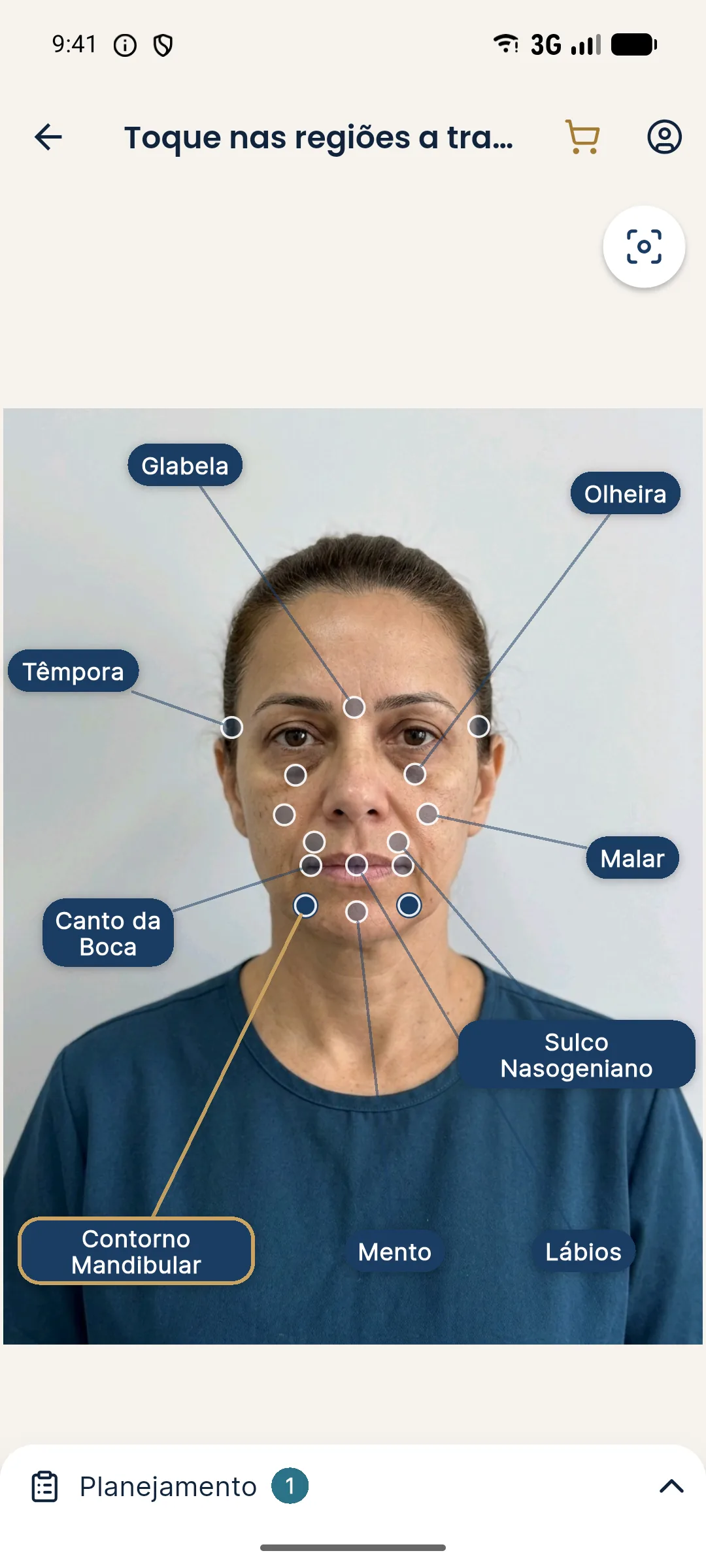
This has a practical consequence: the Jawline projection may show a more defined line, and the patient may assume the neck will change too. Make clear that the image is limited to the face. See explaining that a simulation is not a guarantee.
Every decision on area, product, volume and technique belongs to the qualified professional, after assessment. The simulation is illustrative and does not promise results.
Frequently asked questions
Why include the neck in the facial plan?
Because a treated face next to a neck with much more pronounced signs can look incoherent. Assessing the neck helps keep the whole look natural.
Does the neck always need treatment?
No. Assessing does not mean treating. Often the conversation is about what to expect, about care and about priorities, and the decision is the patient's and the professional's.
Does Harmy simulate the neck and chest?
No. The app marks nine facial points, such as Chin and Jawline, and does not include the neck or chest. The projection is front-facing and of the face.
Which neck signs are part of the assessment?
Skin quality, platysmal bands, horizontal lines, submental fat and laxity. The assessment is clinical and depends on posture and lighting.
Harmy images are illustrative simulations generated by AI from the patient's photo to support the conversation between practitioner and patient. They are not a promise of results. Indication, technique, product and volume are solely the decision of the licensed practitioner. This content is for information only and does not replace a clinical assessment.