
Patient who over-researched online: how to guide the visit

Quick facts
- Situation
- The patient arrives full of information from the internet, right and wrong
- Trap
- Dismissing the research or getting into a confrontation
- Strategy
- Validate, ask and correct gently
- Advantage
- An engaged patient tends to decide with more clarity
The patient arrives with screenshots, saved videos and a list of terms you never even used in the visit. "I read that biostimulators form nodules." "I saw that the high-density one is best." "They said botox stops working because you get used to it." Part of it is right, part is wrong, part is mixed up. How you react decides whether the visit will be a conversation or a debate.
What does the research reveal?
More than the content, the research shows what the patient fears, expects and values.
- Fears. The risks they searched most are usually the ones that worry them most.
- Expectations. The results they looked for point to what they want.
- Sources. Influencers, forums and videos shape their view.
- Level of involvement. People who research a lot usually want a say in the decision.
How do you validate without agreeing with everything?
Validating means acknowledging the effort and what is correct. This lowers the patient's guard and makes room to correct the rest.
What if the information is clearly wrong?
Avoid "that is a lie". Prefer "that is more complex than it usually looks in short videos". Explain what changes from case to case and show why the generalization does not apply. Patients accept correction better when they do not have to admit they were wrong.
How do you correct without confrontation?
| Instead of | Prefer |
|---|---|
| "That is not true." | "I understand where that idea comes from. In practice, what happens is a little different." |
| "That influencer doesn't know." | "Videos show one case, and every face is different." |
| "You read the wrong thing." | "There is a lot of information out there, let's separate what applies to you." |
| "Leave that to me." | "I will explain my reasoning, and you tell me if it makes sense." |
How do you handle fear caused by research?
Some searches cause panic: necrosis, blindness, deformity. The risks exist and must be stated honestly, but the patient needs perspective. Listen to the fear, name the real risks, explain how you prevent them and what you do if something happens. In procedures with hyaluronic acid, for example, it is worth saying that hyaluronidase should be available and that you know the warning signs. Avoid downplaying with "that never happens" and avoid alarming with unnecessary detail.
What about the patient who brings screenshots and videos?
Ask to see them. Notice what caught their attention: a technique, a product, a result. Use it as a starting point to explain your approach. Do not ridicule the source, discuss the content. If the video shows an exaggerated result, talk about what they would like to keep, not about who posted it. Also read patient brings a reference photo and patient brings a filtered photo.
How does the simulation fit into this conversation?
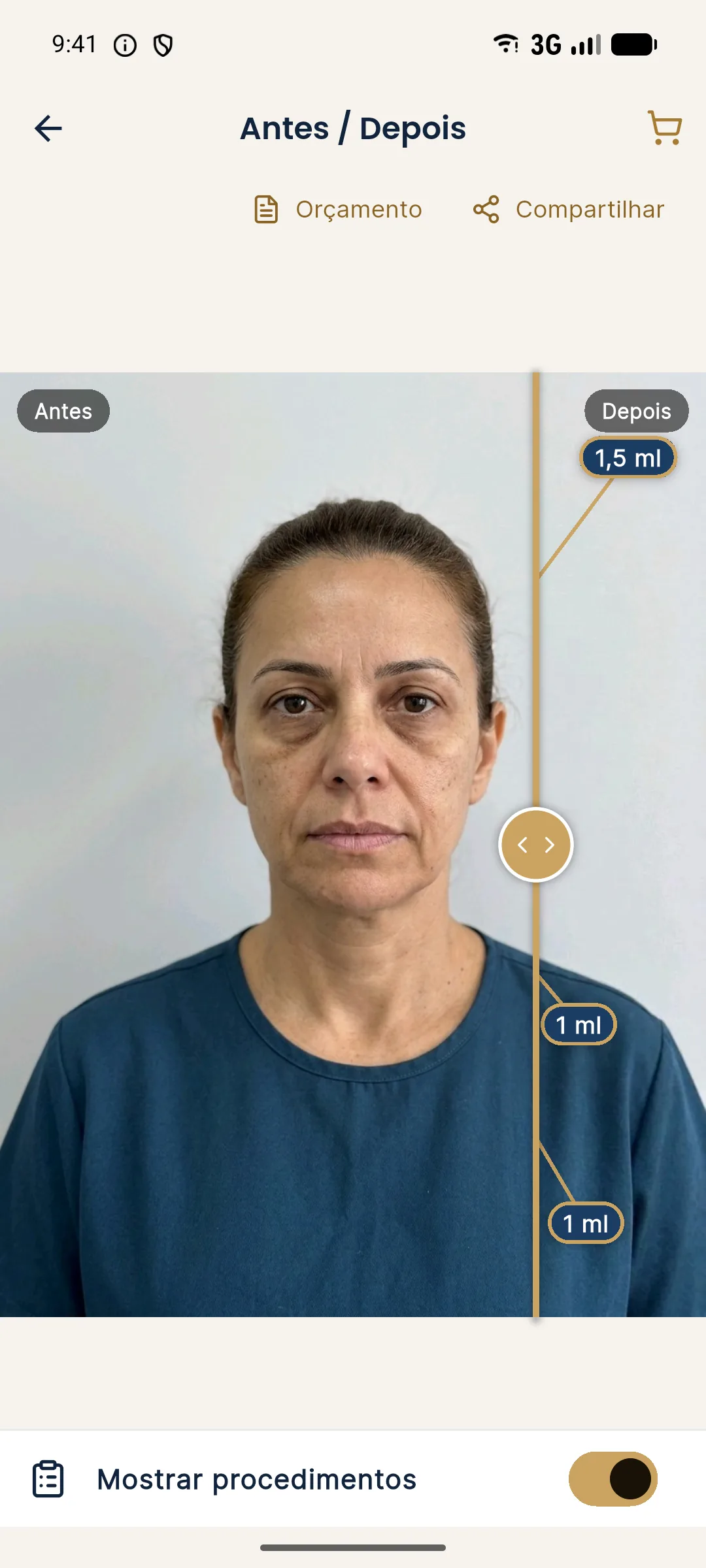
Research creates abstract expectations. The simulation makes them concrete and personal. Instead of debating "what looks good", you show what it would look like on their face, at Subtle, Moderate or Pronounced intensity, and the patient reacts to the real image. This moves the debate from the internet to the case.
When does research become an obstacle?
Some patients get stuck in comparisons, never feel safe and go back to the internet after every visit. In that case, help them set limits: pick two or three reliable sources, agree on a date to decide and offer a second visit if needed. Too much information can paralyze. For the patient who cannot decide, see indecisive patient.
How should you document it?
You do not need to record every piece of information, but it is worth noting in the patient record that the patient did research, which doubts they brought and which corrections were made. This ties in with informed consent, which should reflect what the patient understood, not just what was said.
In short
The patient who did research is an ally, not a threat. When you validate, ask and correct patiently, they leave with more clarity and more trust in you.
How do you point patients to reliable sources?
If the patient wants to keep studying, help steer them. Point to official pages, such as those of regulatory agencies and professional boards, and to educational material you prepare yourself, instead of leaving them at the mercy of viral videos. Offer to answer questions through an agreed channel, so they bring their questions to you and not to the algorithm. When you offer content, keep the same care with language: no promises, no exaggeration, with the risks explained. Patients tend to value the professional who organizes information, not just the one who receives it.
Frequently asked questions
Should I be bothered by a patient who researched a lot?
No. Researching shows interest and care. The professional's role is to validate what is correct and fix the rest patiently, without sounding superior.
How do I correct wrong information without causing confrontation?
Ask where it came from, acknowledge what is true and explain the difference with simple examples. Avoid saying the patient is wrong; say instead that the situation is more complex.
What should I do with a patient who brings screenshots and videos?
Ask to see them, ask what caught their attention and use the material to explain your approach. Do not ridicule the source, discuss the content.
What if the research caused exaggerated fear?
Listen to the fear, give the risks their real size without downplaying them and explain how you manage safety. Clear information usually reassures more than denial.
Harmy images are illustrative simulations generated by AI from the patient's photo to support the conversation between practitioner and patient. They are not a promise of results. Indication, technique, product and volume are solely the decision of the licensed practitioner. This content is for information only and does not replace a clinical assessment.