
Patient who brings a filtered photo: how to run the consultation

Quick facts
- Typical request
- I want to look like my filtered photo
- Problem
- The filter alters proportions that no procedure can reproduce
- Method
- Calmly compare the filtered photo with the standardized photo
- Warning
- Intense distress about their own image calls for care and, sometimes, referral
The patient opens their phone and shows a photo: smooth skin, bigger eyes, a slimmer nose, a more defined chin. "This is how I want to look." It is not a photo of someone else, it is of themselves, with a filter. This situation has become common, and it calls for a more delicate conversation than a request based on a celebrity photo, because the reference is their own "corrected" face.
The challenge is to show the difference between the real face and the filtered one without embarrassing them, without confrontation, and without promising what no procedure delivers.
What does a filter do that a procedure does not?
Filters combine several changes at once, often impossible to reproduce on a real face. In plain language, a filter can:
- smooth skin texture to the point of erasing pores and relief;
- enlarge the eyes, slim the nose, and reshape the chin;
- change the proportions between the thirds of the face;
- correct symmetry mathematically;
- alter light, color, and brightness.
An injectable procedure acts on specific points and gradually. It does not "reshape" the whole face or change skin texture in the same way. The concept is covered in beauty filter, and the associated dissatisfaction in filter dysmorphia.
How to start the conversation without confrontation?
Avoid opening with "that's not possible." The patient would feel corrected, not heard. Prefer questions that get them to talk about what really appeals to them in the image:
The answer usually reveals one or two specific things, and that is where the plan begins. The rest of the image falls into the "filter effect" category, which you explain later, without rushing.
For the underlying reasoning, read patient brings a photo of another person as a reference and I want my face to look like the one in the photo.
How to dismantle the expectation using the patient's own photo?
The most effective strategy is to compare the filtered photo with a standardized photo, taken on the spot, without a filter. The patient sees both and understands for themselves what changed. You just follow their gaze.
- Take a standardized frontal photo, with neutral light and a relaxed expression.
- Place the filtered photo next to it.
- Ask what they notice that is different.
- Add only what they did not say, in neutral language.
- Rebuild together what can really be changed.
The capture technique is in standardized clinical photography and the use of the material in the conversation is in how to use the frontal photo in the conversation.
How does the simulation fit into this conversation?
The simulation shows a realistic direction, on the patient's true photo, which makes it a good counterpoint to the filter. It does not correct skin, does not change eye shape, and alters only what was marked. That honesty is useful: the patient sees what a realistic volume changes and compares it with what the filter changed.
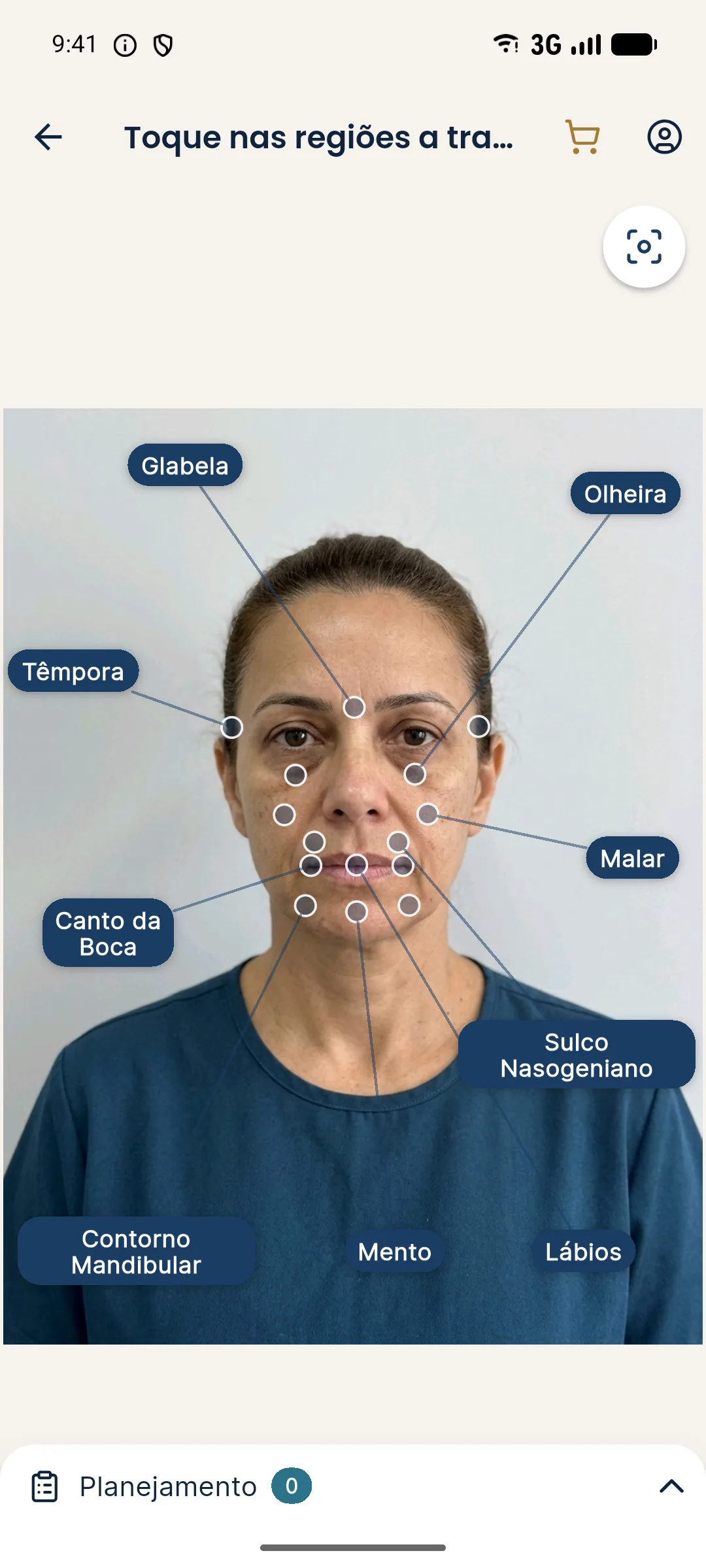
Even so, the image is an illustration. See a simulation is not a guarantee and patient with unrealistic expectations.
When is the concern greater?
Some signs call for more attention than a simple expectation adjustment:
- intense distress about their real appearance;
- avoids mirrors, unfiltered photos, and social events;
- spends many hours editing their own photos;
- asks for several changes at once, always based on edited images;
- is never satisfied with the result, even when it is objectively good.
These signs may point to a distorted body image, and in that case the safest approach may be not to treat and to refer. See patient with suspected dysmorphia, saying no to a patient with dysmorphia and when to refer to psychology.
What to propose when the request is not realistic?
Redirect toward goals you can stand behind. Instead of "looking like the filter," propose observable objectives, such as softening a shadow, improving the proportion between lips and chin, or restoring slight volume in one area. Agree on it in writing, as in aligning expectations in writing, and, if it makes sense, start with just one area, with a review afterward.
What should you record?
Note that the patient brought an edited image, what they said attracted them most, the comparison made with the standardized photo, the goals agreed, and the notice that the real result will not match the filter. This record is part of the informed consent and protects the relationship.
Frequently asked questions
Is it possible to look like the filtered photo?
No. Filters alter shape, proportion, skin, and lighting in ways that procedures do not reproduce. What can be discussed is a realistic, safe improvement in specific areas.
How do I show the patient the difference between the filter and the real face?
Place the filtered photo next to a standardized clinical photo, and point out the differences in proportion, symmetry, and texture, without sounding critical.
Can I do the harmonization if the patient only wants to look like the filter?
It depends on the assessment. If the expectation is unrealistic and the distress is significant, consider postponing, talking more, or referring, instead of treating to try to reach the filter.
Does the simulation help in this conversation?
It can, by showing what a realistic volume changes in their face, as long as it is presented as an illustration and expectations are well aligned.
Harmy images are illustrative simulations generated by AI from the patient's photo to support the conversation between practitioner and patient. They are not a promise of results. Indication, technique, product and volume are solely the decision of the licensed practitioner. This content is for information only and does not replace a clinical assessment.