
Under-eye filler: how many ml per side

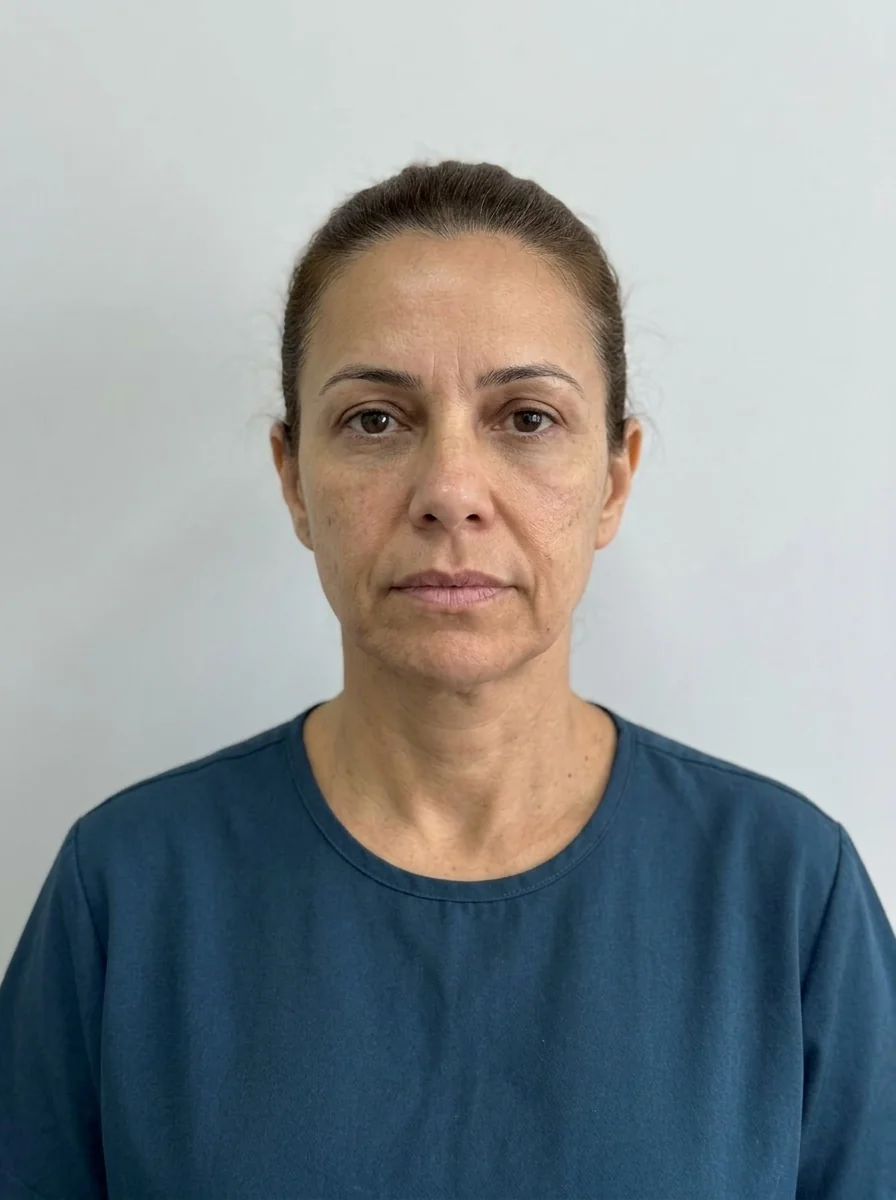 BeforeSimulation
Quick facts
- Question
- How many ml of under-eye filler per side
- Usual range
- Small volumes, often fractions of a ml per side
- Principle
- More volume is not better; excess causes swelling, Tyndall and a heavy look
- Who decides
- The licensed professional, after assessment
Under the eyes, ml is the smallest number in harmonization and, at the same time, the one that worries the patient most. When they hear "half a milliliter", they imagine it is little and that the professional is cutting corners. The opposite is usually true: in the thinnest-skinned area of the face, a little product well placed is what gives results, and a lot of product is what causes problems.
This page explains the logic of small volumes, the danger of overfilling and how to talk about it with the patient. Volume and technique are up to the licensed professional, according to the rules of their professional council (in Brazil).
Why small volumes?
The under-eye area has very thin skin, little fat and nearby vessels. The hollow that creates the shadow is usually small, and the gel only softens it. Because the tissue is thin, any excess shows, as swelling, irregularity or a bluish tint.
| Feature of the area | Consequence for volume |
|---|---|
| Very thin skin | A little gel already shows; excess leaves marks |
| Tissue that retains water | The gel attracts swelling, which can last weeks |
| Nearby vessels | Vascular risk calls for caution |
| Small hollow | Filling of a few fractions of a ml |
| Limited space | Little "room" for product |
The topic of stages and results is in under-eye filler: results and sessions.
Per side or total?
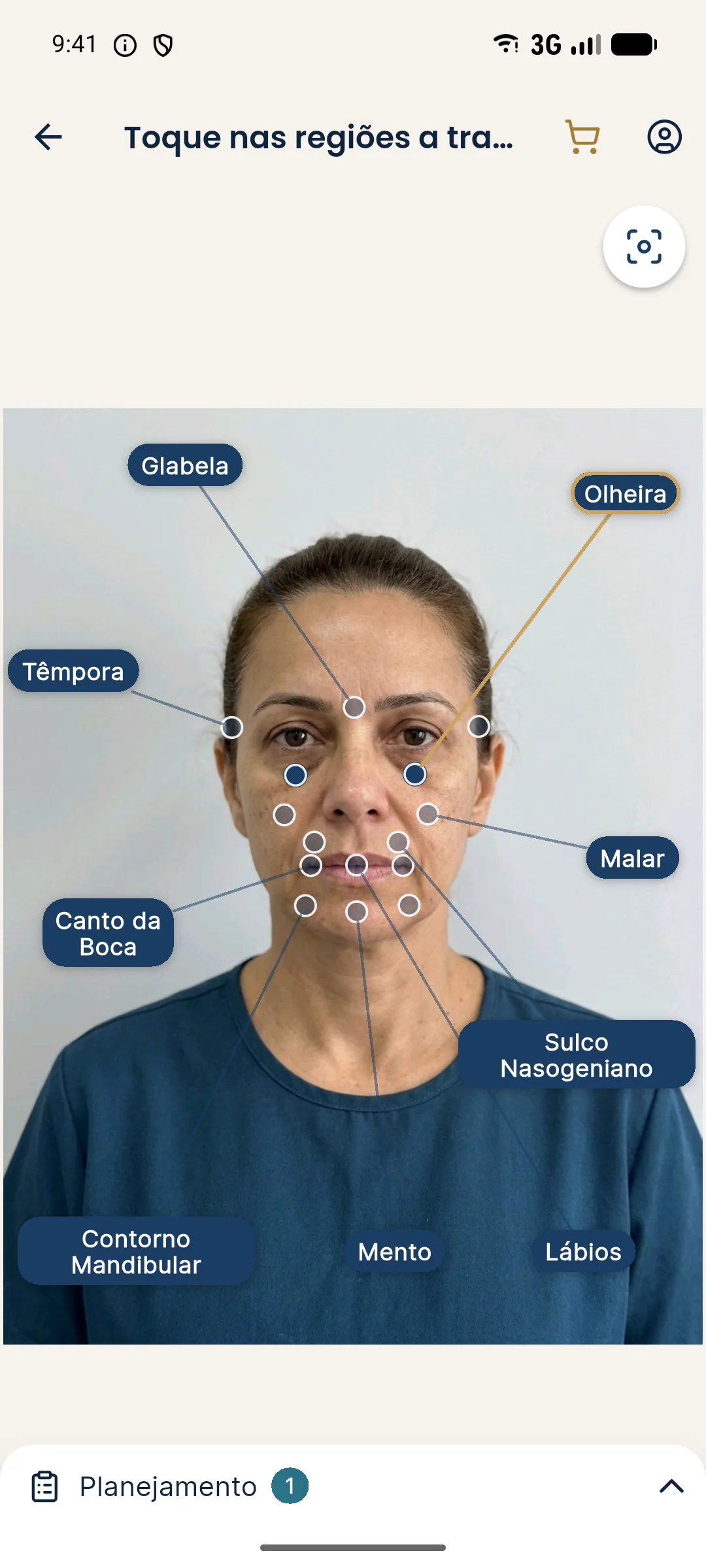
The same ambiguity as in the cheekbone appears here. "1 ml" can be the total or per side, and the difference is large in terms of product. Ask that the quote say which. In Harmy, for bilateral areas, the ml is the total and the app splits it between the two sides.
Why more is not better
When the patient sees that the shadow is still there and asks for "more", remember that swelling hides the result in the first few days. Adding product at that point usually leads to overfilling. The risks of excess include:
- Puffy look: too much gel forms a bulge below the eye.
- Tyndall effect: a bluish tint when the gel is superficial. See Tyndall effect and Tyndall effect under the eyes.
- Persistent swelling: the gel retains water.
- Irregularities: visible waviness in thin skin.
If excess occurs, hyaluronidase can correct some hyaluronic acid cases. But the goal is not to need it. To understand what can go wrong, see under-eye filler that went wrong and under-eye filler: risks.
Stages and assessment timing
Because of how sensitive the area is, many professionals prefer a conservative first stage and an assessment after the swelling goes down, which can take two to four weeks. Only then do they decide whether there is room for an adjustment. Patience is the main tool.
When ml does not solve it
If the dark circle is pigmented or vascular, increasing the ml does not help and can make it worse. The conversation about indication is in botox or filler under the eyes and under-eye filler: does it remove the purple?. It is also worth reading first time with under-eye filler.
Using the simulation to align expectations
The patient with dark circles looks at themselves critically. In Harmy, the Tear Trough point lets you test ml and intensity (Subtle, Moderate or Pronounced) and see the illustrative projection. Showing that 1 ml at Subtle intensity already changes the shadow is usually more convincing than any explanation about small volumes. The simulation is illustrative, not a promise of results, and does not predict swelling.
Summary
Under the eyes, a small ml is the rule, not a saving. The result comes from the right indication, careful technique and the patience to assess. More is not better.
Frequently asked questions
How many ml of filler are used under the eyes?
Small volumes, often fractions of a milliliter per side, set by the professional according to the depth of the hollow and the thickness of the skin.
Do more ml remove the dark circle more?
No. Excess product can cause swelling, a puffy look, the Tyndall effect and irregularities, without guaranteeing a better result.
Is the ml per side or total?
It varies with how the professional reports it. Worth asking so you can compare quotes. In Harmy, for bilateral areas, the marked ml is the total, split between the sides.
Can it be done in two stages?
Many professionals prefer a conservative stage and adjusting after the swelling goes down, because of how sensitive the area is.
Harmy images are illustrative simulations generated by AI from the patient's photo to support the conversation between practitioner and patient. They are not a promise of results. Indication, technique, product and volume are solely the decision of the licensed practitioner. This content is for information only and does not replace a clinical assessment.