
Does botox freeze the face? Myth or fact

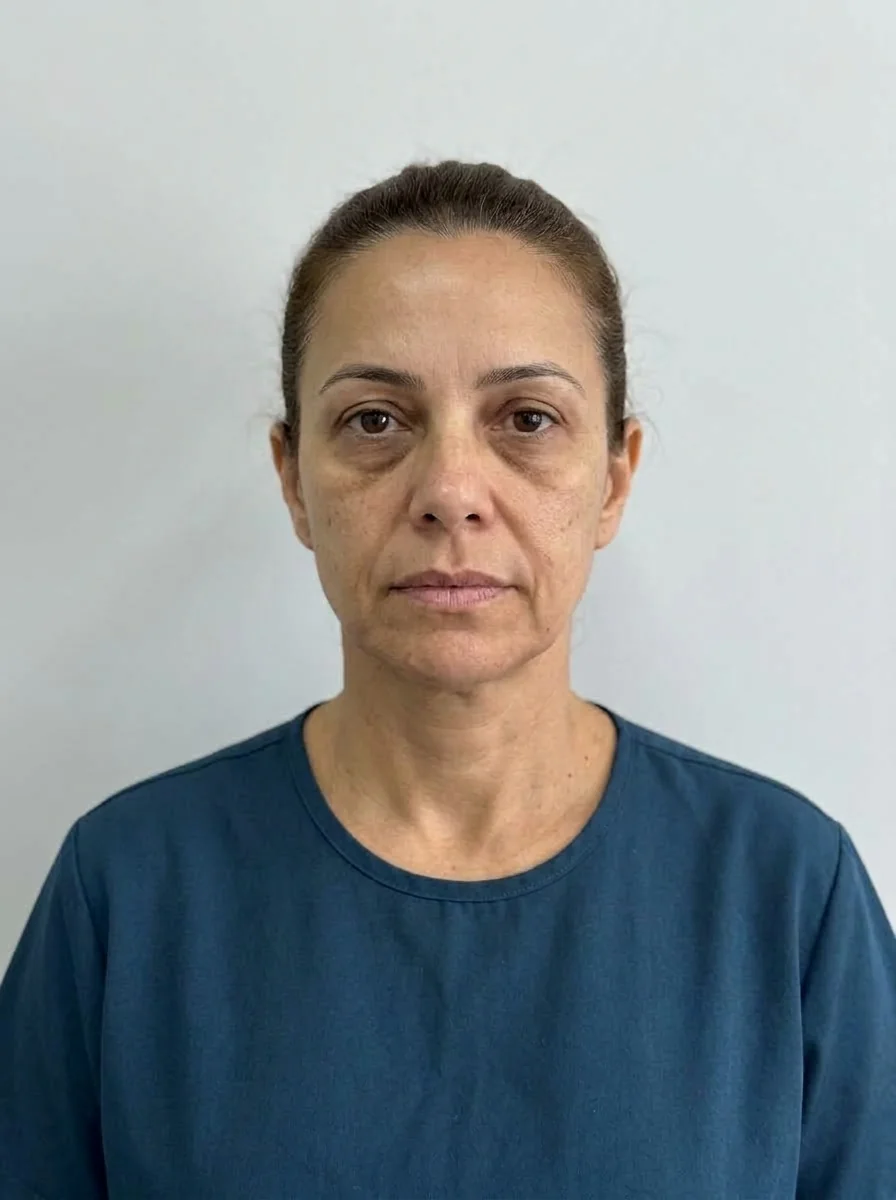 BeforeSimulation
Quick facts
- Myth
- Botox leaves the face frozen
- Fact
- The effect depends on dose, area and distribution, and can be planned to preserve expression
- Cause of a stiff face
- Too much product, imbalance between muscles or poorly aligned expectations
- Who decides
- The qualified professional, after assessment
"I don't want a frozen face" is the oldest version of the fear of anyone considering botox. The image of a smooth forehead and motionless brows marked an era and still lives in patients' minds. The answer is neither "that's a myth" nor "that happens": the result depends on the professional's decisions and on an honest conversation about what each patient wants to keep. This page shows what determines natural-looking results and how to align expectations.
What causes the frozen look?
Botulinum toxin weakens the treated muscles, which softens dynamic wrinkles. How much movement is reduced depends on controllable factors:
- Dose: the higher it is, the greater the reduction in movement.
- Distribution: how the product is spread across the muscles affects the balance of expression.
- Area: the forehead, glabella and eye area play different roles in expression.
- Balance between muscles: treating one without considering its antagonist can create odd expressions, such as "arched" brows.
- Individual response: people with stronger or weaker muscles respond differently.
A frozen look is usually a sign of excess or imbalance, not an inevitable consequence of toxin. When the approach is conservative and the assessment careful, the patient keeps a natural expression, even with fewer lines.
Two patients, two goals
Not every patient wants the same level of effect. It is worth asking clearly:
| Goal | Usual approach |
|---|---|
| "I want a smooth forehead, no lines at all" | Stronger effect; explain that movement drops considerably |
| "I want to soften, but keep expressing myself" | Conservative plan, with a follow-up to adjust |
| "I want to prevent lines" | Moderate doses, with an expectation of a subtle effect |
| "I'm afraid of losing all expression" | Start with a little and reassess, making clear more can be added |
The choice among these profiles is the most important conversation of the visit. Record what the patient asked for, because their memory of what was agreed tends to be selective. See also preventive botox and botox at 30 for the profile of someone who wants little.
The follow-up is part of the treatment
Toxin takes a few days to reach its full effect, and it is at the follow-up, after that period, that the real result shows. That is the moment to adjust, if needed, and for the patient to say whether the expression is what they wanted. Without a follow-up, the professional does not learn how that face responds, and the patient has no channel for adjustment.
Also, the effect is not forever. If the result was stronger than desired, it fades over time, and the professional can use a lower dose at the next session. Timelines are in botox: how long does it last and how long it takes to work.
When the result is not what was expected
If the expression looks odd, the first step is to assess what happened: excess, imbalance or just expectations. In some cases a small correction at the follow-up solves it; in others, it is necessary to wait for the effect to fade. Conditions such as brow drop and asymmetry after botox have their own pages, and it is worth understanding the difference between "frozen" and "drooping."
How the projection helps agree on the result
Harmy lets you show the patient, in an illustrative simulation, the likely visual effect of a marked area, and the AI respects the volume you set. For the glabella, the app uses a symbolic unit, so the projection serves to align expectations about intensity, not to promise an identical result. The same logic applies to intensity: Subtle, Moderate or Pronounced. The patient picks the level that looks natural to them and you record it.
In short: botox does not freeze the face by definition. Natural results depend on dose, distribution, balance between muscles and aligned expectations, and the follow-up is the adjustment tool.
Frequently asked questions
Does botox leave the face frozen?
Not necessarily. How much movement remains depends on the dose, the area and how the professional distributes the product. The most natural result usually requires conservative planning.
How do you avoid the frozen-face effect?
By agreeing with the patient on how much movement they want to keep, starting with moderate doses and reassessing at the follow-up. Fine-tuning is part of the treatment.
Does the frozen effect wear off?
The toxin's action fades over time, and movement returns gradually. The timeline varies, and the professional shares the expected duration.
Can I ask to keep my movement?
Yes, it is a legitimate and common request. Telling the professional what you want to preserve is the best way to calibrate the plan.
Harmy images are illustrative simulations generated by AI from the patient's photo to support the conversation between practitioner and patient. They are not a promise of results. Indication, technique, product and volume are solely the decision of the licensed practitioner. This content is for information only and does not replace a clinical assessment.