
Under-eye filler before an event: how far in advance

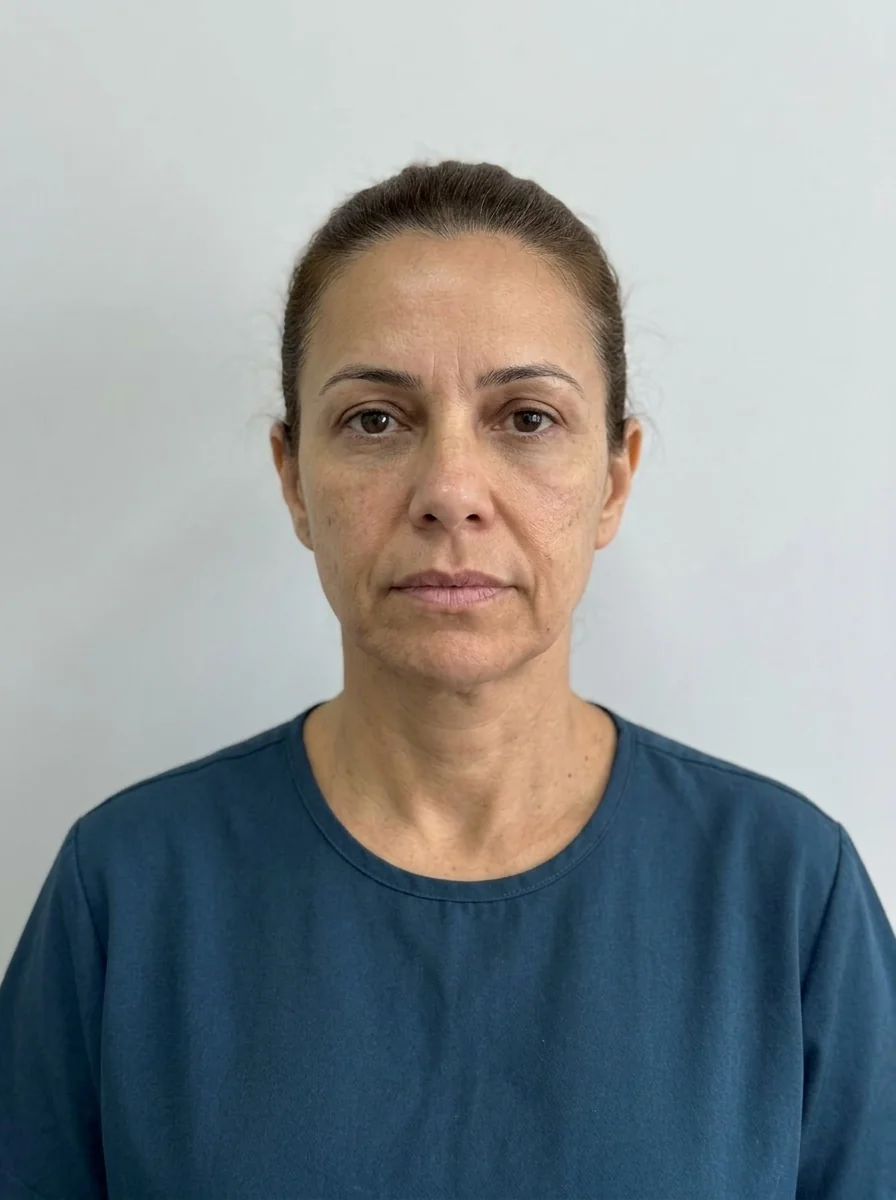 BeforeSimulation
Quick facts
- Question
- How far before an event to get under-eye filler
- Usual margin
- Generally 3 to 4 weeks, at the professional's discretion
- Why so long
- Thin skin, slow-clearing swelling and visible bruising
- Who decides
- The professional who injects, after assessment
The short answer: for an important event, under-eye filler is usually planned 3 to 4 weeks ahead, at minimum. The tear trough has thin skin and little fat, which makes swelling slow to settle and bruising appear easily. The final margin is the licensed professional's decision, after assessment.
The most common mistake is treating the under-eye like the lip or the cheekbone: the same schedule does not work. This page shows how to justify the margin to the patient and what to do when they arrive in a hurry.
Why does the under-eye need more margin than other areas?
Eyelid skin is among the thinnest on the face and the surrounding tissue drains slowly, so swelling fluid stays trapped. A bruise, even a small one, is visible precisely because the skin is translucent. In addition, any excess of superficial gel can show up as a bluish tint, the Tyndall effect, which does not go away in days.
That is why a realistic timeline includes three things: the swelling resolving, the bruising disappearing and a window for adjustment in case the result calls for a touch-up. Whoever squeezed the calendar removed the last of the three.
Reference timeline
| When | What usually happens | What to decide |
|---|---|---|
| 4 weeks before or more | Comfortable margin for swelling, bruising and a possible adjustment | Ideal window for the first injection |
| 3 weeks before | Acceptable margin, with little room for a touch-up | Agree that adjustment happens only if clinically needed |
| 2 weeks before | Short margin; bruising and swelling may still be visible | Assess case by case; it may be better to postpone |
| The week of the event | Insufficient margin for this area | Generally not recommended |
The table is a conversation guide, not a protocol. What decides is what the professional sees at the assessment: skin thickness, signs of eye bags, history of bruising and the patient's expectation.
What to explain about bruising
A bruise does not indicate a technical error. It can appear even with care, because of the capillary fragility of the area, and it usually changes color over several days. The patient should be warned that:
- the bruise can take one to two weeks to fade, sometimes longer;
- it can "travel down" to the cheek because of gravity;
- concealer helps, but how well it hides depends on the size of the mark.
General management for the bruising phase is in how to hide a bruise after filler and care in the first days is in care after under-eye filler.
What if the patient already booked close to the event?
There are three honest paths, none of them promising the impossible:
- Postpone the under-eye until after the event and, if there is aesthetic urgency, choose another area with a lower risk of visible swelling, such as the chin or jawline.
- Do it only if the margin is reasonable (at least three weeks) and make clear that fine adjustment will have no window.
- Decline the under-eye for now, when the skin is very thin, there is an evident eye bag or a history of extensive bruising.
Declining is part of the job. The risk of the under-eye "going wrong" in the week of the event belongs to the professional who accepted, not to the patient who asked. Dissatisfaction cases are summarized in under-eye filler that went wrong.
What the patient should avoid before and after
Guidance follows the general line for any filler, with extra care under the eye:
- Before: avoid, when the professional advises, medications and supplements that increase bleeding. What to stop is the professional's decision and, when use is prescribed, the patient's physician's. See aspirin before filler.
- After: avoid heat, exertion and heavy compresses in the first days. Returning to training is covered in gym after botox or filler.
When it is not worth doing the under-eye for the event
There are situations where the best advice is not to do it, or to choose another path:
- Evident fat pad (eye bag): the gel may accentuate the contour instead of softening it. See under-eye filler in people with eye bags and eye bags and filler.
- Very thin or translucent skin: higher risk of the gel's bluish tint showing.
- Prior persistent swelling: allergy, rhinitis and sinusitis can make swelling last longer.
- Anyone who has had a large bruise in prior procedures.
There are also alternatives: in some cases what bothers is not volume loss but thin skin or pigment, and the answer may be different. The comparison is in under-eye filler or skinbooster.
Plan B for the day of the event
Even with everything calculated, some bruising or mild swelling may remain. A simple plan B helps reduce the patient's anxiety:
- schedule a review visit 10 to 14 days after the injection;
- advise a medium-coverage concealer, applied without rubbing, once the points have closed;
- agree that intense pain, a change in skin color, loss of vision or a suddenly swollen, asymmetric eye are reasons for immediate contact, not for waiting until the event. See emergency after harmonization.
Keep in mind that hyaluronic acid has hyaluronidase as a correction option, but it is not a quick fix: dissolving takes its own time and can also cause swelling.
How to show a realistic expectation
In Harmy, the volume selector goes from 0.5 to 5 ml in any area (the app's technical range, not an indication for the under-eye), and the "First time" shortcut already suggests 1 ml at Subtle intensity. The projection illustrates a subtle change, proportional to the volume marked, and it helps the patient understand that the under-eye does not "disappear", it softens.
The simulation is illustrative, not a promise of results. For more on duration and follow-up, see under-eye filler: how long does it last and harmonization before an event.
Frequently asked questions
How long before a wedding can I get under-eye filler?
A margin of 3 to 4 weeks is usually recommended, to allow time for swelling and bruising and still leave a window for adjustment. The final margin is set by whoever injects.
Can I get under-eye filler the week of the event?
That is not what is usually advised. The area has thin skin, swelling can last more than a week and bruising shows up even with careful technique, with no guarantee it will clear by the date.
Does makeup hide the bruise from under-eye filler?
Concealer can hide part of the bruise once the entry points have closed, but the result depends on the size of the bruise. Makeup does not replace planning enough time.
Can I get a touch-up close to the event?
Under-eye touch-ups close to an event are usually avoided, because they add new swelling to the area. If needed, the professional weighs the risk of swelling against the gain.
Harmy images are illustrative simulations generated by AI from the patient's photo to support the conversation between practitioner and patient. They are not a promise of results. Indication, technique, product and volume are solely the decision of the licensed practitioner. This content is for information only and does not replace a clinical assessment.