
Under-Eye Makeup After Filler: When You Can Use It

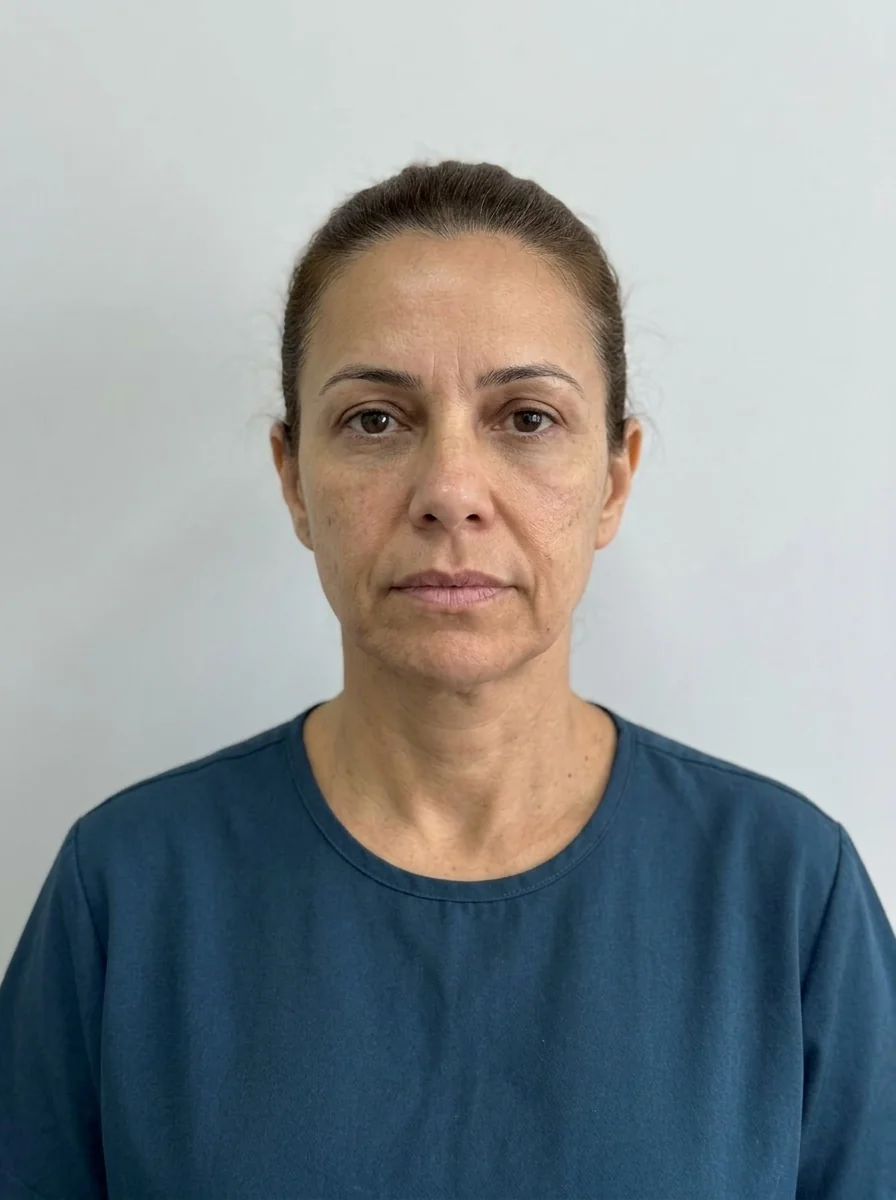 BeforeSimulation
- Highlighted area
Quick facts
- Question
- When can I put concealer under my eyes after filler
- Usual window
- It is common to wait until the entry points close and the bruising or swelling settles
- Avoid
- Pressure, dragging and rubbing the thin skin of the area
- Who decides
- The professional who did the treatment
The under-eye area is the one most exposed to makeup: a patient who gets filler there often wears concealer every day. On the thin skin of the lower eyelid and tear trough, what happens in the first few days matters. This page answers, with a practical step-by-step, when to clear concealer, how to apply and remove it, and when the urge to cover up should give way to a clinical assessment.
Why does this area need extra care?
The skin of the tear trough is among the thinnest on the face, rich in vessels and with little room to accommodate product. After under-eye filler, swelling and bruising are more visible than in other areas, and the temptation to cover them is strong. The problem is that rubbing, pressing and dragging the skin there can increase swelling, irritate the entry points and interfere with how the product settles.
This is also a high vascular risk area. Any unusual symptom, such as severe pain, vision changes, or skin that darkens or turns pale, is an emergency and must not be masked with makeup. Hyaluronidase should be available whenever hyaluronic acid is used, and the signs of vascular occlusion need to be clear to the patient.
When to clear concealer
There is no single rule. In general, clearing it depends on three checks:
- Entry points closed: no blood, scab or open skin.
- Bruising and swelling under control: if they are extensive, coverage usually waits longer.
- The professional's guidance: they are the one who knows what was injected.
The table below frames the conversation with the patient, in broad terms.
| Situation | Usual guidance |
|---|---|
| No bruising, entry points closed | Light concealer, patted on, once the professional clears it |
| Small bruise | Wait for it to close and cover with a thin layer |
| Large or painful bruise | Do not cover; let the professional know |
| Significant swelling | Wait; covering does not fix swelling |
| Persistent bluish color | Reassess; it may be the Tyndall effect |
How to apply and remove it without rubbing
Technique makes all the difference. A few practical tips, which the professional can adjust:
- use a small amount and blend with very light patting;
- use clean products and, preferably, a sanitized brush;
- avoid pulling the eyelid to stretch the skin;
- to remove, use a cotton pad with a gentle makeup remover, without friction;
- in the first few weeks, no massage or deep cleansing around the eyes.
If the patient usually wears contact lenses or more elaborate eye makeup, it is worth stressing that the care applies to the whole eye contour. For general aftercare, see aftercare for under-eye filler.
Does concealer cover bruising and a bluish tint?
It covers the color on the surface, yes, but it is important to tell the cases apart:
- Recent bruise (hematoma): tends to fade within days, changing color. Concealer hides it and does no harm, as long as the skin is intact.
- Persistent bluish tint: it may be the Tyndall effect, a reflection of light off superficial product. Concealer masks it, but the correction is clinical.
- Darkening skin with pain: this is a warning sign, not a cosmetic issue.
When the swelling is bigger than the disguise
Some people have persistent swelling in the filler area. In that case, makeup does not solve it and may even draw attention. See swollen under-eye filler, which explains how to tell swelling from excess product. If the patient needs to look their best for an event, the advice is to plan ahead, as in facial harmonization before an event.
What about Harmy?
Harmy marks the Tear Trough area and simulates the likely visual effect of the chosen volume. The simulation uses the frontal photo, with no makeup applied by the app, because the prompt prohibits skin retouching and makeup: the projection changes only what was marked. So ask the patient to be photographed without concealer, so they can see what really changes in the structure. It is an illustrative simulation, not a promise of results.
In short: concealer under the eyes after filler is usually cleared once the entry points close, with a light touch and removal without friction, and it should never replace an assessment when warning signs appear.
Frequently asked questions
Can I use concealer under my eyes right after filler?
In general, the advice is to wait for the entry points to close and to check whether there is bruising or swelling. The exact timing is up to the professional who treated you, who knows the technique used.
Can I pat the concealer in with my finger?
A light touch is usually fine once you have been cleared, but pressure, rubbing and massage should be avoided. The skin there is thin and the injected product is still settling.
How do I remove concealer without harming the filler?
Use a gentle product and a cotton pad, with short touches. Do not rub or pull the skin, especially in the first few weeks.
Does concealer hide the Tyndall effect?
It can soften the color on the surface, but it does not fix the cause. If a persistent bluish tint appears, the patient should come back for an assessment.
Harmy images are illustrative simulations generated by AI from the patient's photo to support the conversation between practitioner and patient. They are not a promise of results. Indication, technique, product and volume are solely the decision of the licensed practitioner. This content is for information only and does not replace a clinical assessment.